

ISLAMABAD: The National Electric Power Regulatory Authority (Nepra) has approved five-year (2025–2029) Distribution Investment Plans (DIPs) worth Rs 77. 443 billion for three power distribution companies — Gujranwala Electric Power Company (Gepco), Quetta Electric Supply Company (Qesco) and Tribal Areas Electric Supply Company (Tesco) — against their cumulative demand of Rs 127 billion, reflecting a reduction of about 39 percent from the originally proposed investment. The determinations issued by the regulator on Thursday underline a cautious and disciplined approach, as Nepra subjected the proposed investments to stringent prudency checks, technical evaluation and financial scrutiny before finalising the allowed investment ceilings. According to official documents, the Gepco had initially sought approval for an ambitious investment plan amounting to Rs 100. 612 billion for the control period from FY2025-26 to FY2029-30. The company later revised its proposal downward to Rs 85. 301 billion. However, following detailed scrutiny of project justifications, cost assumptions and system requirements, the Nepra approved Rs 48. 013 billion, significantly trimming the proposed outlay. READ MORE: Hesco, Sepco submit distribution investment plans for 2025-2030 Similarly, the Qesco had initially requested Rs 51. 577 billion, which it subsequently revised to Rs 28. 950 billion for the five-year period. The Tesco also reduced its proposed investment from Rs 14. 229 billion to Rs 13. 692 billion. After evaluation of both utilities’ submissions, the Nepra approved Rs 7. 841 billion for the Tesco, while maintaining a strict stance on cost rationalisation and project prioritisation. The regulator clarified that the approved figures are indicative in nature and serve as provisional placeholders for tariff determination, implying that final financial adjustments will be subject to further review during tariff proceedings. A key feature of the determinations is Nepra’s emphasis on loss reduction and operational efficiency. For Gepco, the Authority has set transmission loss targets at 0. 92 percent and technical losses at 8. 85 percent for FY2025-26 and FY2026-27. In order to validate and refine these benchmarks, the regulator has directed the Gepco to undertake an independent third-party study of transmission and distribution (T&D) losses through an internationally reputed consultant or consortium within nine months, effective July 1, 2026, as part of the tariff rebasing process. The regulator has also introduced a strict compliance mechanism. In case the loss study is not completed within the stipulated timeframe, tighter loss targets will automatically be enforced. Under this scenario, the Gepco’s technical losses would be reduced from 8. 61 percent in FY 2025-26 to 8. 41 percent by FY 2029-30, with the resulting financial impact to be incorporated in subsequent tariff rebasing through prior year adjustments (PYA). The Nepra has further directed all three Discos to prioritise the execution of projects approved under their respective DIPs, stressing that efficient and timely implementation will be critical to improving system reliability and reducing losses. However, recognising the dynamic nature of operational requirements, the regulator has allowed limited flexibility to undertake alternative projects not included in the approved plans. This flexibility is subject to strict conditions. The number of such alternative projects cannot exceed 5 percent of the total projects approved under the System Augmentation Programme (SAP), while the total cost must remain within the overall approved investment ceiling. Moreover, these projects must not result in any increase in the total financial approval granted by the Nepra. The Discos are also required to report such deviations in advance, supported by detailed justifications and impact assessments. The Authority has made it clear that this provision is not a blanket approval for deviations and that any misuse or unjustified departure from approved plans could trigger regulatory proceedings. On the financial side, the Nepra has allowed duties and taxes to be treated on an actual basis, subject to submission of satisfactory documentary evidence. At the same time, the Discos have been directed to execute approved short-term projects strictly within sanctioned scope, timelines and cost parameters. To address unforeseen risks and cost escalations, a contingency provision of up to 3 percent of the total approved project cost has been allowed. However, the regulator has cautioned that this contingency cannot be used to cover inefficiencies, poor planning or unauthorised changes in project scope. The determinations also outline a structured framework for cost adjustments. The Foreign Cost Component (FCC) will be adjusted to reflect exchange rate fluctuations, while the Local Cost Component (LCC) will be indexed to the National Consumer Price Index (NCPI). These adjustments will only be applicable during the approved execution period, and no escalation will be permitted beyond the specified timelines. Furthermore, the Nepra has ruled that any cost carried forward beyond the prescribed project completion period will not qualify for indexation, meaning that only the original base cost will be recognised for tariff purposes. In a significant move towards modernisation of the distribution network, the Authority has allowed Discos, including the Tesco, to replace defective meters with either static meters or Advanced Metering Infrastructure (AMI) meters. Priority for AMI deployment will be given to three-phase connections and areas where end-to-end communication infrastructure is already in place. He Nepra has directed that all AMI installations must comply with internationally recognised standards, including DLMS/COSEM and Universal Data Integration Layer (UDIL), and must be capable of integration with a centralised Meter Data Management System (MDMS) to enable secure, two-way communication. Copyright Business Recorder, 2026
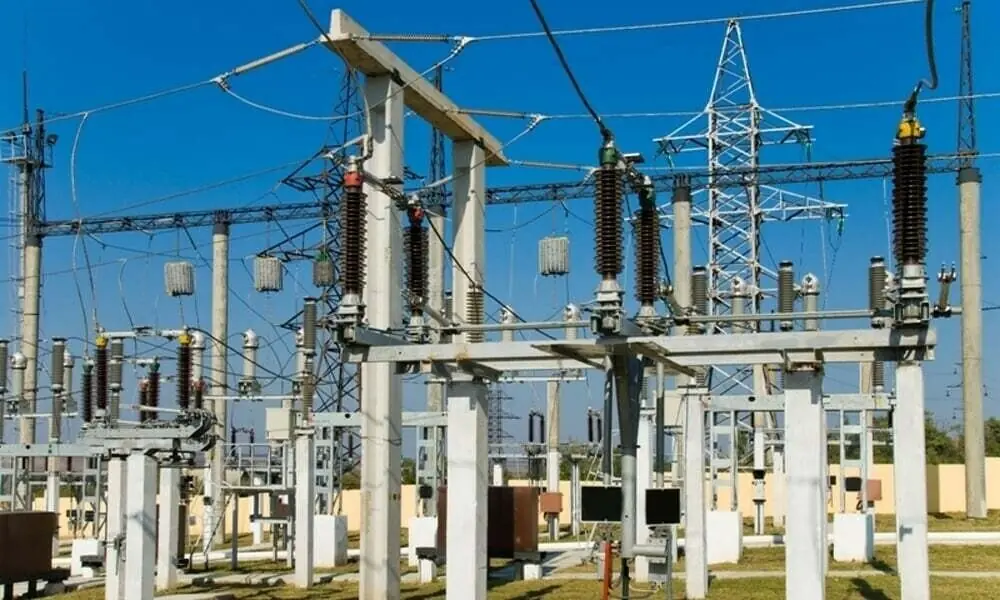
Nepra approves five-year DIPs for three Discos

RELATED ARTICLES


