


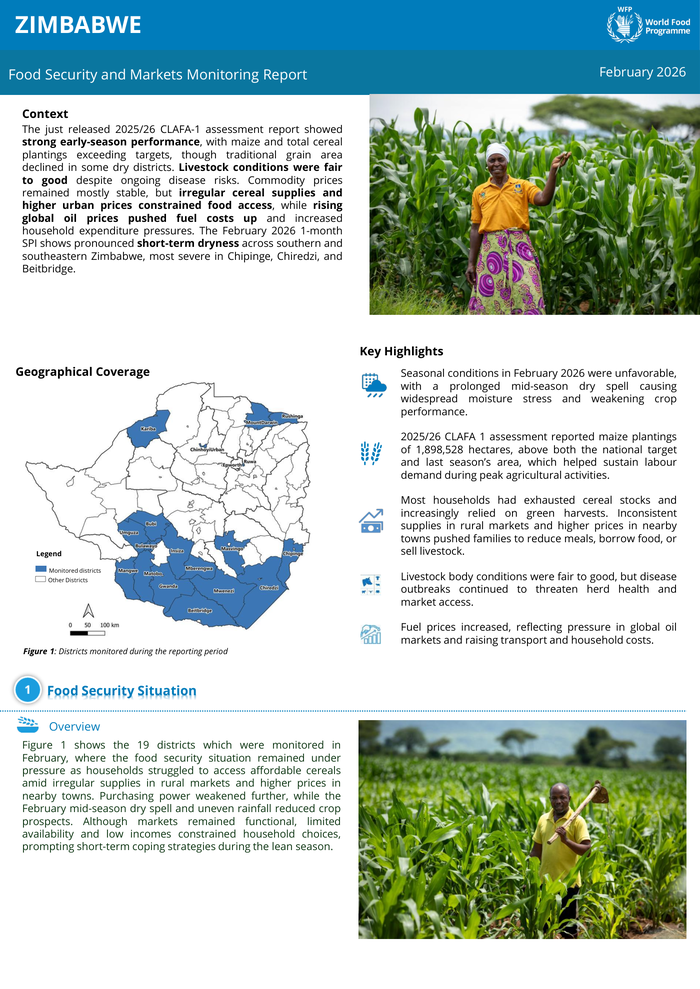
Country: Zimbabwe Source: World Food Programme Please refer to the attached file. Context The just released 2025/26 CLAFA-1 assessment report showed strong early-season performance, with maize and total cereal plantings exceeding targets, though traditional grain area declined in some dry districts. Livestock conditions were fair to good despite ongoing disease risks. Commodity prices remained mostly stable, but irregular cereal supplies and higher urban prices constrained food access, while rising global oil prices pushed fuel costs up and increased household expenditure pressures. The February 2026 1-month SPI shows pronounced short-term dryness across southern and southeastern Zimbabwe, most severe in Chipinge, Chiredzi, and Beitbridge. Key Highlights Seasonal conditions in February 2026 were unfavorable, with a prolonged mid-season dry spell causing widespread moisture stress and weakening crop performance. 2025/26 CLAFA 1 assessment reported maize plantings of 1, 898, 528 hectares, above both the national target and last season’s area, which helped sustain labour demand during peak agricultural activities. Most households had exhausted cereal stocks and increasingly relied on green harvests. Inconsistent supplies in rural markets and higher prices in nearby towns pushed families to reduce meals, borrow food, or sell livestock. Livestock body conditions were fair to good, but disease outbreaks continued to threaten herd health and market access. Fuel prices increased, reflecting pressure in global oil markets and raising transport and household costs.



GrowthPakistan brings you the latest news to keep an eye on Pakistan’s startup ecosystem. Business keeps you growing when you stay aware of your competitors' moves. GrowthPakistan offers Business, Tech, Global Tech, Global, Auto, and Startup News straight from industries all around the globe. This platform will help you identify upcoming opportunities not only in Pakistan but worldwide.
Email : growthpakistan@gmail.com
Whatsapp : +92320-9497079
© growthpakistan