

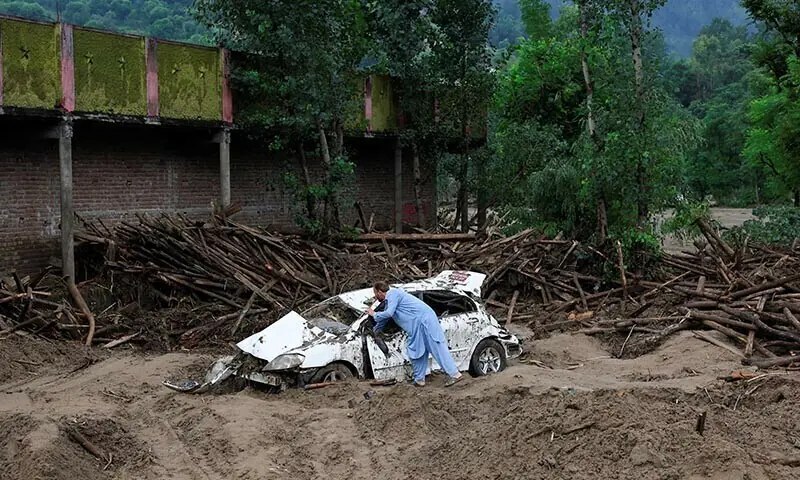
ISLAMABAD: The World Bank is expected to approve a loan of $250 million to Pakistan for resilience, early action, and disaster preparedness in Khyber Pakhtunkhwa, one of the country’s most flood-prone regions. The loan, provided by the International Development Association (IDA), aims to improve flood resilience in selected areas of the province. It is expected to be approved by the World Bank’s executive board in June this year. The province has sustained significant damage and losses from flooding over the years, with approximately $2. 3 billion in cumulative damages from major flood events in 2010, 2022, and 2025 alone. More recently, the 2025 monsoon triggered localised riverine, glacial, and flash flooding, resulting in 509 fatalities. Building flood resilience is fundamental to KP’s long-term development, poverty reduction, and job creation. However, the scale of flood risk facing the province far exceeds what public finances can absorb through reactive recovery and reconstruction. Funding to be provided through International Development Association Recent experience highlights this imbalance: recovery and reconstruction needs from Pakistan’s 2022 floods were estimated at roughly 1. 6 times the entire national development budget for fiscal year 2023, underscoring that post-disaster rebuilding alone is fiscally unsustainable. At the same time, providing universal protection against high-return-period floods across all people, assets, and locations in KP would require investments far beyond available capital budgets and would take decades to implement, according to the loan document. The project’s largest component involves improving infrastructure and planning for resilience, with estimated funding of $193 million. This component will support the design and construction of priority infrastructure aimed at reducing the province’s exposure to climate change–exacerbated floods, including riverine floods, increased flash flooding due to changing monsoon patterns, and glacial lake outburst floods (GLOFs) caused by accelerated glacier melt. Another key component is the construction and rehabilitation of critical infrastructure to mitigate flood risks. Investments will include flood protection structures such as embankments, flood carrier channels, spurs, retaining walls, revetments, gabion works, and check dams to reduce peak flows and downstream impacts. Activities will also include targeted desilting, channelisation, dredging, and sediment management in critical river reaches and confluences. Infrastructure such as embankments will be designed to withstand up to a 1-in-100-year flood, taking climate change into account. Nature-based solutions will be considered on a site-specific basis to replace or complement grey infrastructure where feasible. These may include terracing, slope stabilisation using vegetation, and riverbank restoration. Other components of the project include technical assistance for developing a long-term infrastructure investment plan, establishing flood early warning systems, strengthening institutional and community preparedness, and enhancing emergency response systems. Pakistan’s high vulnerability to climate change acts as a risk multiplier, compounding its human, economic, and employment challenges. Pakistan is among the top 10 countries most affected by climate change and ranks among the top four countries impacted by recurring extreme events over the past 30 years. More frequent and intense weather events are adversely affecting ecosystems, infrastructure, and communities. Economic activity is also being disrupted, leading to job and livelihood losses due to destroyed crops, livestock losses, and business inactivity. Heatwaves, floods, droughts, and cyclones remain prevalent risks. Flooding, in particular, is expected to become increasingly common due to warming temperatures accelerating glacial melt in higher altitudes, while downstream regions are projected to experience higher levels of multi-day precipitation, increasing the risk of flash floods. Published in Dawn, March 29th, 2026
World Bank to provide $250m for KP resilience, disaster readiness

RELATED ARTICLES


