


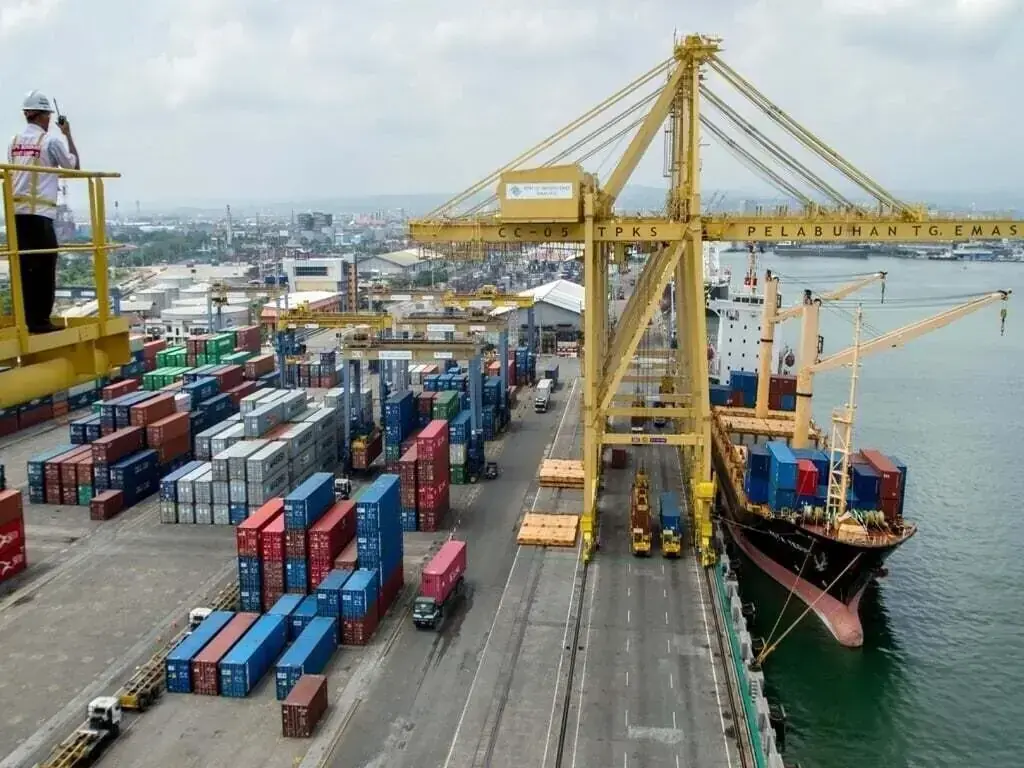
ISLAMABAD: The government’s new initiative to offer terminal facilities to stranded vessels amidst regional geopolitical tensions is a bold and necessary move to handle transhipment cargo diverted to Pakistan. Maritime experts told Business Recorder that by forming a high-level committee to address the logistical challenges of diverted cargo, the Ministry of Maritime Affairs is signalling a clear ambition to position Pakistan as a viable regional transit and transhipment hub. This proactive stance reflects an understanding that, in a volatile global trade environment, seizing the opportunity to act as a “Plan B” for international shipping lines could be a defining moment for the national economy. Importantly, the steps taken today to mitigate this crisis should not be treated as mere temporary measures. They represent a fundamental evolution of Pakistan’s maritime value proposition, they said. By formalizing these protocols and investing in the necessary on-dock infrastructure now, we are not just “rescuing” stranded cargo; we are laying a permanent, vital foundation for long-term maritime growth and securing our future as an indispensable player in global trade. READ ALSO: KPT handles all-time high cargo in FY25 However, while this strategic vision is sound, it must be supported by an equally rigorous assessment of our current operational reality. The ambition to handle diverted, volume-intensive transhipment cargo is colliding with a terminal infrastructure that is already operating at its saturation point. Over the last few years, our primary terminals have been pushed to their limits, with container throughput surging from 2. 9 million TEUs (Twenty-foot Equivalent Units) to 3. 8 million TEUs. This climb is a direct result of successful trade facilitation and renewed commercial activity, but it has effectively exhausted the existing margin of flexibility within our port gates. “We are now in a scenario where our terminals are being asked to process record-breaking volumes with a footprint designed for a different era. The “untapped potential” that policymakers are eager to leverage cannot be unlocked through policy alone; it requires physical space”, they said. Without immediate expansion of the on-dock terminal footprints, the operational strain will only intensify, and the very efficiency we need to attract international shipping lines will be compromised by congestion and slow turnaround times. According to the experts, the government has looked toward the use of off-dock terminal facilities to bridge the gap between our national ambitions and infrastructure limits. While this serves as a necessary emergency stopgap to rescue stranded cargo in the short term, this mustn’t become the default long-term strategy. Relying on remote, off-dock yards introduce significant operational friction. It necessitates additional heavy-vehicle road transport, which further clogs the already strained access routes around the port and inflates logistics costs. Furthermore, for the global carriers we are actively courting, security and reliability are non-negotiable. Major shipping lines and international insurance underwriters prioritize the safety of a consolidated, on-dock environment. The path forward, therefore, must prioritize the immediate expansion of the on-dock operational footprint. Regulatory authorities have a unique window of opportunity to facilitate this by fast-tracking approvals for yard expansion and modernization within existing terminal boundaries. Expanding the on-dock footprint provides the “room to breathe” required to manage not just the surge of stranded cargo, but the steady climb in our baseline trade volume. By shifting the focus from off-dock temporary fixes to permanent on-dock capacity growth, the government can ensure that the initiative to rescue stranded ships becomes the catalyst for a more robust and globally competitive maritime sector. Copyright Business Recorder, 2026



GrowthPakistan brings you the latest news to keep an eye on Pakistan’s startup ecosystem. Business keeps you growing when you stay aware of your competitors' moves. GrowthPakistan offers Business, Tech, Global Tech, Global, Auto, and Startup News straight from industries all around the globe. This platform will help you identify upcoming opportunities not only in Pakistan but worldwide.
Email : growthpakistan@gmail.com
Whatsapp : +92320-9497079
© growthpakistan