


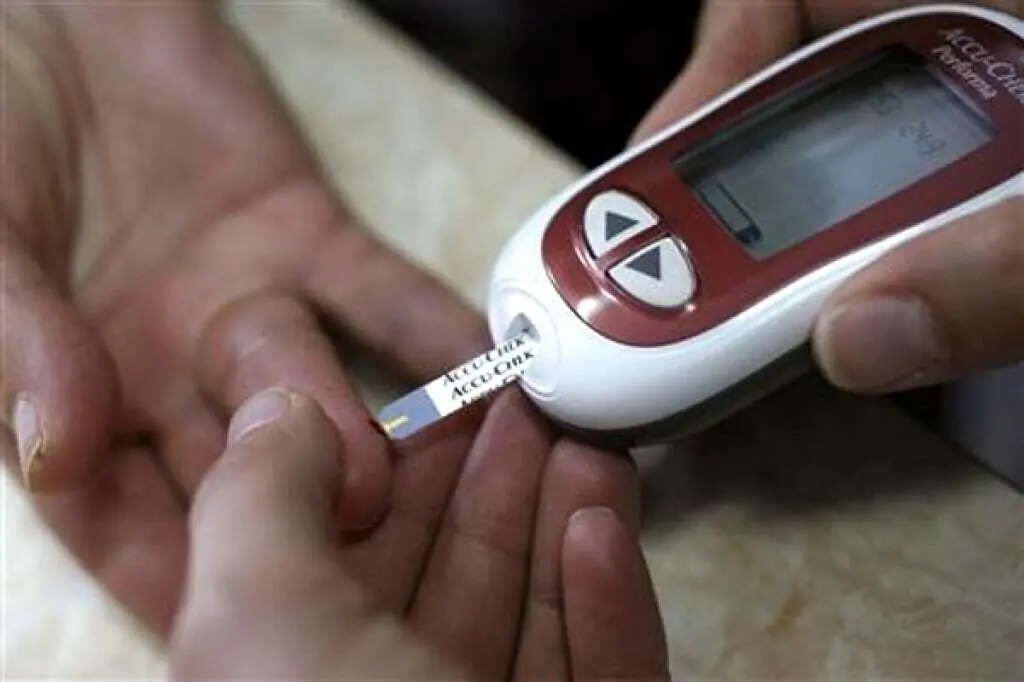
The public furor over Pakistan’s taxation regime, which lines pockets for a select few, overlooks the impact of a far heavier regressive tax brought by the onset of a chronic disease. For millions of Pakistanis living with diabetes, the daily struggle is not just to control blood sugar but to stay afloat financially. With 34. 5 million people diagnosed (adult prevalence – 31 percent), Pakistan now has the fourth-largest diabetic population in the world. The Sugar Overload Between the morning cup of tea/coffee and day’s close with desserts, the average Pakistani consumes ~26. 2 kg of sugar every year. This places Pakistan closer to Middle Eastern dietary patterns (Egypt ~32kg; Kuwait ~25. 9kg; Saudi Arabia ~ 29kg) in comparison to regional peers like India (~17kg) and Bangladesh (~6kg). Cross-country evidence shows that diabetes prevalence is strongly explained by accessibility and consumption of sugar (raising glycaemic load), particularly if individuals are of Asian predisposition or belong to upper-middle-income economies. In essence, slower economic transition makes sugar accessible far quicker than physical activity patterns adapt. For Pakistan, this means that growing access to sugar is akin to making it easier to fire the gun, than to treat the bullet wound. The consequence of this dietary exposure is not just higher disease prevalence, but a transfer of costs from the food system to households and the state. The hidden household tax of diabetes With one out of three adults being diabetic, the situation is a heavy drag on human capital, and its associated costs quietly chip away at national income. The average out-of-pocket monthly cost per diabetic patient is between USD 20-30, of which the vast majority is spent on direct medical care (insulin, consultations, tests, and self-monitoring costs). These costs are just the tip of the calving iceberg. On an inflation adjusted basis, the cost of living with diabetes accounts for ~4 percent of the top household’s income. In contrast, a factory wage earner loses close to a quarter of their income to the condition and when complications arise (dialysis, amputations, retinopathy interventions), expenses skyrocket further. Moreover, lost income from inability to work or reduced productivity adds to the burden, especially for working-age adults. Policy disconnect: awareness and apathy Early this fiscal year, the government allocated PKR 3 billion for the programme in the current fiscal year, with an additional PKR 800 million planned for next year on a national media campaign aimed at educating, preventing, and treating diseases. Even though Pakistan has a National Action Plan for Diabetes, barely anyone is aware of its existence. Its implementation seems to have been hampered by misdirected spending and a lack of political will. While a small, politically connected upper echelon remains endangered by the consequences of a sedentary lifestyle and nutritional gluttony, the vast majority are crushed by inadequate health literacy and compromised access to preventive care. As a large chunk of the populace remains under-educated on the symptoms and complications that this condition entails, the recrudescence of preventable complications does not come as a surprise. Despite this heavy burden, policy discourse on public health in Pakistan often overlooks the financial toll of diabetes. Consequently, without systemic relief, patients are forced to ration care, skip tests, or defer treatment, which in turn worsens outcomes and drives up costs overall. Insurance exclusion trap Even those who seek financial protection find little relief. Private health insurance, which should function as a critical financial protection mechanism, instead erects a crippling barrier for those already diagnosed. For Type 1 Diabetics (T1Ds), whose condition is lifelong and non-negotiable, the policy is particularly punitive. Insurers in Pakistan routinely exclude coverage for Pre-Existing Conditions (PECs), often invoking waiting periods of years or permanent exclusion clauses. This is a strenuous double-bind: patients who need coverage the most are systematically denied help for daily management costs (insulin, strips). This exclusion punishes prevention and pushes diabetics to delay treatment until complications set in. The result is higher costs for the already strained public system. In Pakistan, health insurance remains what it should never be—a privilege for the healthy. Too few specialists, too little state Yet even for those who can pay, care is scarce. Hospitals do not have diabetes specialists. According to data from Rentech Digital, as of January 2025, there are 43 endocrinologists in Pakistan, with only 2 identified as paediatric endocrinologists. Based on these estimates, each specialist is responsible for 800, 000 diabetic patients, in contrast with Bangladesh which offers one specialist per approximately 51, 000 diabetic patients. The nation’s average healthcare spend can be seen as a sharp reflection of the sovereign’s investment in the long-term welfare of its populace. While other South Asian states spend far more on public healthcare, Pakistan allocates barely 1 percent of GDP, one of the lowest shares in the region. However, it cannot afford to poke more holes in its fiscal deficit. This is where policy fails most dramatically: government funding is so insufficient that the nation spends an estimated USD79 per diabetic—an amount that barely registers against the true cost of managing the disease. This inadequacy has been left unaddressed. Punjab’s ‘Insulin Card’ programme covers just 1, 500 children, against an estimated child Type 1 diabetic population of over 100, 000. Much of the burden falls on NGOs like Meethi Zindagi instead of the state. While the programme is a step in the right direction, millions remain adrift without care. Economic stability demands that the state recognises health spending not as a consumption cost, but as a preventive fiscal investment. Bitter solutions from the world to the sweet problem With public spending constrained, Pakistan has few tools left. To deal with the deepening crisis, Pakistan needs to move away from token gestures. The strained fiscal outlay cannot bear the weight of another subsidy programme and amid IMF pressures to expand tax-to-GDP ratio, the government has all the incentive to dip its hands in sin tax. Pakistan could copy Mexico’s sugar-drink tax. It tried in 2023— 20 percent on sodas, 10 percent on juices—but then lost its nerve. Plans and proposals to scale, for example, lifting juices from 10 percent to 20 percent or moving toward higher, health-oriented rates stalled in the following years. Instead of ratcheting upward, the policy path has featured reviews and pushback, with no new, higher tiers or broader coverage implemented since the mini budget on the whims of the foreign investors invested in the Pakistani beverages sector (2024 Investment Climate Statements: Pakistan). Marking this street as a dead-end reiterates the government’s preference of satiating foreign investors over yielding health dividends. Where money lags, data must lead. Case in point: in the UK, DigiBete introduced a modern approach to ensure support for both Type 1 (T1D) and Type 2 (T2D) diabetes. DigiBete is a video platform and app functioning as a one-stop-shop for young people’s diabetes management. The programme hints at how integrating digital technology is not only efficient in terms of scaling but can also save costs over an extended period of time owing to reduced diabetic complications. Pakistan is not entirely off the map here. It has its very own version of a digital diabetes education web platform; “TIDBits” which was created in collaboration with DigiBete via World Diabetes Foundation’s funding. A tale of two missing infrastructures Pakistan’s diabetes burden is sustained by the absence of a primary care system capable of managing chronic disease at scale. Basic Health Units (BHUs) remain structured for episodic care rather than lifelong conditions, leaving diabetes management fragmented across laboratories, pharmacies, and hospitals; effective containment requires upgrading BHUs to provide routine screening, basic diagnostics, standardised counselling, continuity of essential medicines, and clear referral pathways that retain clinical ownership of patients. At the same time, Pakistani cities are designed in ways that suppress physical activity by default. Unsafe streets, fragmented footpaths, and car-centred planning discourage routine walking, meaning that physical activity depends on individual motivation rather than necessity; reversing this requires embedding movement into daily life through walkable neighbourhoods, pedestrian-only market zones, and limits on curb-side parking so that activity becomes an unavoidable by-product of urban design rather than a discretionary choice. Pakistan cannot walk its way out of diabetes, nor can it subsidise its way through it. Without correcting dietary incentives, embedding physical activity into daily life, and rebuilding primary care for chronic disease, diabetes will remain not just a medical condition, but a structural drag on economic growth. Copyright Business Recorder, 2026



GrowthPakistan brings you the latest news to keep an eye on Pakistan’s startup ecosystem. Business keeps you growing when you stay aware of your competitors' moves. GrowthPakistan offers Business, Tech, Global Tech, Global, Auto, and Startup News straight from industries all around the globe. This platform will help you identify upcoming opportunities not only in Pakistan but worldwide.
Email : growthpakistan@gmail.com
Whatsapp : +92320-9497079
© growthpakistan