


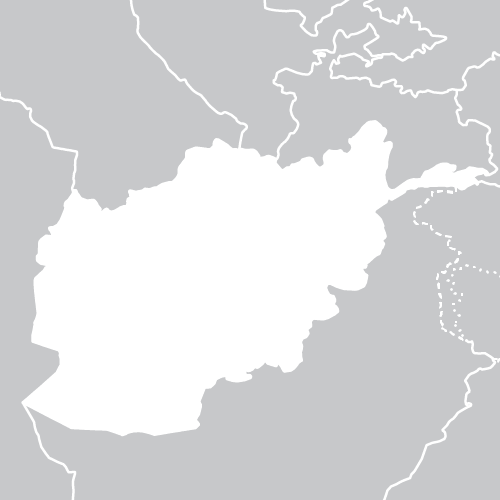
Country: Afghanistan Source: International Peace Institute by Aref Dostyar, CJ Pine, and George A. Lopez On March 16th, 2026, the UN Security Council took the rare step of extending the mandate of the UN mission in Afghanistan (UNAMA) for just three months rather than the standard year. This puts the council on a 90-day countdown to review and redefine its strategy in Afghanistan. While the United States, China, and Russia’s policies toward Afghanistan diverge in many regards, they unanimously agreed to the adoption of Resolution 2816 regarding the Afghanistan sanctions regime on February 12th. The resolution extended the mandate of the Analytical Support and Sanctions Monitoring Team to support the 1988 Afghanistan Sanctions Committee for 12 months. Yet to date, these sanctions have not brought about the change hoped for. It is time for the Security Council to review its sanctions against the Taliban and align them more clearly with political objectives in support of peace and security for the people of Afghanistan. The 90-day assessment window provides an opportunity to begin this process. Evolution of the 1988 Sanctions The sanctions regime under Resolution 1988 originated when these sanctions were separated from the 1267 ISIL/al-Qaida sanctions regime in 2011. Although counterterrorism remained the overall goal of both regimes, the purpose of this separation was to distinguish the Taliban from global terrorist organizations and treat them as a distinct Afghan political entity. The logic of this action was to signal political support for an Afghan-led peace process. Resolution 1988 provided the then Afghan government with important leverage: it could initiate requests to list and delist individuals and request travel ban waivers, usually when these individuals supported peace efforts. However, the role and leverage of the then Afghan government was neutralized when it was bypassed by the US, which entered direct high-level negotiations with the Taliban, concluding in a 2020 deal. The biggest change to the sanctions regime came with the 2021 collapse of the Afghan government. With the Taliban now taking over government institutions, concerns grew about the humanitarian impact of the sanctions regime. This led the Security Council to adopt Resolution 2615, inserting a humanitarian carveout in the sanctions regime to ensure aid could reach ordinary people across Afghanistan. Yet apart from the carveout, the Security Council has defaulted to simply maintaining the status quo of the 1988 sanctions regime. The regime still includes an arms embargo, asset freeze, and a travel ban on 135 Taliban members and 5 entities, with the same criteria in place for listing and delisting. Most critically, while the regime remains a tool for the Security Council to pressure the Taliban, this tool is decoupled from a cohesive political strategy. Stakeholders ranging from Afghan opposition groups to international observers have debated whether to increase sanctions on the Taliban or provide relief. Some groups advocate for increased use of targeted sanctions as the key tool for holding the Taliban accountable for human rights abuses and inadequate action to counter terrorism. Many, especially in the United States, argue that sanctions relief would equate to legitimizing the Taliban. On the other hand, Russia and China have argued for increased cooperation with the regime in Kabul. Why Have the 1988 Sanctions Objectives and Conditions Not Been Updated Given the shifts on the ground since 2021, the current sanctions objectives are not sufficiently clear, and several conditions for delisting are outdated. For example, a now defunct condition left in place since 2015 is to evaluate if a sanctioned individual completed reconciliation programs with the former Afghan government. More broadly, the listing criteria are left at any association “with the Taliban in constituting a threat to the peace, stability and security of Afghanistan. They do not reflect the council’s expectations for how the Taliban should behave with the Afghan people, particularly women, and the international community. Reaching consensus on both adding benchmarks and updating listing and delisting criteria will require hard work to bridge the views of states like the US with those of states like Russia and China. Nonetheless, there has been a shortage of debate and deliberation, either publicly or in the council, on options for an update. It is time for the council to roll up its sleeves, given that simply maintaining the status quo of the 1988 sanctions is not delivering the desired policy objectives for Afghanistan. Moving forward, the five permanent council members agree on maintaining the 1988 sanctions regime as a baseline. However, they differ over the conditions for adjusting the regime or adding specific objectives. The recent resolution, with the United States as penholder, incorporated topics beyond counterterrorism or reconciliation, such as condemnation of kidnapping and hostage taking and regressive decrees targeting women’s rights. This has been criticized by Russia as “oversaturated” with topics unrelated to the original purpose of the 1988 regime. China argued that reviewing and adjusting the 1988 sanctions should be specifically tied to supporting peace and stability in Afghanistan. To address these differences on the topic and show support for the people of Afghanistan, it is only reasonable to begin a formal process of deliberation on updating the objectives of the sanctions. Such an update could reflect both the current realities of the country and the interests of Security Council members. Linking sanctions to benchmarks and updating listing criteria to respond to political conditions are not uncommon. The council has made such adjustments in other recent sanctions regimes. It added benchmarks for the Somalia/al-Shabaab sanctions regime in 2022, including the adoption of action plans to combat sexual violence in conflict and road maps on children and armed conflict. In the sanctions regime for South Sudan, listing criteria have been updated in response to political developments, such as specifying that impeding free and fair elections are grounds for designation. At least seven sanctions regimes refer to sexual and gender-based violence in the listing criteria. The council’s resolution delisting Ahmed al-Sharaa is its most high-profile case of delisting from the 1267 ISIL/al-Qaida sanctions regime. Here, without referencing a criterion, the council delisted al-Sharaa while recalling the expectations that Syria will “protect human rights and safety and security of all Syrians regardless of ethnicity or religion” and advance an inclusive political process. With the Assad government being replaced by al-Sharaa as the new leader, the council assessed that these were the conditions applicable to Syria’s current moment. While this is not a case of delisting according to new criteria, it provides a broader example of the council finding political will and bridging differences to adapt sanctions. These examples demonstrate the council updating its sanctions measures and their objectives in dynamic situations. They further indicate that the council has been able to tie sanctions measures to human rights, political, and governance indicators or expectations. They were not easily adopted and resulted in abstentions from some members, but they provide models that can inform updates to the 1988 sanctions. Why Updating the 1988 Sanctions Criteria Matters The extension of the 1988 regime’s Analytical Support and Sanctions Monitoring Team in February reflects many states’ profound mistrust of the Taliban and concern that terrorism is being fostered within Afghanistan’s territory. Updating sanctions criteria can appear risky because the Taliban may interpret any shift as a softening of the Security Council’s resolve. To mitigate this, the update process should be anchored in safety mechanisms that protect the interests of both the Afghan people and member states. Robust deliberations, both publicly and in the council, should kick off an incremental process where the UN holds consultations with Afghan civil society on potential updated sanctions conditions for the council to consider. Council members could then communicate to the Taliban that they must reverse some of their most restrictive decrees against women before council members would consider adopting new benchmarks. This increases the likelihood that the council does not expend diplomatic capital without something to show in return. Additionally, the strategic utility of sanctions, whether through relief or restrictions, is predicated on clearly defined political objectives. Considering that the sanctions have not coerced the Taliban to change policies, discussing conditions for relief could incentivize action. Both imposing and lifting sanctions depend on clearly stated behavioral objectives. In this context, it is incoherent, and even counterproductive, to argue for or against further restrictions or waivers to the 1988 regime. As a more impactful alternative, adding benchmarks and reviewing the listing and delisting criteria would establish an initial frame of reference for UN member states. This approach would also provide the council with indicators for collective monitoring that reflect the current moment. At the same time, it would fully preserve the council’s ability to grant exemptions or impose further measures as the situation evolves. But such an update is not just about the Taliban. It is an important opportunity to recenter marginalized voices. Resolution 2255 (2015) encourages the Monitoring Team and Sanctions Committee to consult with relevant stakeholders. Since the original consultative bodies like the High Peace Council no longer exist, the update process provides a specific UN platform for civil society, women, youth and other voices who are currently excluded from the Kabul-Kandahar power structures. The potential update process should be informed by those most affected by the Taliban’s policies. An update will also counteract the Taliban’s accusations there is no discussion or way to move forward on sanctions. The Security Council can communicate to the Taliban which actions can result in specific sanctions relief and which could trigger further restrictions. Even if the Taliban refuse to change their behavior, which is likely, the Security Council would win the narrative battle by providing a clear and a reasonable path forward. The burden of impasse and isolation would fall squarely on the Taliban’s shoulders. From a Static Legacy to a Tool for Diplomacy Difficulty in reaching consensus on updating the 1988 regime is not an excuse for passivity. If it is linked to clear objectives, the sanctions regime could be an active tool for diplomacy rather than a static legacy of the past. The Security Council should move beyond passive engagement and grapple with what it intends to achieve for Afghanistan. Yet this is a heavy lift that would require political will on the part of council members—especially the US, Russia, and China—to find common ground, drawing on the vital first-hand perspectives of Afghans themselves. To begin this process, the Security Council should take three actions: Leverage the 90-day review of UNAMA’s mandate. Following UNAMA’s three-month mandate renewal, the UN Security Council should utilize the review window to spark a debate on possible next steps in the evolution of the sanctions regime. After all, both UNAMA and the sanctions regime are part of the UN Security Council’s policy toolbox. It only makes sense that they reinforce one another, collectively contributing to a broader political vision for the UN in Afghanistan. Initiate a process to develop specific benchmarks for the sanctions regime: This would clarify the behavior changes the council expects from the Taliban, which would also inform updated listing and delisting criteria. It would draw on the work of both UNAMA and the 1988 Monitoring Team, combining the former’s on-the-ground insights with the latter’s technical expertise to devise options. Incorporate local voices and expertise: Building on Resolutions 2255 (2015) and other relevant resolutions, it is crucial that both UNAMA and the 1988 Monitoring Team consult with relevant Afghan stakeholders regarding updated criteria and work closely with Afghan subject-matter experts inside Afghanistan and in the diaspora to reflect their voices. The time for updating the objectives and conditions of the 1988 sanctions regime has come—all the more so in light of the unfolding war between Pakistan’s army and the Taliban, which is subjecting the people of Afghanistan to even harsher conditions. It is imperative for the council to seize this opportunity to move past the status quo. Originally Published in the Global Observatory



GrowthPakistan brings you the latest news to keep an eye on Pakistan’s startup ecosystem. Business keeps you growing when you stay aware of your competitors' moves. GrowthPakistan offers Business, Tech, Global Tech, Global, Auto, and Startup News straight from industries all around the globe. This platform will help you identify upcoming opportunities not only in Pakistan but worldwide.
Email : growthpakistan@gmail.com
Whatsapp : +92320-9497079
© growthpakistan