


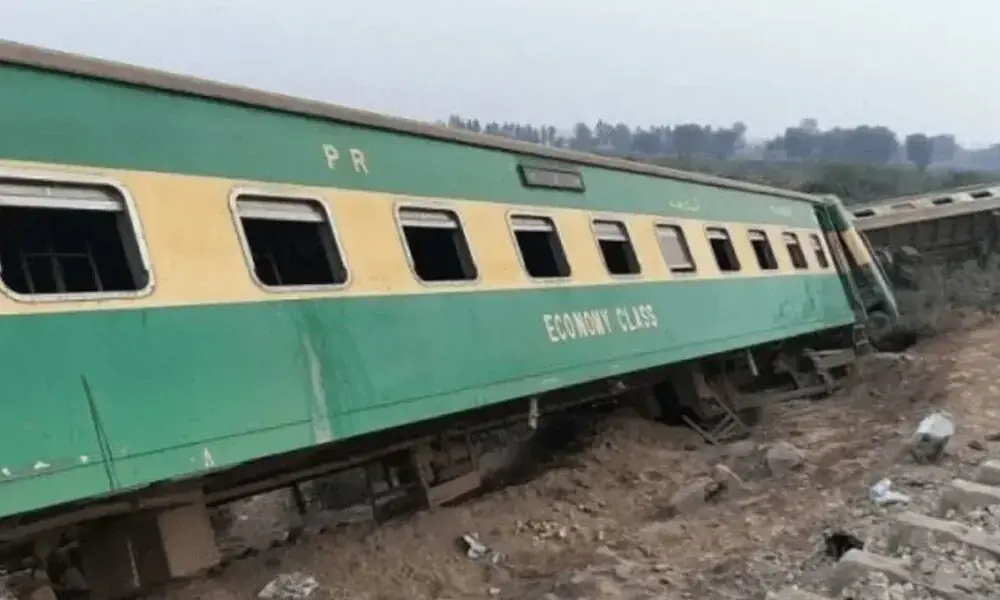
EDITORIAL: When an internal inspection finds that nearly 60 percent of a passenger train’s coaches were operating without functional brakes, yet the immediate conclusion is to hold the driver and his assistant responsible for the resulting collision, the issue at hand extends well beyond a single accident. It raises uncomfortable questions about how Pakistan Railways defines safety, assigns responsibility, and, more importantly, protects itself. The recent Shalimar Express incident has exposed a contradiction that cannot be brushed aside as procedural overlap or investigative haste. The rake examination conducted at Sukkur clearly identified serious defects in 10 out of 18 coaches, including nine with non-functional brake cylinders. These are not minor technical lapses; they go to the core of operational safety. A train running with compromised braking capacity is, by definition, a system already in failure before it even leaves the station. Against this backdrop, the decision to attribute the accident solely to crew negligence appears less like a conclusion and more like a reflex. The Joint Certificate points to overshooting a red signal and failure to control the train. That may well be factually correct at the operational level. But it does not answer the more fundamental question: why was a train in such condition allowed onto the tracks in the first place? Responsibility in a system like railways is layered. Drivers operate within the constraints imposed by the equipment they are given. If braking systems are defective, the margin for error narrows drastically, particularly in situations requiring rapid deceleration. To isolate the crew’s actions from the condition of the train is to examine only the final link in a chain that had already weakened much earlier. The term “dummy coaches” used in the inspection report is especially telling. It suggests that the presence of such compromised equipment is not an aberration but part of an accepted, if unofficial, practice. If coaches lacking critical safety features are routinely deployed, then the problem is institutional. It reflects a maintenance regime that prioritises keeping trains running over ensuring they are fit to run. This is not the first warning. Train drivers had protested as recently as last year against being held responsible for accidents involving faulty equipment. Their concerns now appear prescient. When those at the front line signal risk and the system continues unchanged, the eventual outcome is less an accident and more a predictable consequence. The regulatory framework is equally implicated. Multiple layers exist to ensure safety compliance, from technical inspections to oversight by the Federal Government Inspector of Railways. The fact that a train with such deficiencies could pass through these checks indicates either a breakdown in enforcement or a tolerance for risk that has become embedded in the organisation. There is also a broader cost to such failures. Pakistan Railways, already struggling to regain public confidence and financial stability, cannot afford repeated incidents that highlight systemic neglect. Safety lapses erode trust far more quickly than operational improvements can restore it. Every such episode reinforces the perception of an institution that manages crises rather than prevents them. The immediate response should therefore go beyond assigning blame within the crew. An independent and transparent inquiry is essential, one that examines the full chain of responsibility, from maintenance scheduling and inspection protocols to decision-making at the managerial level. Without this, the outcome will follow a familiar pattern: individual accountability at the bottom, institutional continuity at the top. More importantly, there must be an urgent audit of all operational rolling stock. If one train was found to be in this condition, it is reasonable to question how many others are running with similar deficiencies. Safety cannot remain a paper exercise, certified through documentation while realities on the ground tell a different story. The Shalimar Express accident should serve as a point of inflection. The facts are already clear enough to warrant action. What remains uncertain is whether the system is willing to confront its own failures or continue to route accountability away from where it truly belongs. Copyright Business Recorder, 2026



GrowthPakistan brings you the latest news to keep an eye on Pakistan’s startup ecosystem. Business keeps you growing when you stay aware of your competitors' moves. GrowthPakistan offers Business, Tech, Global Tech, Global, Auto, and Startup News straight from industries all around the globe. This platform will help you identify upcoming opportunities not only in Pakistan but worldwide.
Email : growthpakistan@gmail.com
Whatsapp : +92320-9497079
© growthpakistan