

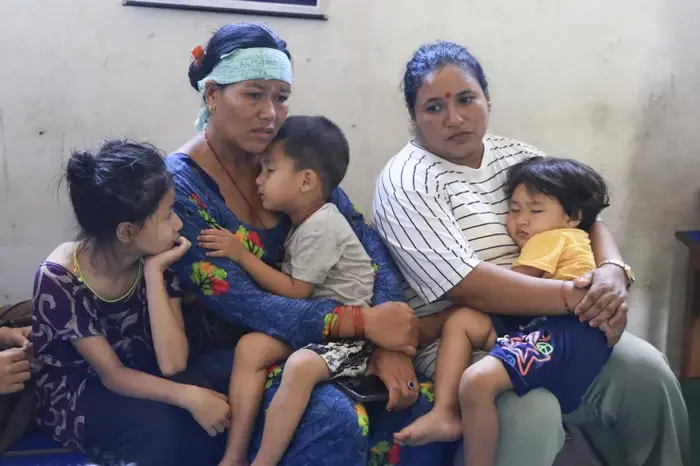
Country: Nepal Source: UN Children’s Fund KATHMANDU, 3 September 2026 – More than one week after flash floods swept down the Bhotekoshi-Trishuli river basin in Nepal, at least 22, 000 children urgently need safe drinking water, sanitation, and hygiene support, UNICEF said today. Water supply systems have been damaged across the affected districts, from community schemes to larger networks, while sanitation facilities have been damaged and destroyed. At the same time, families are crowded into host households and holding centres, creating conditions that raise the risk of waterborne and infectious disease outbreaks. “Every parent in these districts is now making the same calculation several times a day, ” said Alice Akunga, UNICEF Representative in Nepal. “Where can I get water, and is it safe to give to my child? When water systems and toilets have been damaged or destroyed, and dozens of people are sharing the same space, families face enormous challenges in maintaining safe hygiene. The risk of waterborne disease increases rapidly in these conditions, but it is preventable. That is why ensuring access to safe water, sanitation and hygiene is among our top priorities right now. ” UNICEF has dispatched critical water, sanitation, and hygiene supplies for around 19, 000 people in Rasuwa and Nuwakot. These include more than 3, 800 hygiene kits, 3, 300 collapsible 10-litre jerrycans, 3, 500 buckets, 3, 500 one-litre mugs, 4, 000 bottles of water treatment solution, and more than 1, 000 tarpaulin sheets. UNICEF is working with government counterparts and partners on disease surveillance, hygiene promotion, and outbreak prevention, with messages on safe hygiene, water handling, and household water treatment being carried through mobile messaging, radio, social media, and community networks. Mobile subscribers can reach validated advisories without data charges, and a network of more than 600 practitioners is extending outreach into affected communities. As access improves, UNICEF will scale up emergency water supply, household water treatment and water-quality monitoring, temporary sanitation and handwashing facilities, and essential hygiene and menstrual hygiene supplies in communities and holding centres. “Restoring communities’ access to safe water and sanitation is not a one-week job, ” said Akunga. “We can provide water treatment products and emergency supplies today, and we are. But damaged water systems, pipelines, pumps, toilets and other sanitation infrastructure also need to be repaired and rebuilt. And they need to be rebuilt to withstand future floods, not simply restored to the way they were before. We need to make communities safer and more resilient. Otherwise, we will be having the same conversation again after the next disaster, and it will be children paying the price yet again. ” Media contacts Sulaimon Abiodun Banire UNICEF Asia Pacific Regional Office (Bangkok) Email: sbanire@unicef. org Florine Bos UNICEF Nepal Email: fbos@unicef. org Joe English UNICEF New York Tel: +1 917 893 0692 Email: jenglish@unicef. org
More than one week on from Nepal’s floods, thousands of children remain without safe water and face rising risk of disease

RELATED ARTICLES


