

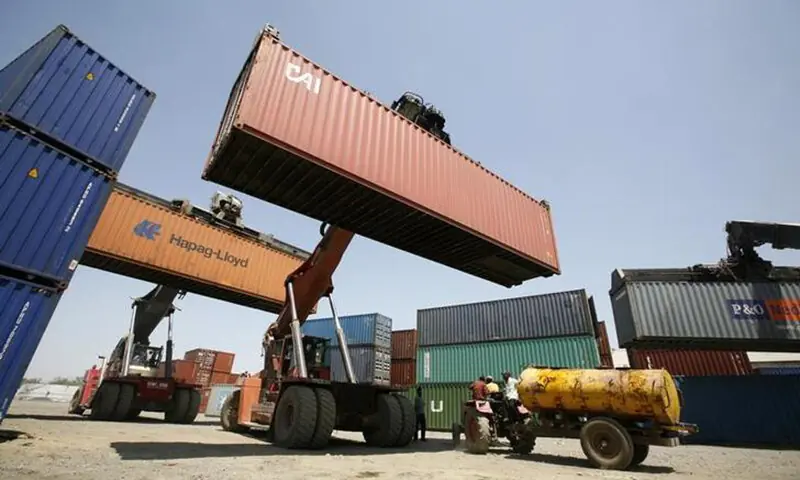
The coordinated intervention by the country’s monetary authorities and the banking sector to reduce export financing costs — without imposing any fiscal burden on the government — represents a rare example of policy alignment.The initiative is part of the relief package announced by Prime Minister Shehbaz Sharif to ease cost pressures on the industry, especially exporters. He had also announced a slash in electricity tariffs for industry by Rs4.04 per unit.Exporters have welcomed the decision to further cut the Export Refinance Facility (ERF) rate as a timely initiative to improve their cash flow and revive their idle production capacity to leverage export growth, while the banking industry described the move as a voluntary, national-interest intervention designed to ease financing costs and strengthen Pakistan’s external account.“A thoughtful and timely initiative by the prime minister to support the export sector,” Musadaq Zulqarnain, the chairman of Interloop Limited, wrote on X.Commercial banks, the government and SBP have coordinated to reduce financing costsHowever, it is unlikely to translate into higher exports in the near term, nor should this single measure be expected to deliver the desired outcome on its own, without effectively tackling other issues affecting export competitiveness.The Pakistan Banks’ Association (PBA) announced last month that it would slash the ERF rate by 300 basis points to 4.5 per cent for new loans and rollovers. The cost impact of this concession, which is in addition to the existing subsidy being provided by the government, which currently stands at 3pc below the prevailing policy rate of 10.50pc, will be borne by banks in their balance sheets.The initiative is currently subject to the existing ERF limit of Rs1.05 trillion, the PBA announced. This capacity is designed to be flexible and may increase as and when the State Bank or Exim Bank increases the limit through June 2027, the PBA said.The reduction has been made possible through a coordinated policy mix in which the State Bank lowered the Cash Reserve Requirement (CRR) for commercial banks by one percentage point in its last monetary policy determination, releasing more than Rs300 billion in previously idle liquidity into the financial system. This freed-up liquidity allows banks to offset the hit to their bottom lines on account of lower returns on export lending by redeploying funds into other earning assets.The CRR is essentially a percentage of a commercial bank’s liabilities (deposits) that it must hold with the central bank, without receiving interest. It is often used by central banks as a monetary policy tool by central banks to tighten or free up liquidity in the system instead of doing so by moving interest rates up or down. In its last monetary policy decision, the SBP held its policy interest rate unchanged at 10.5pc. However, it cut the CRR for banks to 5pc from 6pc on a fortnightly average basis while also lowering the daily minimum maintenance requirement to 3pc from 4pc to support the growth.Analysts say the ERF rate cut reflects an unusual alignment between the government, central bank and commercial lenders to support the export sector at a time when external stability remains a central economic priority.They note that although lower ERF rates may compress banks’ margins on export-linked lending, the CRR cut effectively offsets this impact by lowering funding costs and expanding lending capacity to absorb the ERF rate reduction without a disproportionate hit to profitability.With ERF loans representing a relatively small share of total advances, the broader financial stability implications remain limited, while the potential upside for export growth and economic recovery could be significant if implementation remains smooth and targeted.PBA chairman Zafar Masud acknowledges the role of the CRR cut on banks’ decision to slash ERF rates. “We got the leeway due to favourable CRR adjustment, which we have been asking for a while to boost the market liquidity. Long-term view is to promote exports, which will eventually benefit banks in the medium term.”According to him, this initiative is not just about numbers. “It is about the banking sector answering the call of the nation. We recognise that export growth is critical for Pakistan’s economic stability. By providing export finance at a highly competitive rate, the sector is proving that it stands firmly behind our exporters.”This step would certainly leverage export growth by providing much-needed relief to exporters and enabling them to compete more effectively through improved margins, Mr Masud says. “While this may impact banks’ profitability in the short term, taking such a hit on their balance sheets would serve the larger national interest by supporting economic stability and external account sustainability. At the end of the day, it is a win-win proposition for the industry and for the country, and that’s the reality.”At its core, the ERF rate cut reduces borrowing costs for value-added exporters, strengthening their cash flow and enhancing competitiveness in global markets. “In a country where exporters, especially small and medium-sized firms, routinely struggle with high financing costs, currency volatility, and structural inefficiencies, access to cheaper credit can significantly improve working capital cycles and enable investment in new technologies,” says Arif Ehsan Malik, the CEO of Al Ghani Terry Mills and an exporter from Faisalabad. He emphasises that easing access to concessional export finance is critical for small and medium-sized exporters, who are disproportionately affected by tight financial conditions.Nonetheless, concessional financing alone cannot resolve Pakistan’s deeper structural export weaknesses, says Shahzad Saleem, one of Pakistan’s largest textile exporters and chairman of Nishat Chunian. High energy costs, regulatory uncertainty, infrastructure gaps and so on continue to constrain export competitiveness. While cheaper credit can provide relief, sustainable export growth ultimately depends on broader reforms that enhance productivity, reduce transaction costs and improve the overall business environment. If accompanied by structural reforms and policy consistency, this initiative could provide meaningful support to the country’s export sector.That said, the ERF intervention represents a pragmatic and balanced policy response to the exporters’ needs for affordable finance. By aligning monetary policy tools with export promotion objectives, authorities have created immediate financial space for exporters without destabilising the banking sector or worsening fiscal deficits. The CRR adjustment ensures that banks remain willing partners in this effort.Published in Dawn, The Business and Finance Weekly, March 2nd, 2026



GrowthPakistan brings you the latest news to keep an eye on Pakistan’s startup ecosystem. Business keeps you growing when you stay aware of your competitors' moves. GrowthPakistan offers Business, Tech, Global Tech, Global, Auto, and Startup News straight from industries all around the globe. This platform will help you identify upcoming opportunities not only in Pakistan but worldwide.
Email : growthpakistab@gmail.com
Whatsapp : +92320-9497079
© growthpakistan