


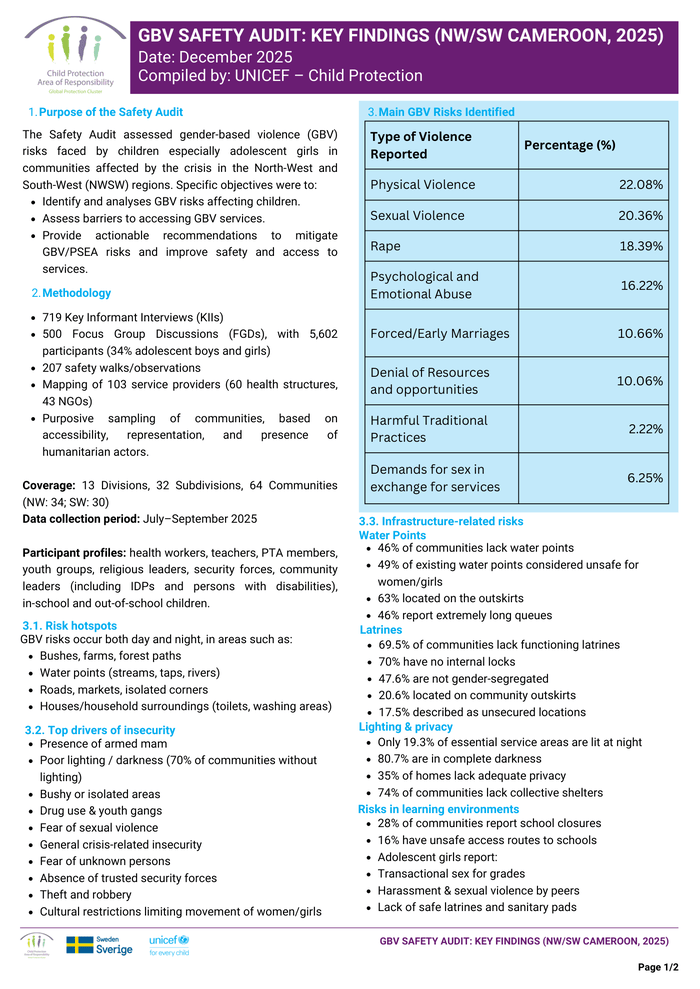
Country: Cameroon Source: UN Children’s Fund Please refer to the attached file. Executive Summary The GBV Safety Audit (North-West and South-West Cameroon, 2025) assessed gender-based violence (GBV) risks affecting children, particularly adolescent girls, across 64 crisis-affected communities. Using 719 key informant interviews, 500 focus group discussions involving 5, 602 participants, 207 safety walks, and mapping of 103 service providers, the assessment identified widespread protection risks, major service gaps, and priority actions for humanitarian actors. The audit found that physical violence (22. 1%), sexual violence (20. 4%), rape (18. 4%), and psychological abuse (16. 2%) are among the most prevalent forms of GBV. High-risk locations include bushes, farms, water points, roads, markets, and household surroundings, while insecurity is driven by the presence of armed groups, poor lighting, isolation, youth gangs, and limited trusted security services. Inadequate infrastructure further increases risks, with many communities lacking safe water points, gender-segregated latrines, lighting, and privacy. Schools also present significant protection concerns, including unsafe access routes, harassment, transactional sex for grades, and inadequate menstrual hygiene facilities. The assessment also highlights critical barriers to protection and survivor support. GBV services remain limited and unevenly distributed, with insufficient availability of post-exposure prophylaxis (PEP) kits, low awareness of referral mechanisms, and a severe shortage of Women and Girls Safe Spaces. As a result, survivors often rely on informal community structures rather than specialized services. To address these challenges, the report recommends a coordinated, multi-sectoral response focused on strengthening prevention of sexual exploitation and abuse (PSEA), expanding safe and accessible WASH infrastructure, improving child safeguarding in schools, ensuring survivor-centred health services, strengthening case management and referral systems, and promoting community engagement to reduce harmful practices and GBV risks. Overall, the audit concludes that sustained collaboration across child protection, GBV, health, WASH, education, and general protection sectors is essential to reduce GBV risks and improve access to quality services for affected children and communities.



GrowthPakistan brings you the latest news to keep an eye on Pakistan’s startup ecosystem. Business keeps you growing when you stay aware of your competitors' moves. GrowthPakistan offers Business, Tech, Global Tech, Global, Auto, and Startup News straight from industries all around the globe. This platform will help you identify upcoming opportunities not only in Pakistan but worldwide.
Email : growthpakistan@gmail.com
Whatsapp : +92320-9497079
© growthpakistan