

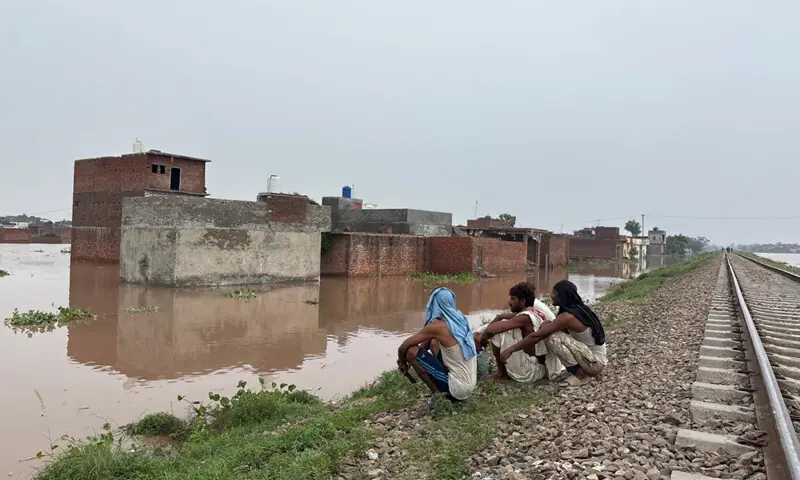
AFTER being forced to leave his home submerged in the waters of Bhed Nullah, Aslam and his family have come back to the flooded village in Ferozwala to pick up some clothes, bedding, and other essential items. A large number of people, including his relatives, moved to higher ground and other cities after the nullah breached its bank and inundated villages along the GT Road. “Flooding in Bhed Nullah has always ruined our houses and farmland, throwing our life out of gear, ” Aslam, a resident of Rahim Colony, told Dawn while walking beside a railway track towards his flooded house to pick up clothes. They had to vacate their houses after the floodwater suddenly entered their village, he said, adding that they left everything behind because there was no time to prepare. Several villages along the Lahore-Gujranwala tract of GT Road have been fully submerged after nearby nullahs overflowed For Aslam, life had been difficult before the floods, but he fears more hardships in the near future, especially after authorities predicted another monsoon spell would swell the eastern rivers and their tributaries. His house is among scores of inundated brick houses, surrounded by floodwaters from Bhed Nullah. As he and his family waded through the water to reach their home for clothes and other basic items, Aslam regretted that they had not received any help from the government so far. ‘Water everywhere’ Like Aslam, many others had to leave their homes after water inundated villages and agricultural land in Ferozwala – a tehsil in Sheikhupura along the Lahore-Gujranwala tract of the GT Road. Maqsood Ali, a local worker, moved his family to Lahore after water from the overflowing nullah entered his village. “Today, I have come to see if the water level has gone down, ” he said, but quickly added that the situation was not good. “Our houses are underwater since there is water everywhere. ” The Bhed Nullah submerged other localities as well, including Pathan Colony where most houses are under several feet of water. Dawn witnessed several people leaving their houses in rescue boats and moving towards safer places with the help of rescue officials. “We have left our house in Bhullay village and sent our family to relatives temporarily, ” Ramzan told Dawn, with his gaze fixed on the floodwaters. “Most homes in Pathan Colony are under four to five feet of water — some are even worse, ” another resident said in an equally despondent tone. Nullahs like Bhed, Main Deg, Nikki Dege, and Main Hussri originate in Kashmir and pass through rural and semi-urban localities of Punjab before merging with various rivers, particularly the River Ravi. Earlier this month, these swollen streams wreaked havoc on areas situated along their banks. Swollen nullahs According to Punjab irrigation officials, the devastation occurred because these nullahs overflowed as a result of frequent rains over the last week. Some of the areas affected by these nullahs included Pathan Colony, Rahim Colony, Bhullay village, and Forest Park, among others. For instance, Deg Nullah, with a capacity of 19, 361 cusecs, was flowing at 20, 900 cusecs on Tuesday. The officials blamed the residents of Pathan Colony for the destruction caused in their area by Bhed Nullah. They alleged that the locals stopped their team from strengthening the embankment of the nullah and instead made a “big cut” in the embankment so that the floodwater could “enter other localities”. The official did not share any evidence. In a separate incident, he alleged, the residents held a protest on GT Road and also pelted the official team with stones and forced them to leave the area. Residents rejected these allegations, questioning how the villagers could breach such a big embankment on their own. “It is surprising to hear this. The breach in the nullah occurred naturally, because there was too much water, ” they said, adding that they held a protest after two teenagers drowned in the Bhed and there was no help for their rescue. The Sheikhupura deputy commissioner and the Lahore commissioner were not available to respond to these claims. Gujranwala villages submerged Villages in Kamoki, Gujranwala, also faced devastation after Hussri Drain and Nullah Deg overflowed their banks and entered settlements. “Nullah Deg submerged our village Nangal Essa following two breaches. We are in great trouble, ” said Muzzamil, a resident. “We want the government to immediately plug these breaches to prevent further destruction, ” he requested. As floods force people to relocate, Rescue 1122 and some relief bodies have set up camps at the GT Road in Ferozwala to assist the victims. “We are rescuing hundreds of people daily and shifting them to safe places (camps) on the GT Road, ” said Waqas Ahmad, a rescue official. “Our core objective is to rescue the people first and nothing more. ” Those being rescued were being given meals and other essentials at these camps. “We are giving them warm food. .. besides other items, ” a camp in charge said about facilities at one of the camps. In the north, Sialkot district fared a little better but still faced floods in its villages. The affected settlements included Garar Baryar, Gagay, Sokan Wind, Pajokey, Uddo Fateh, Mokhal and Nand Pur. For now, the city is safe, said Sialkot DC Awais Mushtaq. “In Pasrur and Daska, some areas were affected due to inundation by Aik Nullah. Daska is our tehsil where 200mm of rain occurred, leading to urban flooding. ” Published in Dawn, July 30th, 2026
Footprints: Trudging home in waist-deep water

RELATED ARTICLES


