


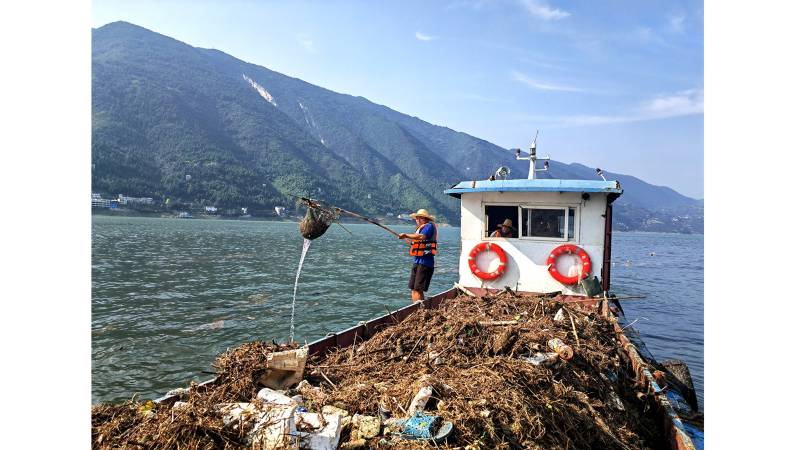
By the early 2000s, the Yangtze was suffocating. Decades of breakneck industrialisation, unregulated dumping, relentless overfishing, and massive engineering projects had pushed its ecosystems to the brink of collapse. The river had become a cautionary tale of what happens when a developing nation prioritises economic growth over everything else. But something unexpected has happened recently. The narrative of the Yangtze is changing, shifting from a story of environmental ruin to one of the most ambitious—and surprisingly effective—ecological restoration projects in modern history. This isn’t just about planting a few trees or passing a symbolic law. The Chinese government, recognising that the degradation of the Yangtze threatened the country’s long-term economic stability, has initiated a massive, multi-billion dollar effort to essentially revive a dying river system. And biologists are starting to see the results. Decades of Decline For the second half of the 20th century, the prevailing philosophy regarding the Yangtze was one of extraction and control. As China’s population boomed and its economy modernised, the river and its surrounding wetlands were viewed primarily as resources to be exploited. Vast floodplains and lakes across the central Yangtze were aggressively drained and reclaimed to make way for agriculture, factories, and expanding cities. Thousands of miles of dykes and massive dams—most notably the controversial Three Gorges Dam—were constructed for flood control and hydroelectric power. This infrastructure fundamentally altered the river’s hydrology. It severed the natural, seasonal connections between the main river channel and surrounding lakes, which served as vital spawning and feeding grounds for fish. Dongting Lake, China’s second-largest freshwater lake and a crucial part of the Yangtze ecosystem, lost more than half its surface area compared to the 1950s due to land reclamation and sedimentation. Saving the Frescoes of Haveli Nau Nihal Singh – Conserving Lahore’s Painted Past Instead of just outlawing the practice and expecting compliance, the central government spent an estimated $3 billion on compensation packages to help fishers transition to new industries Along the riverbanks, heavy industries—chemical plants, textile factories, steel mills—sprang up by the thousands, routinely discharging untreated or poorly treated industrial wastewater directly into the water. Agricultural runoff loaded with fertilisers and pesticides compounded the pollution. Simultaneously, the river was being strip-mined of its aquatic life. As fish stocks plummeted from pollution and habitat loss, fishers resorted to increasingly desperate and destructive methods, including electric shock fishing, explosives, and nets with mesh so fine they caught even the smallest fry. By the late 2010s, the fish biomass in the Yangtze had plummeted by an estimated 85% compared to historical levels. The consequences for biodiversity were catastrophic. The most infamous casualty was the baiji, a unique species of freshwater dolphin that had inhabited the Yangtze for 20 million years. Often referred to as the “Goddess of the Yangtze”, the baiji was declared functionally extinct in 2006—the first dolphin species to be driven to extinction by human activity. By the time the government seriously intervened, the Yangtze was critically ill. Turning Point: Banning the Nets The cornerstone of the Yangtze’s recovery has been a policy that many initially thought was impossible to enforce: a comprehensive, 10-year ban on commercial fishing across the main stem and key tributaries of the river. Chinese scientists had been advocating for a fishing moratorium for years, arguing that the ecosystem needed a prolonged break to have any chance of recovery. Previous, shorter bans (usually a few months a year) had proven ineffective; fish populations simply couldn’t bounce back fast enough before the nets returned. In 2021, the central government finally pulled the trigger on the decade-long ban. It was an incredibly complex policy to implement, directly impacting the livelihoods of roughly 200, 000 fishers and requiring the scrapping of over 100, 000 fishing boats. Saving Rawal Before It Is Too Late What made the implementation notable was the strategy behind it. According to researchers, the government utilised principles of “evolutionary game theory” to structure the ban, analysing how local governments, fishing communities, and central authorities would react to different incentives and penalties. Instead of just outlawing the practice and expecting compliance, the central government spent an estimated $3 billion on compensation packages. They provided subsidies, funded retraining programmes, and helped fishers transition to new industries—from aquaculture and agriculture to factory work and river patrolling. It wasn’t a flawless transition, and illegal fishing remains a persistent threat, particularly in some of the larger tributaries, requiring constant surveillance. But on a macro level, the ban removed the single most immediate pressure on the river’s aquatic life. Rewiring the Industrial Engine Stopping the fishing was only half the battle; the government also had to stop the poisoning. Alongside the fishing ban, China launched a massive campaign to restructure the industrial landscape along the river basin. The government introduced “ecological red lines”—legally protected zones encompassing critical habitats, wetlands, and water sources where industrial development is strictly prohibited. Thousands of heavy polluting factories situated near the riverbanks have been forcibly shut down or ordered to relocate to industrial parks with centralised, heavily monitored waste treatment facilities. Simultaneously, there has been a massive influx of capital into urban infrastructure. New sewage treatment plants have been constructed, ageing drainage systems have been upgraded, and networks of real-time water quality monitoring stations have been installed along the river to track pollution sources and enforce regulations. Authorities are increasingly utilising satellite surveillance and artificial intelligence to catch illegal dumping. When The River Stops Arriving The government has also begun rethinking its approach to flood control. After devastating floods in the late 1990s, authorities recognised that relying solely on dykes and concrete was a losing battle. They began a slow process of reversing decades of land reclamation, encouraging farmers to abandon flood-prone reclaimed land to restore natural wetlands, which act as crucial “sponges” during high-water events. The River Breathes Again The results of these interventions have been swifter and more dramatic than many experts anticipated. A major study published in early 2026 in the journal Science analysed data from the two years before the fishing ban (2019–2021) and the two years after (2021–2023). The findings were striking. Researchers found that overall fish biomass in the monitored areas had more than doubled in just a few years. Biodiversity, measured by the variety of species present, improved by 13%. Sébastien Brosse, a biologist at the University of Toulouse who worked on the study, described the results as some of the most positive news in freshwater conservation globally over the past two decades. He noted that it was a rare example of government intervention not only mitigating damage but actively reversing it on a massive scale. One of the most encouraging signs has been the apparent rebound of the Yangtze finless porpoise, a critically endangered species that many feared would follow the baiji into extinction. Known locally as the “smiling angel” due to its distinctive facial structure, the porpoise is highly sensitive to pollution and ship traffic. Recent observations suggest their numbers in the wild have increased from around 400 individuals to roughly 600. Migratory bird populations are also showing signs of recovery in the restored wetland areas. In places like Honghu Lake, where intense aquaculture and netting had decimated the local ecosystem, concerted efforts to remove miles of nets and improve water quality have seen the return of species like the endangered Oriental white stork. The Katcha Belt: Where State Authority Meets River Chaos The Long Game Despite the genuinely positive data, biologists and conservationists are quick to caution that the Yangtze is not “saved. ” The recovery is real, but it is deeply fragile. The river basin remains one of the most heavily industrialised and populated regions on Earth. The pressures from urban development, agricultural runoff, and the sheer volume of shipping traffic are immense. Furthermore, the physical architecture of the river has been permanently altered. The Three Gorges Dam and other massive hydroelectric projects continue to disrupt natural sediment flows and block migration routes for several species, including the critically endangered Chinese sturgeon, which struggles to reach its historic spawning grounds. While authorities are attempting to mitigate these impacts by occasionally adjusting water flows from the dams to mimic natural seasonal flooding, the fundamental barrier remains. Climate change introduces another unpredictable variable. Changes in glacial melt on the Tibetan Plateau and increasingly erratic rainfall patterns are altering the river’s seasonal dynamics, leading to severe droughts in some years and extreme flooding in others, both of which stress the recovering ecosystems. The true test for the Yangtze won’t just be the next five years of the fishing ban; it will be the decades after it expires. The challenge for China is maintaining this delicate balance, ensuring that the short-term ecological gains become permanent shifts in how the country interacts with its most vital waterway. For now, the story of the Yangtze offers a rare commodity in global environmental news: proof that even severely degraded ecosystems can begin to heal when governments commit the political will and the financial resources required to let nature do its work.



GrowthPakistan brings you the latest news to keep an eye on Pakistan’s startup ecosystem. Business keeps you growing when you stay aware of your competitors' moves. GrowthPakistan offers Business, Tech, Global Tech, Global, Auto, and Startup News straight from industries all around the globe. This platform will help you identify upcoming opportunities not only in Pakistan but worldwide.
Email : growthpakistan@gmail.com
Whatsapp : +92320-9497079
© growthpakistan