


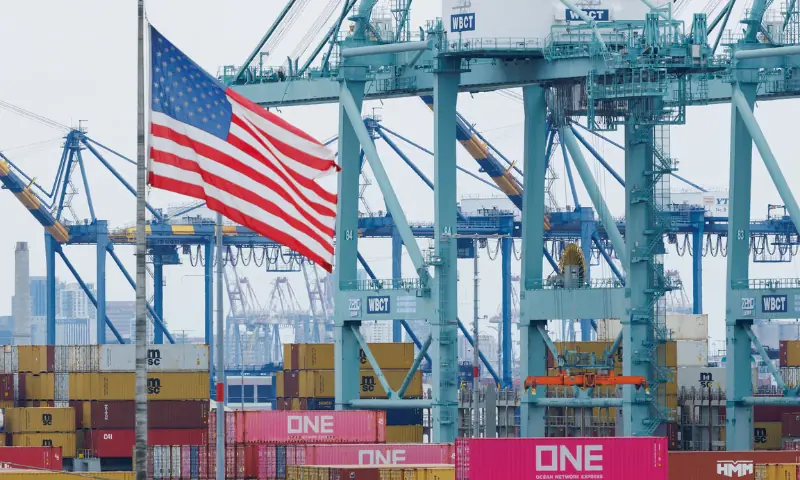
The Trump Administration on Friday imposed new tariffs of 10% on imports from Pakistan and several other trading partners, alongside duties of up to 12. 5% on goods from 60 economies including the European Union and China, citing what the Trump administration said was inadequate enforcement of bans on forced labour in global supply chains. The new duties replaced a temporary 10% global tariff that expired at 12: 01 am EDT (0401 GMT), allowing President Donald Trump’s administration to maintain a broad tariff regime after the US Supreme Court in February struck down his earlier “reciprocal” tariffs imposed under emergency powers. Announced in a Federal Register notice on Thursday, the tariffs cover about 99. 4% of US imports but exempt a range of products, including oil and gas, fertiliser, certain food items, aircraft and parts, critical minerals, and goods already subject to national security tariffs on steel, aluminium, copper and automobiles. The measures were imposed under Section 301 of the Trade Act of 1974, a legal authority that has previously survived court challenges and is viewed as less vulnerable than the emergency powers used for Trump’s earlier tariffs. “The United States has had a forced labour import ban for nearly a century, and rigorously enforces it. It’s well past time for our trading partners to do the same, ” US Trade Representative Jamieson Greer said in a statement. “Today’s action will begin to correct what is both a human rights abuse and a distortive trade practice to improve the welfare of workers everywhere. ” Greer has previously said countries that have negotiated trade agreements with Washington capping US tariff rates would not see the new forced labour duties push their overall tariff levels above those agreed ceilings. Pakistan was among the countries whose exports were assigned a 10% tariff. The same rate applies to imports from Argentina, Bangladesh, Britain, Cambodia, Canada, Ecuador, El Salvador, Guatemala, Honduras, India, Indonesia, Jordan, Malaysia, Mexico, Sri Lanka, and Trinidad and Tobago. The European Union, Japan, South Korea, Switzerland and Taiwan were assigned rates that, when combined with existing most-favoured-nation duties, amount to either 10% or 12. 5%. Another 38 countries, including China and Vietnam, were assigned a 12. 5% tariff. The administration has accused China of benefiting from forced labour involving Uyghur minorities, allegations Beijing has repeatedly denied. Administration officials have also indicated they intend to restore tariffs on Chinese goods to 20%, in line with a trade truce reached between Trump and Chinese President Xi Jinping in November 2025, but not exceed that level. Before Friday’s action, tariffs on Chinese imports had fallen to 10%, excluding separate first-term duties on industrial goods. The tariffs prompted criticism from several US trading partners. European Union foreign policy chief Kaja Kallas said the bloc viewed the move as unjustified, arguing the rationale did not reflect Europe’s labour standards. Australia and Brazil also described the tariffs as unwarranted and said they would seek their removal, while Norway said there was “no basis” for the measures. Canada, which earlier this week faced new US tariffs on $20 billion of its exports, said it would continue engaging with Washington on trade issues. Kelly Ann Shaw, a former White House trade adviser during Trump’s first term and now a partner at Akin Gump Strauss Hauer & Feld, said the measures were largely in line with expectations, although the administration expanded the list of exempt products. A senior administration official rejected suggestions that the tariffs were simply a replacement for the expiring global levy, saying the United States enforces stronger restrictions on goods made with forced labour than other countries, creating what Washington considers an uneven competitive environment. The official said the action also responds to bipartisan calls in Congress to eliminate forced labour from global supply chains. Ryan Majerus, a former Commerce Department official and trade lawyer at King & Spalding, said the tariffs could prove more difficult to challenge in court because Section 301 has withstood previous legal scrutiny and gives the administration broad authority to adjust duties after they are imposed.



GrowthPakistan brings you the latest news to keep an eye on Pakistan’s startup ecosystem. Business keeps you growing when you stay aware of your competitors' moves. GrowthPakistan offers Business, Tech, Global Tech, Global, Auto, and Startup News straight from industries all around the globe. This platform will help you identify upcoming opportunities not only in Pakistan but worldwide.
Email : growthpakistan@gmail.com
Whatsapp : +92320-9497079
© growthpakistan