


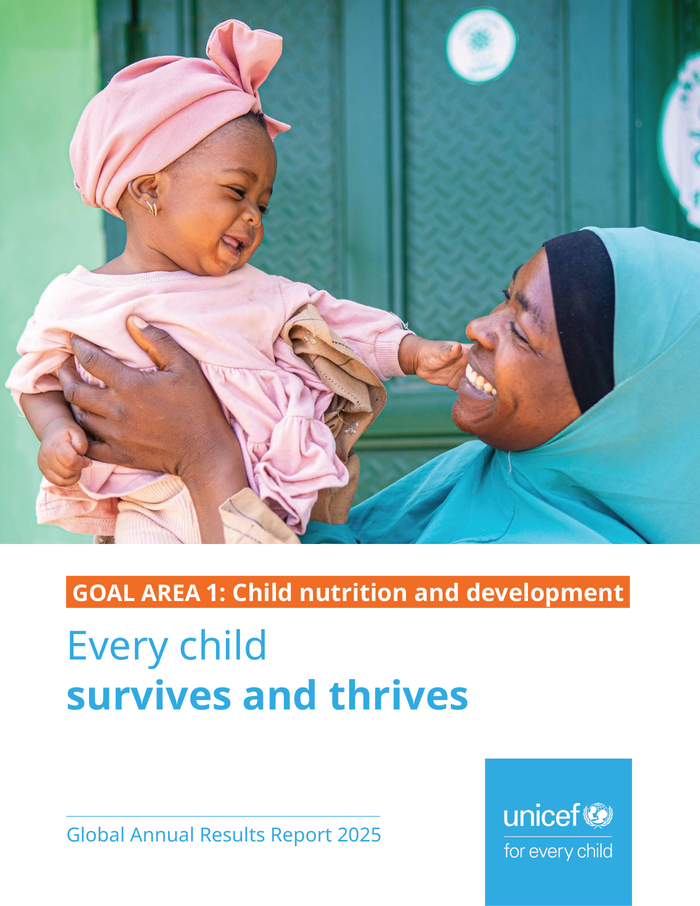
Country: World Source: UN Children’s Fund Please refer to the attached file. Highlights This Global Annual Results Report on Goal Area 1 of the UNICEF Strategic Plan 2022–2025 presents results on child nutrition and development. The overall aim of this work is to ensure that every child, including every adolescent, survives and thrives with access to a nutritious and diverse diet, nurturing care practices and essential supplies. UNICEF’s efforts to advance these outcomes supports achievement of the Sustainable Development Goals, particularly 2 and 3. In 2025, multiple global threats continued to jeopardize child nutrition and development: increasing inequities, rising food prices, conflict and climate crises, and the proliferation of ultra-processed foods and harmful food environments. Within this context, UNICEF aimed to strengthen national systems to deliver nutritious diets, essential services and nurturing care practices to give every child the best chance to survive and thrive across the life course. In the final year of its 2022–2025 Strategic Plan, UNICEF achieved all of its targets for child nutrition and development, with the following headline results: 423 million children under 5 years of age and their caregivers in 78 countries were reached with policies, programmes and services for the prevention of malnutrition in early childhood, exceeding the 2025 target of at least 300 million (baseline: 300 million children in 2021). 158 million school-age children and adolescents in 71 countries were reached with policies, programmes and services for the prevention of anaemia, overweight and other forms of malnutrition, exceeding the 2025 target of at least 90 million (baseline: 67 million children and adolescents in 2021). More than 255. 3 million children under 5 were screened for wasting in 54 countries; of these, 9 million children with severe wasting were admitted for life-saving treatment (baseline: 154. 4 million children screened and 5. 4 million treated in 2021).



GrowthPakistan brings you the latest news to keep an eye on Pakistan’s startup ecosystem. Business keeps you growing when you stay aware of your competitors' moves. GrowthPakistan offers Business, Tech, Global Tech, Global, Auto, and Startup News straight from industries all around the globe. This platform will help you identify upcoming opportunities not only in Pakistan but worldwide.
Email : growthpakistan@gmail.com
Whatsapp : +92320-9497079
© growthpakistan