

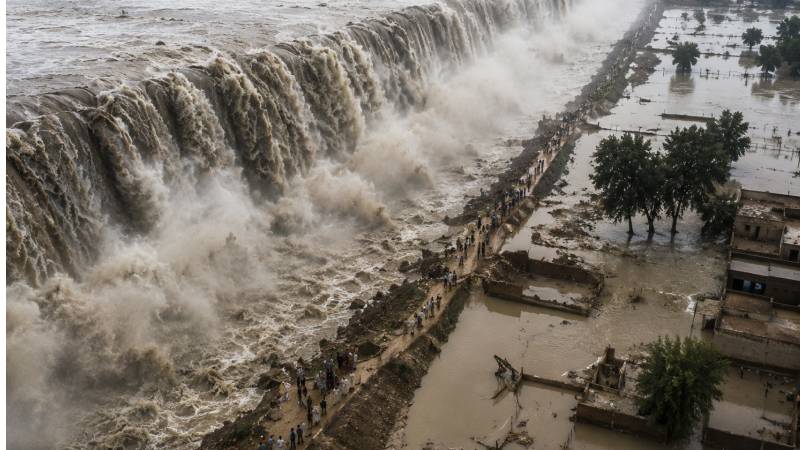
July is here. In Pakistan, that means one thing before it means anything else: water is coming. The monsoon is beginning, the rivers will swell and at some point in Gilgit-Baltistan, a glacial lake that has been filling slowly over months will get more meltwater than it is capable of holding. It will burst. The resulting water wall will sweep through valleys, burst bridges, knock down villages and all who had no fault in the carbon emissions that caused the melting of the ice in the first place. This is not a forecast. It is a pattern. It has happened in each monsoon season for years and it will happen this one. The folks in those valleys aren’t waiting to see if it does. They’re just waiting to see how bad it will be. More than 7, 000 glaciers are found in Pakistan, which is the largest concentration of glaciers outside the polar regions. They are our water towers; the source of the Indus River that supports the agriculture on which hundreds of millions of people depend. They are, quite literally, the backbone of our food security and the livelihoods of farming families who have never heard the word carbon emissions and never meaningfully contributed to them. Pakistan’s share in the global GHGs is less than 1%. However, the Hindu Kush-Himalayan region, the Third Pole, is undergoing an almost double rate of warming compared to the rest of the world. Glaciers are melting at an unprecedented rate, more than any other part of the world. Those who inhabit them are losing homes, crops, and lives. It’s not bad luck. That is injustice. The focus of most discussion on Pakistan’s glaciers is the drama. They are heart-wrenching and true. But there’s another slow catastrophe going on at the same time as the flooding; the loss of freshwater storage that’s already been built up over thousands of years and it can’t be recovered. Glaciers act as a water reservoir in winter and gradually release water during the summer, when rainfall is no longer sufficient to maintain the river flow. That is why Pakistan’s agricultural calendar has been working well for centuries. This buffer is lost as glaciers melt. In the short term, the melting is faster, which leads to more water flowing through the rivers and causes the floods that are observed today. This is a false abundance, however. After the ice melts, the summer flows will cease, and the Indus will carry much less water than is required by irrigation systems in the State of Punjab and Sindh. Before And After The Water: A Photo Story Of Flood Survival In Thar Those who inhabit them are losing homes, crops, and lives. It’s not bad luck. That is injustice. We are not just observing floods. We’re witnessing the depletion of our long-term water supply, live. All carbon dioxide released globally is responsible for warming that is causing melting of Pakistan’s ice. The countries that are losing their glaciers are not the ones most responsible for emissions. A farmer in Hunza whose irrigation channel was washed out by a glacial lake outburst flood was not responsible for it. The child in the mountain village who had his school washed away has not yet lived long enough to leave a carbon footprint to measure. In 2022, floods (in part due to increased glacial melt) displaced tens of millions of people and resulted in $30 billion in damages. That destruction was caused by emissions that Pakistan did not emit. This is what international climate negotiations now refer to as Loss and Damage: climate impacts which are so great and irreversible that they cannot just be adapted to. They have to be remunerated. The case of Pakistan’s glaciers is a textbook example of the impacts of climate change. There has been some improvement; more than 200 early warning systems have been installed in the most vulnerable valleys of Gilgit-Baltistan and Khyber Pakhtunkhwa regions by the Green Climate Fund, which is a tremendous achievement and has already saved lives. However, early warning systems alert communities to when to run. They don’t stop the floods. They don’t replenish the ice. They don’t make up for the lost crop, the washed away house, or the lost year of school. Being a climate activist has shown me that the strength of our negotiating position in international forums can make a real difference in securing meaningful climate action. However, vulnerability isn’t the only condition. Pakistan must come to every climate negotiation with definite projects and definite demands, not with appeals to conscience that are accepted once and forgotten. International climate finance for Pakistan is not charity. It is a debt and Pakistan should start collecting it. Because the melting of our glaciers is not a natural disaster, it’s due to decisions taken in capitals and boardrooms far away from Gilgit-Baltistan, by people who have never seen the Karakoram and will never have to run from a glacial lake outburst flood. Meet The Conservators Behind The Lahore Fort Picture Wall Project
Water Wall: The Flood We Didn’t Earn

RELATED ARTICLES


