


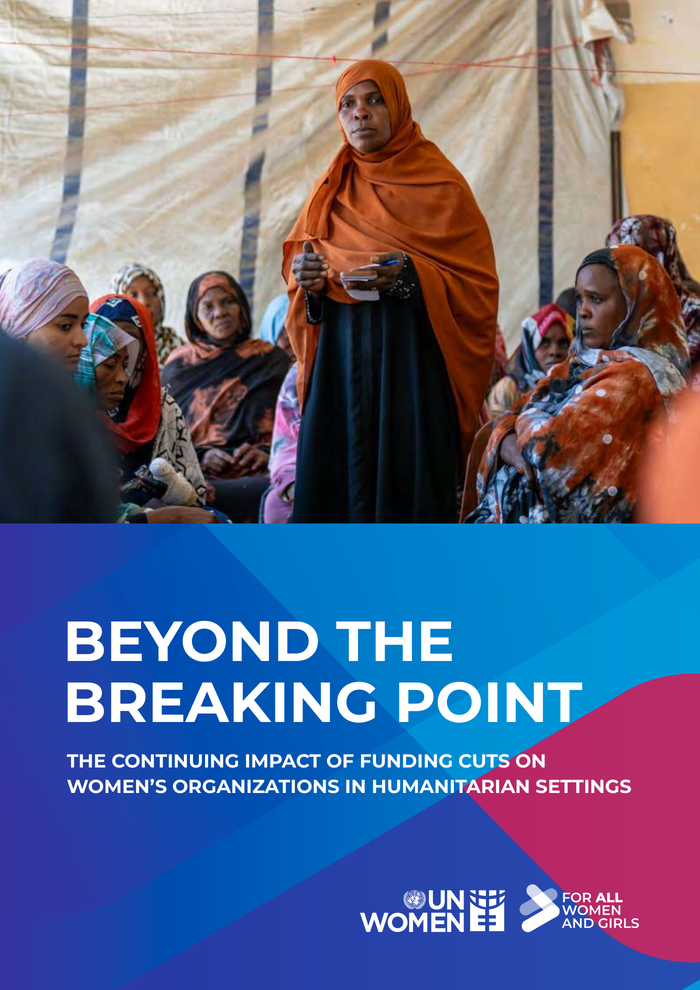
Country: World Source: UN Women Please refer to the attached file. The publication presents new evidence on how sustained reductions in humanitarian funding are affecting women-led and women’s rights organizations—and the women and girls who depend on them. Building on UN Women’s 2025 assessment of the initial impacts of funding reductions, the report draws on a global survey of 855 predominantly local and national women-led and women’s rights organizations operating across 52 countries and contexts, complemented by interviews with women civil society leaders and crisis-affected women. The findings show that humanitarian needs continue to rise while organizations are being forced to reduce services, lay off staff, and scale back their geographic reach. As a result, women and girls face declining access to essential services, including gender-based violence prevention and response, safe spaces, psychosocial support, and livelihoods assistance, while protection risks continue to increase. The report also highlights the growing financial and operational pressures facing women-led organizations, the erosion of core organizational systems, and the implications for gender equality, localization, and humanitarian reform. The report concludes with priority actions for donors, humanitarian actors, and development partners to protect essential services, strengthen women-led and women’s rights organizations, reform humanitarian financing, and advance more equitable, locally led, and gender-responsive humanitarian action.



GrowthPakistan brings you the latest news to keep an eye on Pakistan’s startup ecosystem. Business keeps you growing when you stay aware of your competitors' moves. GrowthPakistan offers Business, Tech, Global Tech, Global, Auto, and Startup News straight from industries all around the globe. This platform will help you identify upcoming opportunities not only in Pakistan but worldwide.
Email : growthpakistan@gmail.com
Whatsapp : +92320-9497079
© growthpakistan