


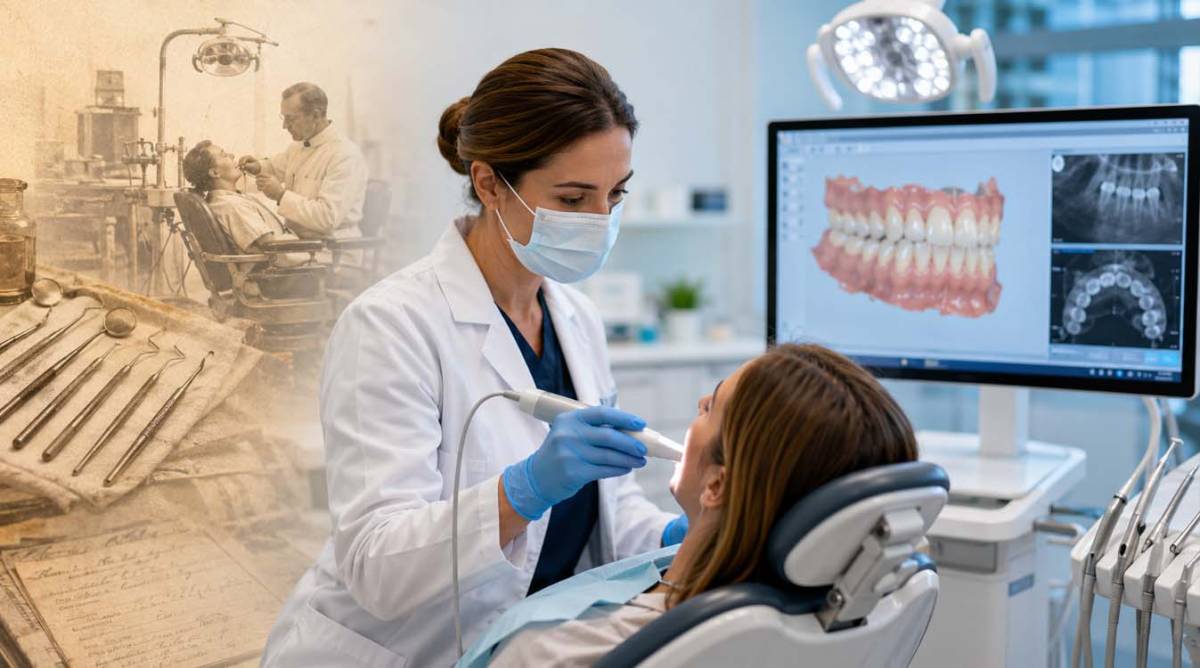
CHICAGO: The American Dental Association (ADA) is marking 100 years of dental standards, celebrating a century of work that has quietly influenced nearly every aspect of modern dentistry—from the materials used to restore teeth to the safety of dental instruments, infection prevention protocols and, increasingly, the development of artificial intelligence and digital technologies. While dental standards often remain invisible to patients, experts say they provide the scientific foundation that allows dentists worldwide to rely on safe, effective and consistently manufactured products while ensuring that innovation reaches clinical practice without compromising patient care. The milestone traces its origins to 1926, when the ADA published its first official dental standard for amalgam following research initiated during the First World War. At the time, the US military faced widespread dental problems among soldiers, prompting the US Army’s Surgeon General to commission research into dental materials through the National Bureau of Standards, now known as the National Institute of Standards and Technology (NIST). That work laid the foundation for stronger, longer-lasting restorative materials and eventually evolved into one of the world’s most influential dental standards programmes. Over the past century, the programme has expanded far beyond restorative materials. Today, more than 500 volunteer experts from clinical dentistry, academia, industry and government participate in over 100 technical working groups responsible for developing standards covering restorative and orthodontic materials, prosthodontics, dental implants, infection prevention, instruments, oral hygiene products, dental equipment, computer-aided design and manufacturing (CAD/CAM), forensic odontology, health informatics, artificial intelligence and secure data exchange. According to ADA Executive Director Dr Nader A. Nadershahi, the trusted practice of dentistry depends on rigorous standards that establish benchmarks for safety, quality and effectiveness before products and technologies reach patients. “The trusted art and science of dentistry would not be possible without the rigor of ADA standards supporting the safety, quality and efficacy benchmarks that our profession demands, and the public relies upon,” he said while marking the programme’s centennial. Experts note that although standards rarely attract public attention, they influence virtually every stage of dental care. They determine how restorative materials should perform, how infection control products are evaluated, how dental instruments are tested, how implant systems are assessed and how digital technologies communicate safely with one another. As dentistry becomes increasingly technology-driven, these standards are also helping establish reliable frameworks for artificial intelligence, digital imaging, electronic health records and secure exchange of patient information. The programme gained additional significance in 2000, when the ADA became an American National Standards Institute (ANSI)-Accredited Standards Developer, allowing its standards to be formally recognised as American National Standards through an open, consensus-based process involving multiple stakeholders rather than a single organisation or individual. Dr Kenneth Aschheim, Chair of the ADA Standards Program Oversight Committee and a volunteer for two decades, said the programme’s credibility stems from its consensus-based approach, where experts representing different perspectives collectively develop standards that balance scientific evidence, clinical practicality and public safety. The impact of these standards extends beyond dental clinics. The US Food and Drug Administration (FDA) recognises many consensus standards, including those developed by the ADA, when evaluating dental products for the American market. Manufacturers whose products comply with recognised standards can often navigate regulatory review more efficiently because testing methods, safety criteria and performance benchmarks have already been independently established. ADA leaders say this process not only supports patient safety but also accelerates innovation by providing manufacturers with clear technical requirements while maintaining high standards of quality and effectiveness. The influence of ADA standards also reaches well beyond the United States. The association represents the official US position within the International Organization for Standardization (ISO) Technical Committee 106 on Dentistry, helping shape international standards governing dental materials, equipment and technologies used around the world. Participation in ISO standard-setting allows American clinical expertise to contribute to global requirements while also facilitating international trade in dental products. Harmonised standards reduce duplication in testing and documentation, improve interoperability between technologies and provide dentists with access to a wider range of safe, high-quality products developed according to internationally accepted specifications. The ADA also contributes to ISO Technical Committee 215 on Health Informatics, supporting international efforts to improve secure exchange of electronic patient information as healthcare systems become increasingly digital and interconnected. Looking ahead, the organisation says future standards will increasingly focus on rapidly evolving technologies such as artificial intelligence, 3D printing, digital workflows and standardised health data exchange, while continuing work on longstanding essentials including dental materials, amalgam separators, toothbrushes, toothpaste and clinical instruments. Dr Jennifer Thompson, Chair of the ADA Council on Dental Practice, said the centennial provides an opportunity not only to celebrate a century of progress but also to recognise the continuing importance of evidence-based standards in improving patient outcomes and strengthening public confidence in dentistry. As digital technologies reshape oral healthcare worldwide, experts say the principles that guided the first dental standards a century ago—scientific evidence, safety, reliability and professional consensus—remain just as relevant today. Whether supporting traditional restorative materials or emerging artificial intelligence systems, dental standards continue to operate quietly behind the scenes, helping ensure that innovation advances responsibly while protecting patients and supporting clinicians across the global dental profession. Stay informed, stay alert! pk/07-Jul-2026/ada-marks-100-years-of-dental-standards-shaping-patient-safety-worldwide” target=”_blank” rel=”nofollow noopener noreferrer”>Read full story on Dental News



GrowthPakistan brings you the latest news to keep an eye on Pakistan’s startup ecosystem. Business keeps you growing when you stay aware of your competitors' moves. GrowthPakistan offers Business, Tech, Global Tech, Global, Auto, and Startup News straight from industries all around the globe. This platform will help you identify upcoming opportunities not only in Pakistan but worldwide.
Email : growthpakistan@gmail.com
Whatsapp : +92320-9497079
© growthpakistan