

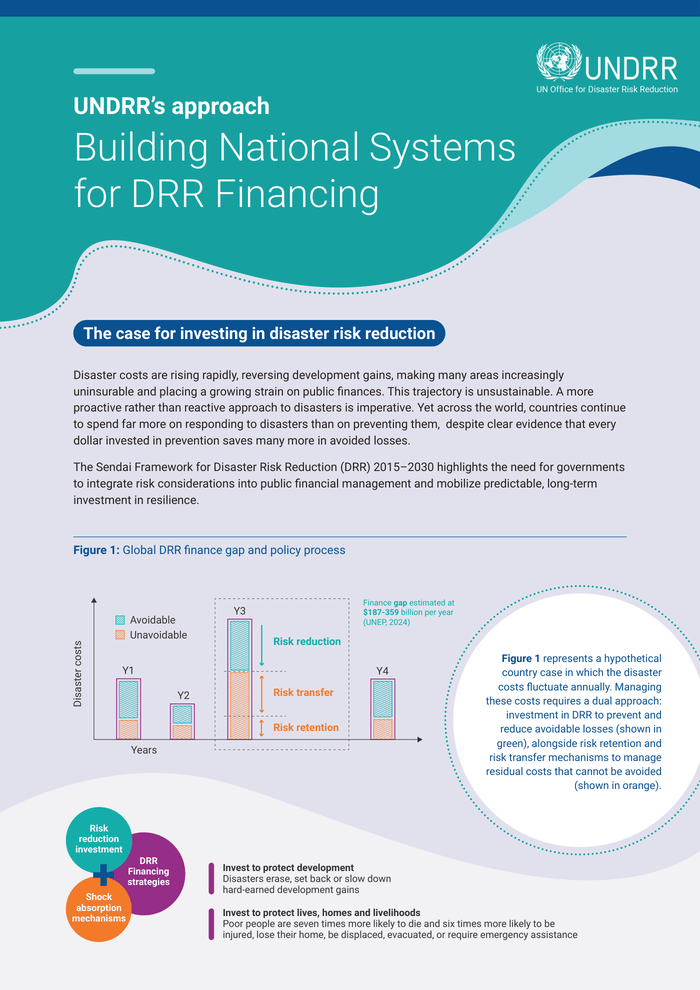
Countries: World, Guatemala, Madagascar Source: UN Office for Disaster Risk Reduction Please refer to the attached file. Disaster costs are rising rapidly, reversing development gains, making many areas increasingly uninsurable and placing a growing strain on public finances. This trajectory is unsustainable. A more proactive rather than reactive approach to disasters is imperative. Yet across the world, countries continue to spend far more on responding to disasters than on preventing them, despite clear evidence that every dollar invested in prevention saves many more in avoided losses. The Sendai Framework for Disaster Risk Reduction (DRR) 2015–2030 highlights the need for governments to integrate risk considerations into public financial management and mobilize predictable, long-term investment in resilience. From UNDRR’s perspective, DRR financing, adopts a morecomprehensive approach. In addition to shock absoprtion, it supports investment in risk reduction before disasters occur, including resilient infrastructure, early warning systems and risk-informed urban planning. This dual approach helps governments reduce losses, avoid long-term economic scarring and protect development gains. UNDRR works with governments, United Nations partners, international and national financial institutions and other stakeholders to help countries develop national DRR financing systems.
World: Building National Systems for DRR Financing

RELATED ARTICLES


