

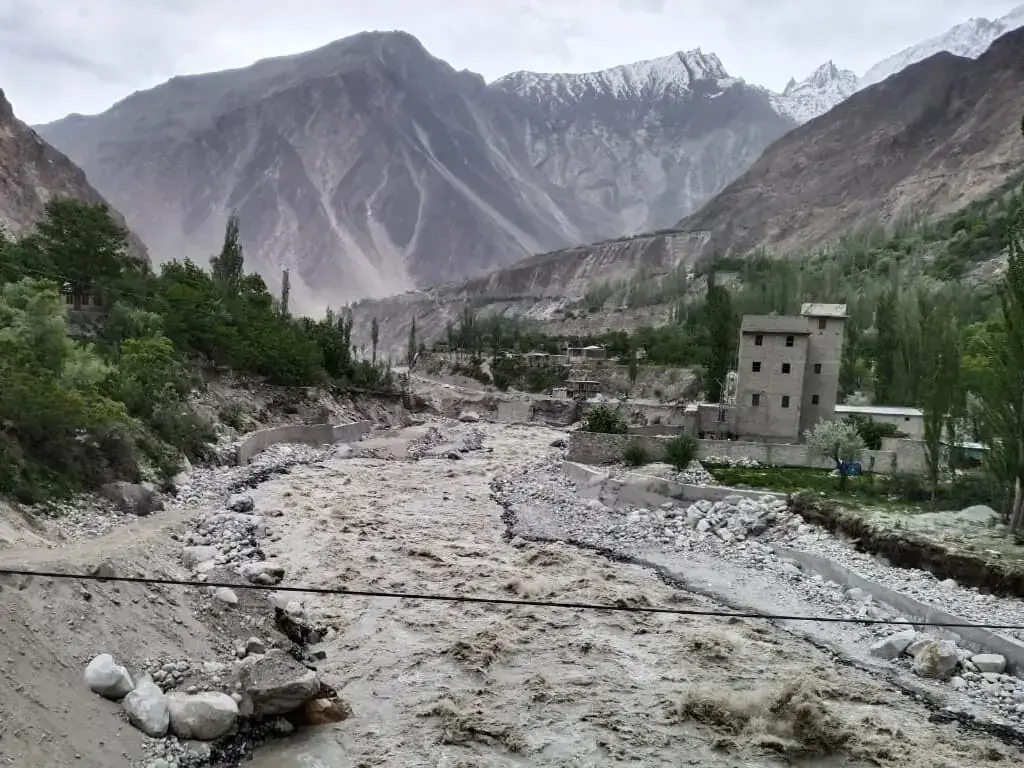
The National Disaster Management Authority (NDMA) has issued a high-alert warning for Glacial Lake Outburst Floods (GLOF) across Gilgit-Baltistan and Khyber Pakhtunkhwa, as soaring temperatures are expected to persist until the first week of July 2026. The significant warming trend is projected to substantially accelerate snow and ice melt in glaciated valleys. Consequently, river and stream water levels are expected to remain exceptionally high, existing glacial lakes may rapidly expand, and new lakes are likely to form due to the high volume of meltwater. In response to the prevailing situation, the NDMA has directed all relevant federal ministries, provincial governments, the disaster management authorities of KP and GB (PDMA and GBDMA), district administrations, and municipal bodies to implement strict precautionary measures. Provincial and district authorities have been advised to undertake proactive monitoring of vulnerable GLOF sites, conduct evacuation drills in at-risk communities, and ensure safe evacuation shelters are fully stocked and operational. All civic agencies and emergency services, including Rescue 1122, the Fire Brigade, and Civil Defence, have been placed on high alert with instructions to ensure the round-the-clock availability of personnel and equipment. The NDMA has also called for close coordination with the National Highway Authority (NHA), Frontier Works Organisation (FWO), and Communications and Works (C&W) departments to pre-position heavy machinery for immediate road restoration in the event of blockages or landslides. Traffic police and law enforcement agencies have been tasked with managing and redirecting traffic away from vulnerable zones. Furthermore, the authority has launched a comprehensive public awareness campaign urging residents in low-lying areas to exercise extreme caution and monitor local streams for sudden changes in water colour or unusual grinding sounds. Locals are advised to secure livestock on higher ground and coordinate closely with community-based disaster management committees. Tourists visiting the northern regions have been advised to avoid trekking in glacier-prone areas, refrain from taking photographs or videos near glaciers, and strictly avoid going close to dangerous glacier sites to prevent any untoward incidents. In cases of heightened risk, authorities may coordinate the controlled breaching of vulnerable glacial lakes to prevent sudden, catastrophic outburst events.
NDMA issues Glacial Lake Outburst Floods alert for Khyber Pakhtunkhwa, GB

RELATED ARTICLES


