


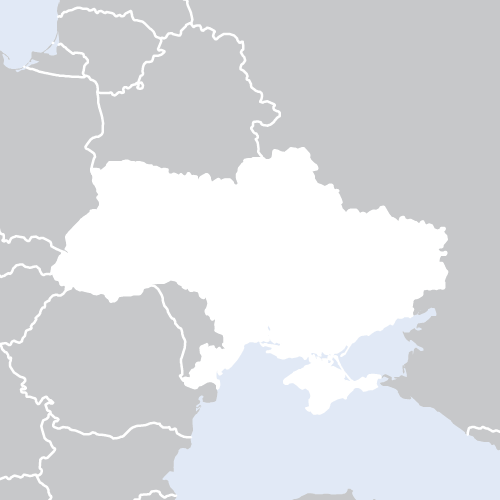
Country: Ukraine Source: International Atomic Energy Agency Repairs have been completed on a key power line and other energy infrastructure vital for nuclear safety at the Zaporizhzhya Nuclear Power Plant (ZNPP), as part of efforts to strengthen its access to the electricity grid and help reduce the risk of a nuclear accident during the military conflict, IAEA Director General Rafael Mariano Grossi said today. The technically complex repairs, preceded by extensive de-mining, were carried out on the frontline under the protection of a localized ceasefire mediated by the IAEA. Agency teams monitored the work in challenging conditions, including nearby drone activity and the sound of military activity in the area. “Of the six temporary ceasefires that we have negotiated since late last year to help protect nuclear safety at the Zaporizhzhya Nuclear Power Plant, this was the most challenging to implement. It required several months of delicate negotiations, followed by mine clearance and repairs on high pylons across the Dnipro River. The IAEA monitored these activities on the ground to confirm they were carried out as agreed, ” Director General Grossi said. “It is an important step for nuclear safety at the plant, where reliable access to off-site power remains essential as all six reactors are in shutdown, ” he added. “Both sides worked constructively with us to enable the repairs to proceed. Despite the many military and technical challenges, this demonstrates that concrete progress remains possible, even during a large-scale war. We will continue our efforts to reduce the ever-present danger of a nuclear accident. ” The ceasefire enabled repairs at two separate locations, both of them essential components of the ZNPP’s energy infrastructure: the 750 kilovolt (kV) Dniprovska power line, which has been disconnected since March this year, and the switchyard of the Zaporizhzhya Thermal Power Plant (ZTPP), which helps supply electricity to the ZNPP through the back-up 330 kV Ferosplavna-1 line. The Ferosplavna-1 line is currently the only line available to the ZNPP and has been repeatedly disconnected in recent weeks. During the de-mining and repairs of the 750 kV Dniprovska power line, the IAEA team based at the ZNPP observed the activities on the plant side of the frontline, while another Agency team was deployed on the opposite side of the Dnipro River to monitor developments from there. This work focused on several high pylons across the waterway, where the transmission line runs up to 100 metres above the water. At the ZTPP, repairs were completed both on switchyard equipment and on a back-up transmission line connecting the Ferosplavna-1 line to the plant, making it more robust. However, the 750 kV Dniprovska line has not yet been brought back into operation because of extensive damage to its connecting substation, located more than 100 kilometres northwest of the ZNPP. The substation was reportedly damaged during military activity in late May, and IAEA staff experts who visited the facility this week observed severe damage to essential equipment. Repair efforts are not expected to be completed in the near term, but are on-going, and the Agency will continue to monitor the situation closely. “The line has been repaired, but it still needs to be brought back into operation, ” Director General Grossi said. “Repeated damage to the electrical infrastructure on which nuclear power plants depend continues to create serious nuclear safety and security risks. I once again call for maximum military restraint around all nuclear facilities and the power infrastructure they require. ” Elsewhere in Ukraine, IAEA teams continued to report military activity near nuclear facilities. The South Ukraine Nuclear Power Plant (NPP) informed the Agency that 11 drones had been detected in its monitoring area on Sunday, some as close as 3. 5 kilometres from the site. During this period, the IAEA team at the plant heard gunfire and the sound of drones. The Chornobyl site reported detecting ten drones in its monitoring area over the past week, as well as three fire spots in the exclusion zone caused by falling drone impacts. Under the IAEA’s nuclear safety and security assistance programme for Ukraine, personal electronic dosimeters were delivered to the State Specialized Enterprise “Central Enterprise for Radioactive Waste Management”, mass decontamination systems to the State Emergency Service of Ukraine, and microwave detectors for physical protection purposes to the Chornobyl NPP. These deliveries were made possible with financial contributions from Canada, Japan and the United Kingdom. Under the medical assistance programme, the National Research Center for Radiation Medicine, Hematology and Oncology, National Academy of Medical Sciences of Ukraine received digital oscilloscopes and uninterruptible power supply systems. The delivery was made possible with funds from Japan and the European Union.



GrowthPakistan brings you the latest news to keep an eye on Pakistan’s startup ecosystem. Business keeps you growing when you stay aware of your competitors' moves. GrowthPakistan offers Business, Tech, Global Tech, Global, Auto, and Startup News straight from industries all around the globe. This platform will help you identify upcoming opportunities not only in Pakistan but worldwide.
Email : growthpakistan@gmail.com
Whatsapp : +92320-9497079
© growthpakistan