


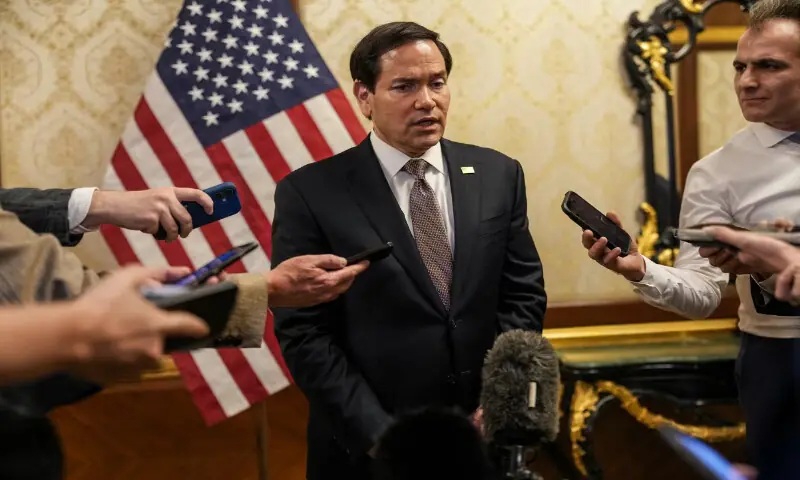
The United States and Iran have agreed to establish a direct military deconfliction channel involving officials from the US Central Command (CENTCOM) and Iran’s Islamic Revolutionary Guard Corps (IRGC) in Qatar, marking an unprecedented step between two longtime adversaries despite Washington’s designation of the IRGC as a Foreign Terrorist Organisation. US Vice President JD Vance disclosed the arrangement in an interview with British news outlet UnHerd, published on Thursday, saying the mechanism was one of the key outcomes of US-Iran negotiations held in Switzerland earlier this week. “One of the things we wanted to come out with was a channel on the Iranian side for reducing conflict, which we did, ” Vance said. “They were like, ‘OK, fine, we’ll send somebody from the IRGC to go hang out in Doha with somebody from CENTCOM, ’ and that’s how we’re going to settle a lot of these disputes. ” The revelation is notable because it would bring US military officials into direct contact with the IRGC, which Washington designated a terrorist organisation in 2019. It also comes only weeks after US and Israeli forces reportedly targeted IRGC personnel during the recent conflict with Iran. Although US officials had previously confirmed that contact with the IRGC had been established during negotiations following the recent conflict, Vance’s latest comments suggest those contacts will now be at the military level. Vance had announced before leaving Switzerland that Washington and Tehran had agreed to establish two new mechanisms — one to help ensure freedom of navigation through the Strait of Hormuz and another to maintain a regional ceasefire, particularly in Lebanon. It remains unclear whether the CENTCOM-IRGC coordination hub in Doha will oversee one or both of those arrangements. The Lebanon-related mechanism has already drawn criticism from Israel, which opposes any formal Iranian role in discussions concerning Lebanon. In response, Washington has also announced a separate deconfliction framework involving Israeli and Lebanese military officials alongside CENTCOM to address ceasefire violations in real time, although it remains unclear how the two mechanisms will operate alongside each other. Analysts say the new arrangement reflects Washington’s recognition that Tehran’s influence is critical to maintaining regional stability, particularly in the Strait of Hormuz and through its ties with Hezbollah. The decision has also raised legal and operational questions. Although US officials had previously confirmed that contact with the IRGC had been established during negotiations following the recent conflict, Vance’s latest comments suggest those contacts are now moving beyond diplomatic channels to direct military-to-military engagement. The IRGC combines military and intelligence functions and is Iran’s most powerful security institution, leading some observers to question why CENTCOM, rather than the CIA or the US State Department, will serve as Washington’s primary interlocutor. Traditionally, sensitive contacts between the United States and hostile states have been conducted discreetly through intelligence agencies rather than the military. However, analysts said the public nature of the new arrangement may have made direct military-to-military engagement the more practical option. Some also argued that regular communication between military officials could be more effective than political dialogue in preventing misunderstandings and reducing the risk of future conflict. CENTCOM commander Gen. Brad Cooper has previously participated in discussions related to Iran, though those engagements involved Iranian civilian diplomats rather than IRGC officials. Vance also said the agreement Washington ultimately seeks would differ substantially from the 2015 nuclear deal, arguing that it would include a far stricter inspection regime and eliminate Iran’s stockpile of enriched uranium — conditions that Tehran has repeatedly rejected. The vice president further claimed that the framework had encouraged unprecedented engagement between Iran and Gulf Arab states, including discussions between the United Arab Emirates and the IRGC on potential economic cooperation. Regional analysts, however, contend that the recent diplomatic outreach between Iran and its Gulf neighbours stems largely from concerns that the United States has become a less reliable security partner, prompting Arab states to pursue improved ties with Tehran to safeguard their own interests.



GrowthPakistan brings you the latest news to keep an eye on Pakistan’s startup ecosystem. Business keeps you growing when you stay aware of your competitors' moves. GrowthPakistan offers Business, Tech, Global Tech, Global, Auto, and Startup News straight from industries all around the globe. This platform will help you identify upcoming opportunities not only in Pakistan but worldwide.
Email : growthpakistan@gmail.com
Whatsapp : +92320-9497079
© growthpakistan