


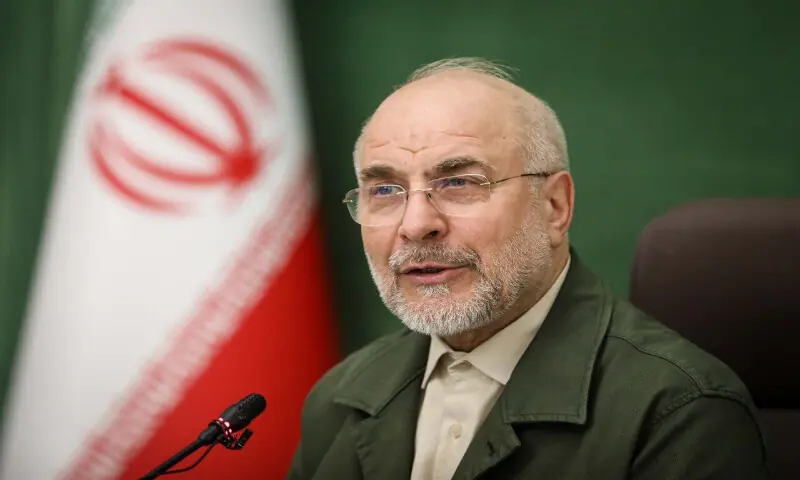
Iran’s parliamentary speaker and chief negotiator Mohammad Bagher Qalibaf has said the strategic Strait of Hormuz will be administered by Iran under international law, following a newly reached agreement with the US. Speaking to Iranian media upon returning from four-party talks in Switzerland, Qalibaf said the recent understanding between Iran and the US had “fundamentally changed” conditions in the waterway linking the Persian Gulf to the Arabian Sea. The Strait of Hormuz will not revert to its pre-war arrangement, he added. “Everyone should know that the administration of the Strait of Hormuz will never go back to the way it was before the war, ” he said, adding that Iran would oversee the route while still observing international regulations. The Strait of Hormuz is one of the world’s most critical oil transit chokepoints, and any shift in its governance or security arrangements carries major geopolitical implications. US-Iran memorandum Qalibaf referred to the 14-point memorandum of understanding signed on June 18 by Iranian President Masoud Pezeshkian and US President Donald Trump, and said the agreement includes a 60-day negotiation window aimed at reaching a comprehensive final settlement, during which commercial shipping through the Strait of Hormuz would be facilitated under Iranian arrangements. Iran would ensure safe passage of vessels through the waterway from the Persian Gulf to the Sea of Oman, with temporary fee waivers during the interim period, according to his description of the document. Sanctions relief and financial claims Qalibaf also claimed that sanctions targeting Iran’s oil exports, petrochemicals, banking, insurance, and transport sectors had been eased temporarily under the agreement. He stated that the release of Iran’s frozen Iranian funds —including two tranches of $6 billion — was finalised during the Switzerland talks. These claims have not been independently verified. ‘Negotiation as continuation of conflict’ Rejecting any distinction between military and diplomatic efforts, Qalibaf described negotiations as “a continuation of struggle, ” saying Iran’s battlefield gains must be consolidated through political and legal channels. He said the Swiss talks were a direct extension of prior military developments, and argued that Iran’s combined use of “hard and soft power” had produced strategic gains that would otherwise have been costly to achieve through force alone. Strong message to US Qalibaf also emphasised that Iran does not fully trust the United States and said the agreement includes safeguards requiring immediate reciprocal actions from Washington. He further claimed that US President Trump had to revise a public statement about the Strait of Hormuz following Iran’s negotiating position, terming it evidence of Iranian leverage. “If problems arise in implementation, we can respond both with missiles and through negotiations, ” he said. Lebanon situation Addressing Lebanon, Qalibaf said hostilities had eased during the negotiation period and suggested displaced civilians were returning to their homes. He reiterated Iran’s support for Lebanon’s sovereignty and territorial integrity. He warned that any violation or failure to implement the agreement could be met with both military and diplomatic responses.



GrowthPakistan brings you the latest news to keep an eye on Pakistan’s startup ecosystem. Business keeps you growing when you stay aware of your competitors' moves. GrowthPakistan offers Business, Tech, Global Tech, Global, Auto, and Startup News straight from industries all around the globe. This platform will help you identify upcoming opportunities not only in Pakistan but worldwide.
Email : growthpakistan@gmail.com
Whatsapp : +92320-9497079
© growthpakistan