


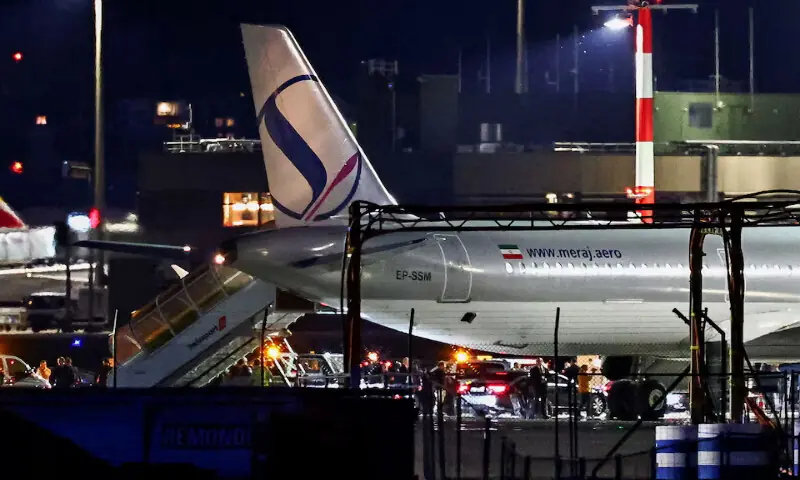
As a follow-up to the signing of the Islamabad Memorandum of Understanding, technical-level talks between the US and Iran will be held in Bürgenstock, Switzerland, on Sunday. Representatives of the United States and Iran, along with mediators from Pakistan and Qatar, will participate in the discussions. Pakistan will continue to facilitate the process in its role as mediator, with a view to advancing the understandings reached under the Islamabad Memorandum of Understanding. Meanwhile, US Vice President JD Vance arrived in Switzerland on Sunday to help formally launch negotiations with Iranian officials aimed at advancing a fragile interim agreement to curb Tehran’s nuclear programme and end the war in Iran. Iranian state media showed senior Iranian negotiators arriving in Switzerland. Iran’s delegation is led by parliamentary Speaker Mohammad Bagher Qalibaf and includes Foreign Minister Abbas Araghchi and other senior economic and energy officials. Talking to reporters before departure, Vance said he expected to stay in Switzerland for “a day or two, ” expressing cautious optimism about progress on both Iran’s nuclear programme and a potential ceasefire in southern Lebanon. He also confirmed that senior US negotiators Jared Kushner and Steve Witkoff were already present. Iranian Foreign Ministry spokesperson Esmail Baghaei said negotiations toward a final agreement would proceed only if key commitments are met, warning that otherwise the memorandum of understanding could collapse. The diplomatic push comes after Iran announced it had closed the Strait of Hormuz in response to Israeli strikes in Lebanon, warning that negotiations could fail if hostilities do not stop. The move drew a sharp rebuttal from the United States, which disputed Tehran’s claim and said maritime traffic through the strategic waterway was continuing under US monitoring. US President Donald Trump responded with a warning of potential American tolls on shipping through the Strait if a final agreement with Iran is not reached within 60 days. He said the proposed revenue would compensate for “services rendered as the Guardian Angel to the countries of the Middle East. ” The interim arrangement currently guarantees toll-free passage for a 60-day negotiation period. Despite the tensions, technical-level talks are set to begin on Sunday in Switzerland, with Pakistan acting as a key mediator and Qatar also participating. The Strait of Hormuz has again emerged as a flashpoint. Iran’s joint military command said its closure was in response to what it called a US breach of commitments by failing to end the war. The United States rejected that claim, with US Central Command stating that Iran does not control the waterway and that commercial shipping continues uninterrupted. Officials said 55 merchant vessels carrying more than 17 million barrels of oil passed through the strait on Saturday. Global markets have reacted with concern as uncertainty grows around the agreement, which has already allowed the limited resumption of Iranian oil exports and the unfreezing of billions in Iranian assets.



GrowthPakistan brings you the latest news to keep an eye on Pakistan’s startup ecosystem. Business keeps you growing when you stay aware of your competitors' moves. GrowthPakistan offers Business, Tech, Global Tech, Global, Auto, and Startup News straight from industries all around the globe. This platform will help you identify upcoming opportunities not only in Pakistan but worldwide.
Email : growthpakistan@gmail.com
Whatsapp : +92320-9497079
© growthpakistan