


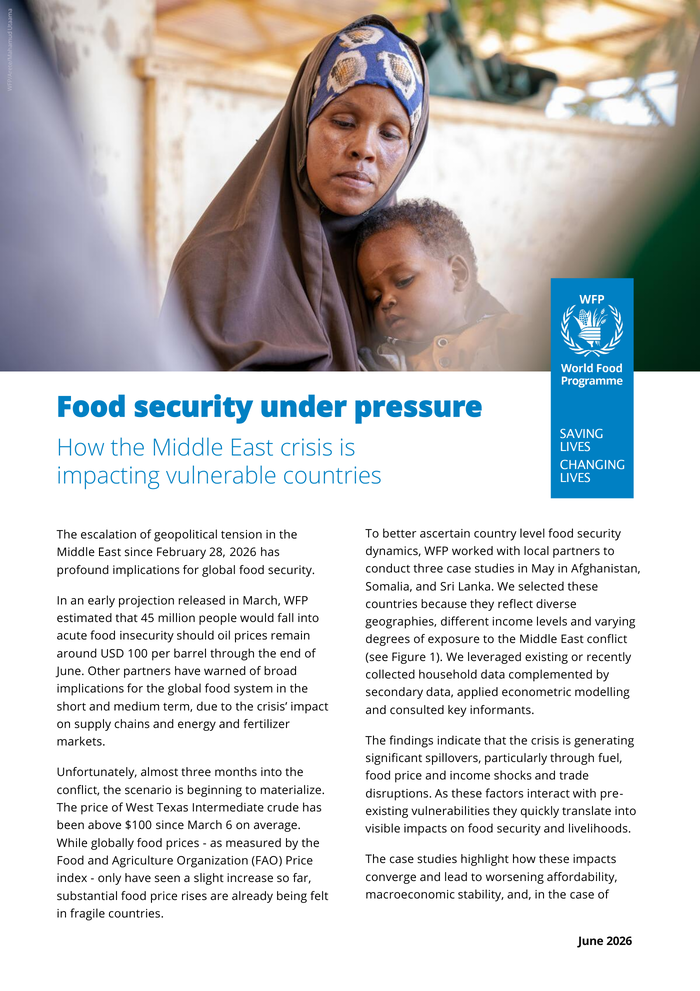
Countries: Afghanistan, Somalia, Sri Lanka Source: World Food Programme Please refer to the attached file. The escalation of geopolitical tension in the Middle East since February 28, 2026 has profound implications for global food security. In an early projection released in March, WFP estimated that 45 million people would fall into acute food insecurity should oil prices remain around USD 100 per barrel through the end of June. Other partners have warned of broad implications for the global food system in the short and medium term, due to the crisis’ impact on supply chains and energy and fertilizer markets. Unfortunately, almost three months into the conflict, the scenario is beginning to materialize. The price of West Texas Intermediate crude has been above $100 since March 6 on average. While globally food prices – as measured by the Food and Agriculture Organization (FAO) Price index – only have seen a slight increase so far, substantial food price rises are already being felt in fragile countries. To better ascertain country level food security dynamics, WFP worked with local partners to conduct three case studies in May in Afghanistan, Somalia, and Sri Lanka. We selected these countries because they reflect diverse geographies, different income levels and varying degrees of exposure to the Middle East conflict (see Figure 1). We leveraged existing or recently collected household data complemented by secondary data, applied econometric modelling and consulted key informants. The findings indicate that the crisis is generating significant spillovers, particularly through fuel, food price and income shocks and trade disruptions. As these factors interact with preexisting vulnerabilities they quickly translate into visible impacts on food security and livelihoods. The case studies highlight how these impacts converge and lead to worsening affordability, macroeconomic stability, and, in the case of Afghanistan and Somalia, humanitarian outcomes. These impacts are expected to intensify in the coming months, even if the crisis in the Middle East de-escalates.



GrowthPakistan brings you the latest news to keep an eye on Pakistan’s startup ecosystem. Business keeps you growing when you stay aware of your competitors' moves. GrowthPakistan offers Business, Tech, Global Tech, Global, Auto, and Startup News straight from industries all around the globe. This platform will help you identify upcoming opportunities not only in Pakistan but worldwide.
Email : growthpakistan@gmail.com
Whatsapp : +92320-9497079
© growthpakistan