


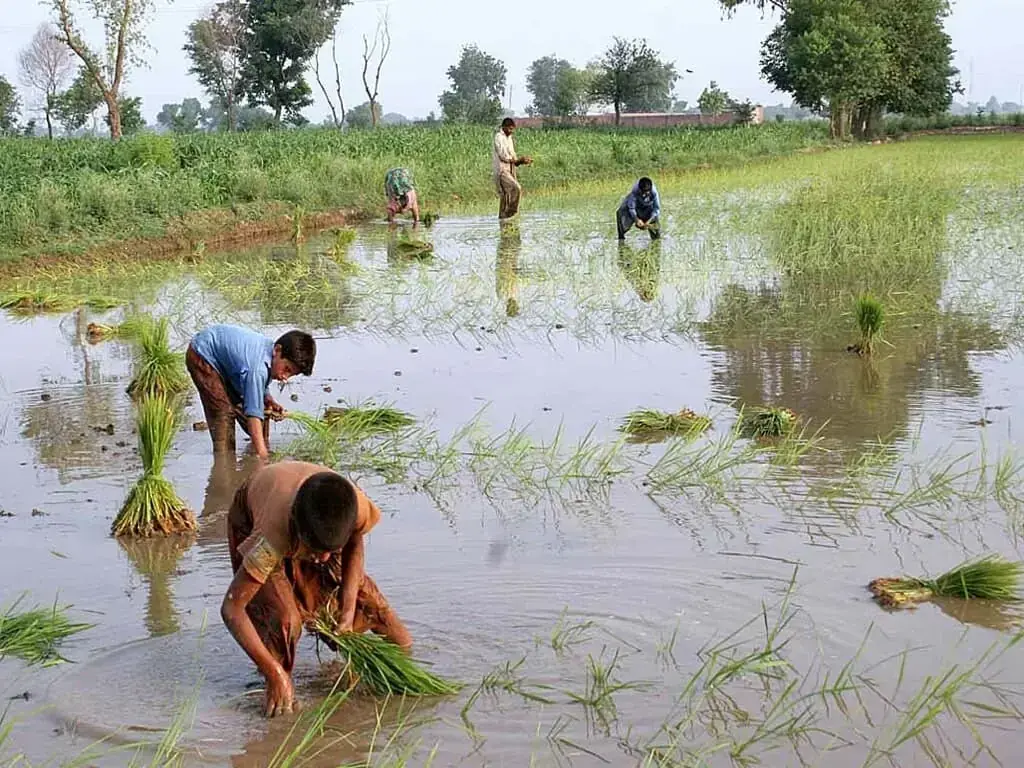
Farmers and progressive growers have called on Pakistan’s federal and provincial governments to urgently overhaul agricultural policy, urging a shift towards modern farming techniques, climate-resilient seed development and stronger research investment to arrest declining yields. In a bid to stabilise the struggling sector and safeguard food security, they also pressed for subsidised fertilisers, guaranteed pricing for at least four major crops, and expanded value-addition measures to lift farm incomes. Talking to Business Recorder, progressive grower Ali Palh said the government should play a role in producing climate resilient and quality seeds with varieties through proper research, while helping growers adopt technology-cum-machine through buying tractors and learning new techniques. Also read: Banana waste to textile fiber: SMEDA launches ‘innovative’ project He asked for ensuring good packaging of produce including mango, date, banana, vegetable while enhancing shelf life. Sindh Chamber of Agriculture (SCA) Senior Vice President Nabi Bux Sathio said, “agriculture is the only sector in the country which sustains and servives all the weather”. “Almost all the sectors, including the industrial services and retailers, can be moved from one place, province, or country to another place. But it’s only the agriculture sector/lands that neither be shifted nor be left unattended, ” Sathio said. “Unfortunately, since decades the policy makers and people who matters in the affairs of the state have only rendered oral services and could not formulate a five-or-ten-year agriculture sector focused programme for uplifting the productivity and profitability of the people attached to the sector. “The agriculture sector not only employees directly 40 to 45% labour force of the country, it also guarantees food security to 250 million. That’s why owing to the lack of focused and long-term sustainable policy for the agriculture sector, today we stand at cross roads. Despite the agriculture state, every year we face the shortage of basic food items. As during the current year, we are short of 9 million bales of cotton. Wheat crisis is looming. ” Sathio said the government should fix proper rates of four major crops of the country including wheat, sugarcane, paddy/rice and cotton with a view to supporting growers so that they may be able to fulfil input costs. During ten years, he continued, rates of diesel, seeds and fertilisers increased 300 times while rates of crops went up by 100 times only. “Growers remain discouraged and reluctant to grow crops because of losses following climate change. ” SCA senior vice president said the government should regulate rates and give at least 20% profit to growers out of their input costs so that they may get rid of loans and make investment in upcoming crops. He said in the neighbouring country (India), the government fixes rates of 32 crops to benefit growers except for giving billions of rupees subsidies. Sathio pleaded for scaling up research budget and holding researchers-cum-research institution responsible for conducting research on seed varieties in order to increase crop yield. “If researchers failed to produce new seed varieties, the action should be taken against them and accountability should be ensured. ” Meanwhile, Advisor in University of Faisalabad and Sindh Agriculture University Tahir Mahmood Chaudhry said, “Agriculture is the lifeblood of Pakistan’s economy, driving employment, food security, and industrial supply”. “It contributes roughly one-fifth of our GDP and sustains the vast majority of the rural workforce. In fact, nearly 73% of our population relies on this sector directly or indirectly, and a staggering 95% of our national exports depend on it. “Major crops like wheat, rice, cotton, and sugarcane form the bedrock of both domestic survival and foreign exchange. Yet, despite its monumental importance, this vital sector remains profoundly neglected. “Today, our farmers are trapped by water scarcity, low productivity, severe climate shocks, and outdated farming practices. To achieve sustainable growth and secure our long-term economic goals, modernisation is no longer optional—it is urgent, ” Chaudhry said. Talking about reforms and proposals, he said the government should maximise crop yields and stabilise food supplies in the upcoming federal budget, offer subsidised solar tubewells, ensure import duty waivers on AgTech, eliminate taxes on smart-farming machinery, precision drone sprayers, and localised weather-forecasting tools to boost efficiency, while allocating dedicated funds for regional, temperature-controlled silos to eliminate post-harvest waste and guarantee national strategic food reserves.



GrowthPakistan brings you the latest news to keep an eye on Pakistan’s startup ecosystem. Business keeps you growing when you stay aware of your competitors' moves. GrowthPakistan offers Business, Tech, Global Tech, Global, Auto, and Startup News straight from industries all around the globe. This platform will help you identify upcoming opportunities not only in Pakistan but worldwide.
Email : growthpakistan@gmail.com
Whatsapp : +92320-9497079
© growthpakistan