


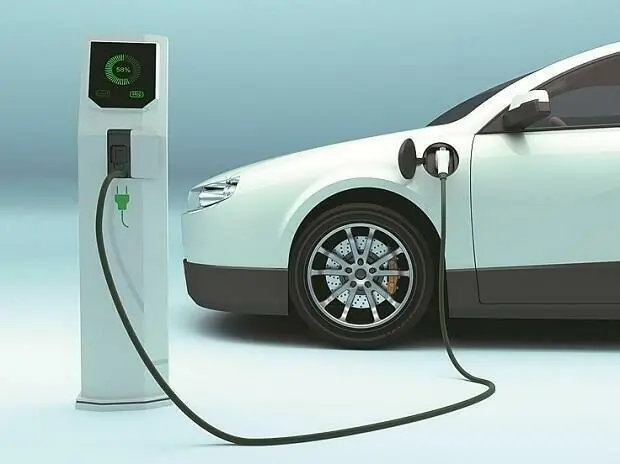
Local automakers and experts have appreciated the government’s decision to induct electric buses and motorbikes into public fleets all over Pakistan, but dubbed the New Energy Vehicle (NEV) policy as ambitious, while pleading for setting up a proper and sustainable mechanism and road infrastructure in that regard. Speaking to to Business Recorder, automotive expert Jamil Asghar said the decision was taken by Prime Minister Shehbaz Sharif in a meeting on energy security recently and the prime minister stated that the country must gradually shift towards eco-friendly electric vehicles while also calling for local manufacturing of batteries. As per the New Energy Vehicle policy 2025-30, the government aims to accelerate the transition and targets 30% of all vehicle sales to be NEV sales by 2030. However, the local automakers termed the target ambitious and daunting at the same time. Also read: PM launches Pakistan’s New Energy Vehicle Policy 2025-30 “The government must prioritise the improvement of public transportation and let the market and customer decide about the rest of the vehicle classes, ” said Asghar. He said the manufacturing of EVs would remain import-dependent for the foreseeable future, as, unlike Internal Combustion Engine (ICE) vehicles, where localisation is more than 90% for two wheelers and around 60% for four wheelers, the NEVs are imported as Completely Knocked Down (CKDs) and assembled in the country. “The prices of these NEV vehicles run into tens of millions of rupees, rendering them very expensive for an average Pakistani customer, ” said Asghar, adding that the country would be spending more on imports that way. Misdirection of public policy leads to misallocation of scarce resources, as billions are already being spent on subsidising electric two-wheelers for a small fraction of society, according to the expert. “It is really a tall order for a resource-starved country like Pakistan (where around 45% are living below the poverty line) to commit such huge resources for a fraction of society, but if the government really wants to be energy efficient, fixing public transport is the way forward. ” He stressed need for setting up a mechanism and road infrastructure. “Otherwise, this new plan will go into fiasco. ” Speaking about policies formed by the India’s government, Asghar said India introduced its FAME-I (Faster Adoption and Manufacturing of Electric Vehicles) scheme in 2015 with an initial outlay of INR (Indian rupee) 8. 95 billion, and it was followed up with FAME-II in 2019 with an outlay of INR 100 billion. After the end of FAME-II in March 2024, he continued, the Electric Mobility Promotion Scheme (EPMS) was introduced, and the scheme was active from April to September 2024, with an outlay of INR 5 billion. Recently, the FAME scheme has been replaced by PM-EDRIVE (PM Electric Drive Revolution in Innovative Vehicle Enhancement) in October 2024, and INR 109 billion was committed by the Indian government, he added. “Despite spending billions of rupees, the results, however, are not that promising so far. After more than a decade and an overall commitment of around INR 223 billion towards the goal of promoting EVs in the country, the share of electric two-wheelers in India has hardly reached 6% of the total market size till the last calendar year. “We have seen this phenomenon in other parts of the world as well. Recently, electric vehicle sales in China have drastically been reduced as a result of subsidy rollback, ” said Asghar. Also read: EV bikes demand continues to surge in Pakistan as petrol prices soar International trade expert and auto analyst Aadil Nakhoda said, “Adopting new technologies like NEVs is absolutely the way forward for Pakistan”. “However, the apprehension that the transition to electric vehicles that we are not ready is justified as we may not have had good previous examples. This is where the buck stops though. We still need to ensure better adoption as it is essential to phase out old technologies. “For decades we have relied on a highly protected, captive auto market and an unsustainable dependence on imported fossil fuels, ” Nakhoda said. According to him, transitioning to EVs allows to strip away these inefficiencies. “We need to reduce the anti-export bias and rationalise tariffs. The goal should be to integrate our auto parts vendors into global value chains. If we reduce the duties on raw materials and high-tech inputs, local vendors can produce competitive EV components efficiently rather than surviving on endless government protections. Competitive pricing across the industries is key. ” He urged the government to consider the demand for individual products and the necessity of that product based on the technological revolution it might bring in. “Once there are enough EVs in the market that require chargers on the road and not at homes, there will be a demand for charging stations and the private firms will meet the demand once the regulations and the business environment is there. “Unfortunately, shelving a new technology that can reduce dependency on imported fuel, the main driver of balance of payment crisis, will only result in prolonging poor economic conditions. Therefore, it is imperative to promote adoption of new technologies. CNG stations were phased out due to a shortage of supply, ” Nakhoda stressed.



GrowthPakistan brings you the latest news to keep an eye on Pakistan’s startup ecosystem. Business keeps you growing when you stay aware of your competitors' moves. GrowthPakistan offers Business, Tech, Global Tech, Global, Auto, and Startup News straight from industries all around the globe. This platform will help you identify upcoming opportunities not only in Pakistan but worldwide.
Email : growthpakistan@gmail.com
Whatsapp : +92320-9497079
© growthpakistan