


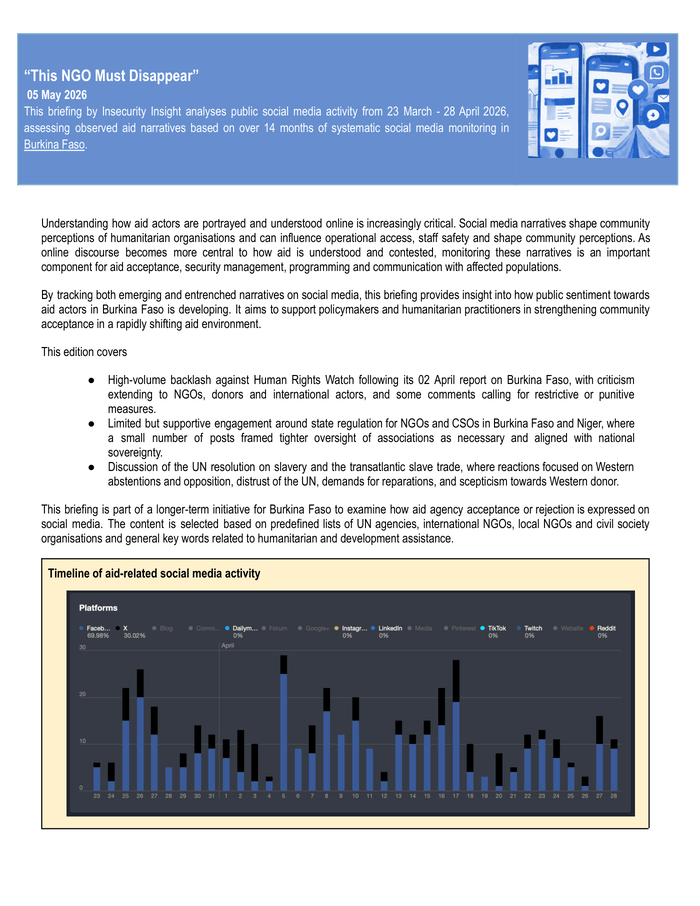
Country: Burkina Faso Source: Insecurity Insight Please refer to the attached file. Understanding how aid actors are portrayed and understood online is increasingly critical. Social media narratives shape community perceptions of humanitarian organisations and can influence operational access, staff safety and shape community perceptions. As online discourse becomes more central to how aid is understood and contested, monitoring these narratives is an important component for aid acceptance, security management, programming and communication with affected populations. By tracking both emerging and entrenched narratives on social media, this briefing provides insight into how public sentiment towards aid actors in Burkina Faso is developing. It aims to support policymakers and humanitarian practitioners in strengthening community acceptance in a rapidly shifting aid environment. This edition covers ● High-volume backlash against Human Rights Watch following its 02 April report on Burkina Faso, with criticism extending to NGOs, donors and international actors, and some comments calling for restrictive or punitive measures. ● Limited but supportive engagement around state regulation for NGOs and CSOs in Burkina Faso and Niger, where a small number of posts framed tighter oversight of associations as necessary and aligned with national sovereignty. ● Discussion of the UN resolution on slavery and the transatlantic slave trade, where reactions focused on Western abstentions and opposition, distrust of the UN, demands for reparations, and scepticism towards Western donor. This briefing is part of a longer-term initiative for Burkina Faso to examine how aid agency acceptance or rejection is expressed on social media. The content is selected based on predefined lists of UN agencies, international NGOs, local NGOs and civil society organisations and general key words related to humanitarian and development assistance.



GrowthPakistan brings you the latest news to keep an eye on Pakistan’s startup ecosystem. Business keeps you growing when you stay aware of your competitors' moves. GrowthPakistan offers Business, Tech, Global Tech, Global, Auto, and Startup News straight from industries all around the globe. This platform will help you identify upcoming opportunities not only in Pakistan but worldwide.
Email : growthpakistan@gmail.com
Whatsapp : +92320-9497079
© growthpakistan