


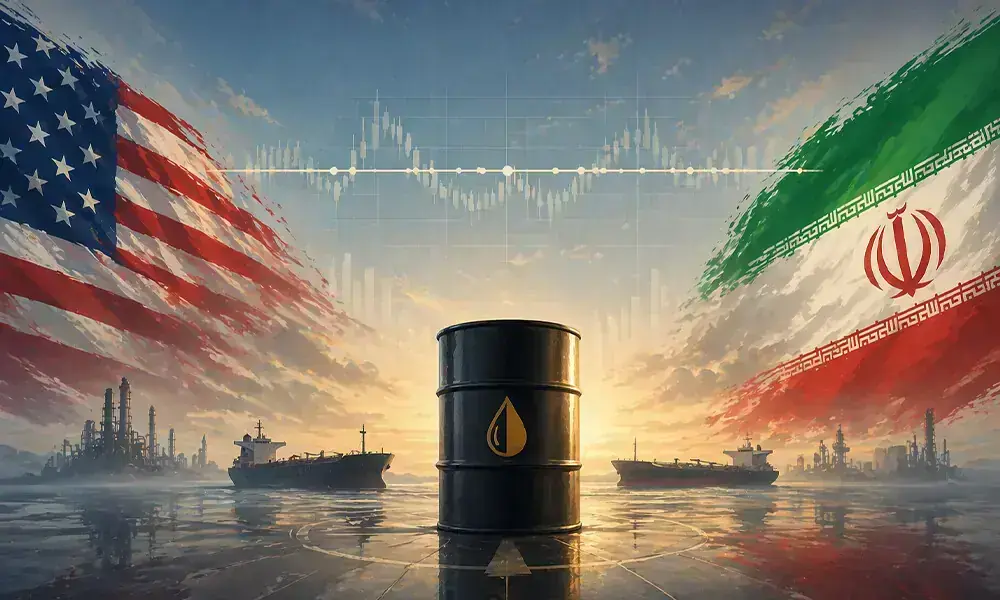
NEW YORK: Oil prices fell about 3% on Tuesday with at least one vessel passing through the Strait of Hormuz after the United States said the ceasefire with Iran remained in place despite exchanges of fire between the U. S. and Iran following a U. S. effort to reopen the strait for oil tankers and other ships. Brent futures fell $3. 43, or 3. 0%, to $111. 01 a barrel at 10: 29 a. m. EDT (1429 GMT), while U. S. West Texas Intermediate (WTI) crude fell $4. 55, or 4. 3%, to $101. 87. Earlier in the session, Brent was down over $4 and WTI was down over $6. Both crude benchmarks, however, pared earlier losses after the United Arab Emirates’ defense ministry said its air defenses were dealing with missile and drone attacks coming from Iran on Tuesday, a second day of attacks after a four-week period of relative calm since the United States announced a ceasefire. “The complex is pulling back today on what appears to be a deserved technical correction following another price leg up during the past week that has seen July Brent futures advance to new four-year high territory during the past couple of sessions, ” analysts at energy advisory firm Ritterbusch and Associates said in a note. Washington said on Tuesday that Iran had not breached a fragile ceasefire, following an exchange of fire between the two sides the previous day as U. S. forces attempted to force open the Strait of Hormuz. The strait connects the Gulf to wider markets and typically carries oil and liquefied natural gas supply equal to about 20% of global demand every day. On Monday, the U. S. military said it destroyed six Iranian small boats, as well as cruise missiles and drones, after U. S. President Donald Trump sent the navy to escort stranded tankers through the strait in a campaign he called “Project Freedom”. U. S. Defense Secretary Pete Hegseth said the U. S. had successfully secured a path through the critical waterway and that hundreds of commercial ships were lining up to pass through. Maersk said the Alliance Fairfax, a U. S. -flagged vehicle carrier, exited the Gulf via the strait accompanied by the U. S. military. “It shows that limited safe passage is possible under current conditions and helps chip away at some of the worst-case supply disruption fears, ” said Tim Waterer, chief market analyst at KCM Trade, in an email. “However, it’s still very much a one-off event rather than a full reopening, ” he added. South Korea, meanwhile, is reviewing whether to join Trump’s plan to help ships transit through the Strait of Hormuz, an official said on Tuesday, following an explosion and fire on a Korean-operated ship in the waterway. Also read: US and Iran launch new attacks as they wrestle for control of Gulf waters Around the world In Russia, the vast Kirishinefteorgsintez (Kirishi) oil refinery halted processing on Tuesday following Ukrainian drone attacks which damaged the plant’s units and caused a fire, two industry sources said. In Kazakhstan, KazMunayGas (KMG), the national oil and gas company, said on Tuesday it will redirect oil exports to the Caspian Pipeline Consortium (CPC) and Russian ports following the suspension of flows through the Druzhba pipeline, Russian news agency Interfax reported. The Druzhba pipe carries oil from Russia across Ukraine and Belarus to the rest of Europe. In Germany, the biggest economy in Europe, exports are set to stagnate this year, the chambers of commerce said on Tuesday, lowering their previous forecast for slight growth as companies face supply chain snarls and uncertainty from the Iran war.



GrowthPakistan brings you the latest news to keep an eye on Pakistan’s startup ecosystem. Business keeps you growing when you stay aware of your competitors' moves. GrowthPakistan offers Business, Tech, Global Tech, Global, Auto, and Startup News straight from industries all around the globe. This platform will help you identify upcoming opportunities not only in Pakistan but worldwide.
Email : growthpakistan@gmail.com
Whatsapp : +92320-9497079
© growthpakistan