


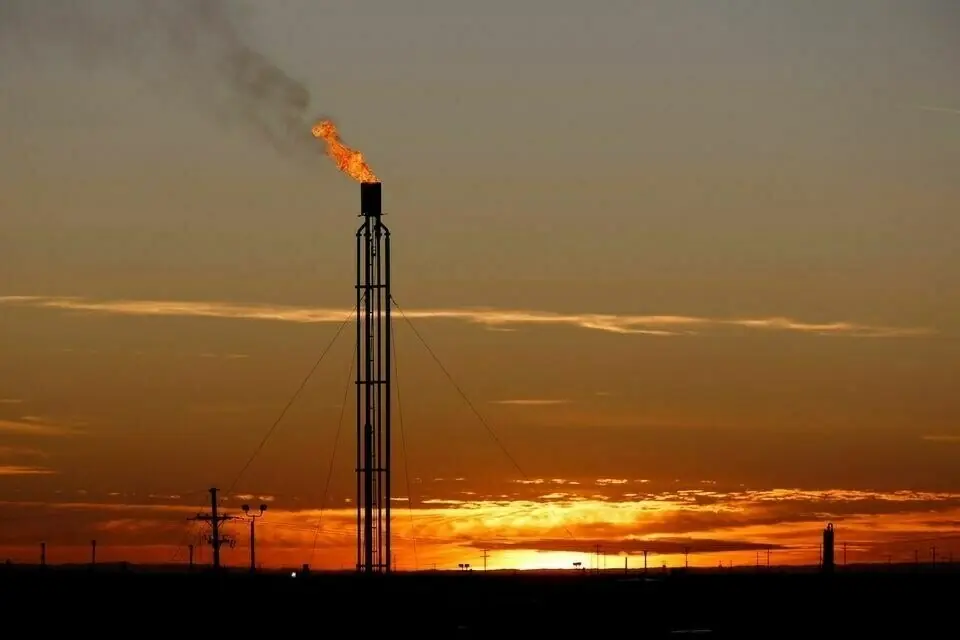
Pakistan did not merely misprice gas. It mispriced its own future. For decades, the country treated natural gas not as a scarce national asset requiring disciplined allocation, but as a politically convenient entitlement to be distributed cheaply and broadly. The result was a widening distortion between gas and competing fuels, especially fuel oil, electricity, and later imported LNG. That differential encouraged waste, rewarded arbitrage, subsidised low-value uses, weakened incentives for efficient investment, and slowly hollowed out one of Pakistan’s few genuine resource advantages. Figure note: Pakistan industrial gas price versus fuel oil price on a common energy basis, measured in Rs per MMBtu, from 1975 to 2025, shows the long-run pricing wedge, the effect of the 1993 producer-price reform, the later consumer-price delinking, and the distortions associated with CNG-based gas use. This was not an unavoidable market outcome. It was policy-induced. Pakistan once had a more coherent way of thinking about energy pricing. The 1993 producer-price reform linked upstream compensation initially to fuel oil and later to 66 percent of crude, with productivity-zone adjustments. That made producer economics commercially intelligible and helped attract capital and expertise. But downstream and consumer pricing moved in the opposite direction. Gas consumers were increasingly insulated from the real energy value of the resource. The state told producers that gas had international opportunity value, while telling consumers that it was a cheap domestic entitlement. That contradiction could not survive forever. Under World Bank-guided reform thinking, consumer gas pricing was progressively moved away from a direct energy-value framework. On paper, this may have looked technocratic and tidy. In practice, it produced a deeply irrational outcome. Consumer prices remained far below the economic value of competing fuels even as Pakistan’s broader energy system became more dependent on imported oil, LNG, and expensive electricity. The state created an enormous wedge between what gas was worth and what many users were paying for it. That wedge was not harmless. It was a transfer of national wealth. Cheap gas did not remain confined to deserving low-income households. It became a system-wide distortion. It favoured industrial users able to capture energy arbitrage. It encouraged households to use gas for water heating and space heating. It pushed a finite domestic resource into low-value uses instead of conserving it for high-value industrial processes, efficient power generation, or strategically managed transition needs. Pakistan was not just subsidising consumers. It was under-pricing its own natural-resource wealth. The illustrative calculation is ugly enough. Using total gas consumption as the base, Pakistan appears to have lost on the order of $285 billion over the last 25 years by under-pricing gas relative to fuel oil. This estimate is calculated year by year using annual gas consumption, the annual pricing wedge between industrial gas and fuel oil on an energy-equivalent basis, and each year’s own PKR/US dollar exchange rate. That matters because the earlier years of the distortion coincided with a much stronger rupee, meaning the dollar value of the resource transfer was far larger than a crude conversion at today’s exchange rate would suggest. The estimate should be read carefully. It is not a booked fiscal loss sitting neatly in some government ledger. It is an economic resource-loss measure and a broad upper-bound indicator of the damage caused by under-pricing a finite national resource across the full gas-consumption chain. The calculation uses an annual gas consumption anchor of about 3, 207 mmcfd, equivalent to roughly 1. 214 billion MMBtu per year and around 30. 35 billion MMBtu over 25 years. With an average fuel-oil-versus-gas wedge of about Rs 995 per MMBtu, the implied resource loss is roughly Rs 30. 2 trillion, or about $285 billion using annual exchange rates. One can debate the precise number. One cannot seriously debate the direction of the damage. Pakistan systematically priced gas below its opportunity value and then acted surprised when people wasted it. That is not economics. That is arson with a tariff notification. The CNG vehicle policy made the mistake worse. Pakistan pushed natural gas into road transport in the name of short-term consumer convenience, lower fuel bills, and imported-fuel substitution. But in energy-economic terms, it diverted valuable domestic gas into one of its least strategic uses. Gas that could have supported industry, efficient generation, fertiliser production, or a managed transition was burned in motor vehicles. It was bad policy dressed up as affordability. The country consumed strategic fuel as if it were free roadside air. Industrial gas policy created another distortion. Under-priced gas and subsidised RLNG for selected sectors allowed private users to capture a national resource at prices divorced from its real opportunity cost. This was often presented as support for competitiveness. Too often, it became a transfer from the national balance sheet to narrow private beneficiaries. Instead of rewarding productivity, technology upgrading, or export discipline, the system rewarded access to cheap molecules. That is not industrial policy. That is rent distribution wearing a hard hat. The domestic sector was no better. Blanket under-pricing for households may sound compassionate, but it is a lazy substitute for real social policy. Cheap gas for everyone encourages waste by everyone with a connection, while the poorest households without reliable access receive little benefit. A better system would protect vulnerable consumers through targeted support and lifeline pricing, while allowing the broader tariff structure to reflect scarcity and opportunity cost. Compass ion should not require burning the national balance sheet to heat bathwater. The bureaucratic role in this failure cannot be excused. Energy pricing in Pakistan has long been handled as a political shock absorber rather than an economic signal. Instead of asking where gas creates the most national value, the state repeatedly asked where price increases would cause the least immediate noise. Notifications were delayed. Tariffs were smoothed. Cross-subsidies were buried. Losses were socialised. Each time the problem grew larger, the bureaucracy responded with another layer of administrative fog. That fog suited many people. It suited consumers enjoying under-priced gas. It suited industrial users benefiting from arbitrage. It suited utilities that could hide weak performance inside pooled prices and delayed settlements. It suited officials who preferred discretion to transparency. It also suited external advisers whose models often looked coherent on paper while ignoring the institutional weakness and political habits of the Pakistani state. This is the deeper problem with over-reliance on multilaterals in sectors like energy. Their models often assume that if the formula is written correctly, the system will behave rationally. Pakistan’s experience proves otherwise. A country with weak contract enforcement, administrative delays, politicised tariffs, utility inefficiency, and poor payment discipline cannot simply import policy blueprints and expect them to work. Multilateral advice can be useful, but only if filtered through local professional expertise with real knowledge of how Pakistan’s institutions actually operate. That is precisely why local experts must be at the centre of policy design, not merely invited later as decorative participants. Local professionals understand where the bureaucracy will sabotage reform, where contracts will be diluted, where tariffs will be politically smoothed, where utilities will hide losses, and where one pricing change will distort the rest of the chain. They understand the difference between textbook coherence and operational reality. In Pakistan’s energy sector, that difference is the difference between reform and self-deception. The downstream reform agenda is not mysterious. Re-anchor gas pricing to its real energy value. Narrow the artificial gap between gas and substitute fuels. End generalized under-pricing and replace it with targeted protection for the poor. Stop using gas policy as a subsidy machine for industrial arbitrage. Eliminate legacy distortions that encouraged CNG misuse. Bring gas and electricity prices closer to parity where end uses overlap, so that households and firms make rational choices instead of chasing hidden subsidies. Utilities must also be forced into a harder performance regime. SNGPL and SSGC should not remain semi-administrative institutions that act as network operators, billing platforms, political shock absorbers, and warehouses for subsidy burdens all at once. Their job should be clear: operate the network efficiently, reduce UFG, meter honestly, bill accurately, collect robustly, maintain service standards, and settle upstream payments on time. If the state wants to subsidise certain consumers, it should do so explicitly through the budget. It should not bury social policy inside utility balance sheets and then call the resulting debt a surprise. OGRA must stop acting like a passive accountant of dysfunction. Tariff determinations should not simply process claimed costs and pass them through. Returns should be tied to measurable performance: UFG reduction, collection efficiency, pressure management, metering integrity, service reliability, capex discipline, and timely payment to producers. A utility that misses operational benchmarks should not be allowed to behave as if a tariff petition is a substitute for reform. Pakistan’s energy problem is not only that it made bad choices. It is that it kept protecting those choices long after the damage was obvious. The country once had a valuable natural-resource advantage. It then priced that advantage badly, allocated it wastefully, and allowed bureaucracy and borrowed wisdom to turn resource wealth into strategic weakness. That is not merely an energy-policy error. It is a national-development error. If Pakistan wants to recover, it must stop pretending that under-pricing a scarce fuel is compassion, stop confusing bureaucratic discretion with policy, and stop outsourcing judgment where local knowledge is indispensable. Gas is not a political sweetener. It is strategic wealth. Treat it cheaply, and the country becomes cheap too. Copyright Business Recorder, 2026



GrowthPakistan brings you the latest news to keep an eye on Pakistan’s startup ecosystem. Business keeps you growing when you stay aware of your competitors' moves. GrowthPakistan offers Business, Tech, Global Tech, Global, Auto, and Startup News straight from industries all around the globe. This platform will help you identify upcoming opportunities not only in Pakistan but worldwide.
Email : growthpakistan@gmail.com
Whatsapp : +92320-9497079
© growthpakistan