

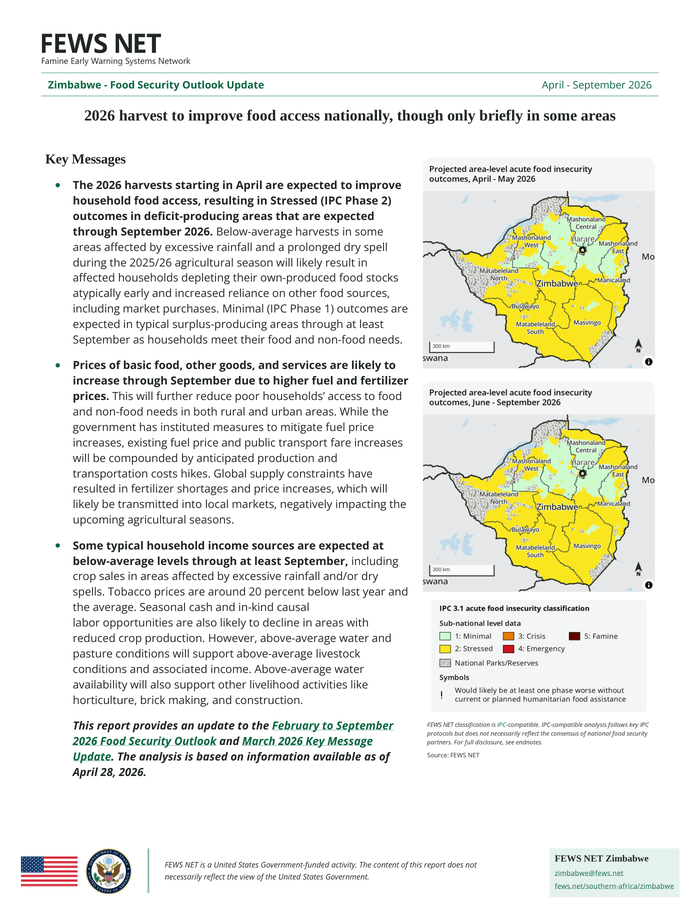
Country: Zimbabwe Source: Famine Early Warning System Network Please refer to the attached file. Key Messages The 2026 harvests starting in April are expected to improve household food access, resulting in Stressed (IPC Phase 2) outcomes in deficit-producing areas that are expected through September 2026. Below-average harvests in some areas affected by excessive rainfall and a prolonged dry spell during the 2025/26 agricultural season will likely result in affected households depleting their own-produced food stocks atypically early and increased reliance on other food sources, including market purchases. Minimal (IPC Phase 1) outcomes are expected in typical surplus-producing areas through at least September as households meet their food and non-food needs. Prices of basic food, other goods, and services are likely to increase through September due to higher fuel and fertilizer prices. This willfurther reduce poor households’ access to food and non-food needs in both rural and urban areas. While the government has instituted measures to mitigate fuel price increases, existing fuel price and public transport fare increases will be compounded by anticipated production and transportation costs hikes. Global supply constraints have resulted in fertilizer shortages and price increases, which will likely be transmitted into local markets, negatively impacting the upcoming agricultural seasons. Some typical household income sources are expected at below-average levels through at least September, including crop sales in areas affected by excessive rainfall and/or dry spells. Tobacco prices are around 20 percent below last year and the average. Seasonal cash and in-kind causal labor opportunities are also likely to decline in areas with reduced crop production. However, above-average water and pasture conditions will support above-average livestock conditions and associated income. Above-average water availability will also support other livelihood activities like horticulture, brick making, and construction.
Zimbabwe Food Security Outlook Update: 2026 harvest to improve food access nationally, though only briefly in some areas, April – September 2026

RELATED ARTICLES


