


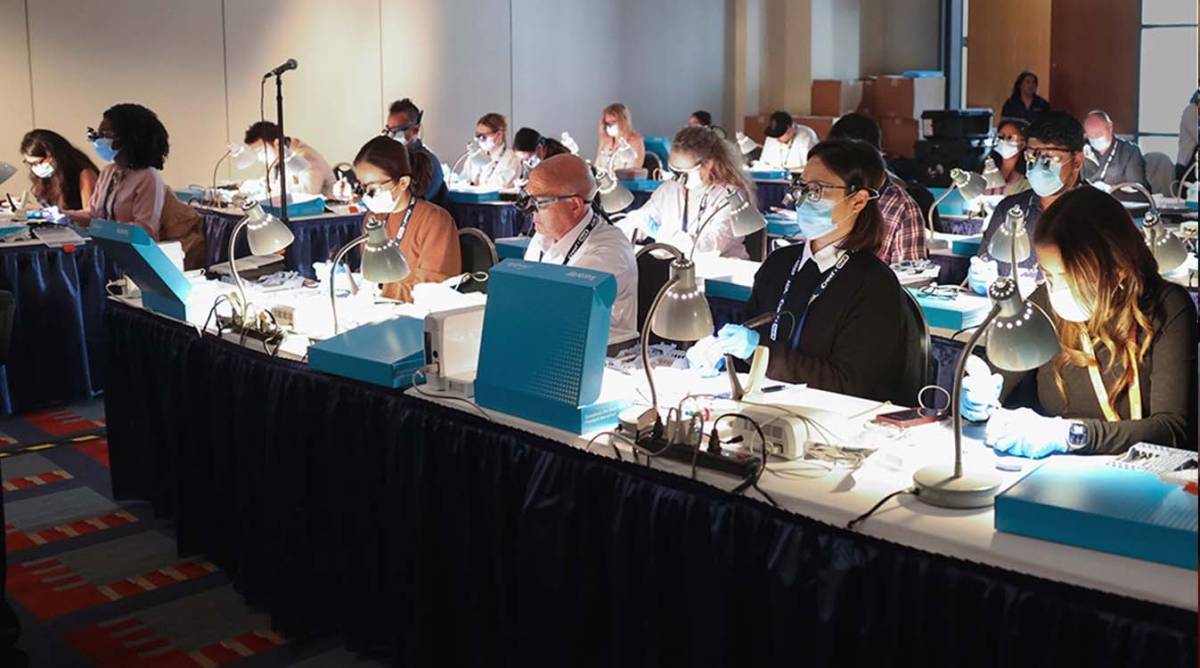
INDIANAPOLIS: At a time when dentistry is rapidly evolving—and clinical decisions are becoming more complex than ever—the American Dental Association is positioning its 2026 Scientific Session as a decisive answer to one critical question: how can dentists translate evolving evidence into confident, everyday patient care? Set to take place from October 8 to 10 at the Indiana Convention Center in Indianapolis, the ADA 2026 Scientific Session is being designed not as a routine academic gathering, but as a high-impact, practice-focused experience aimed at solving the real clinical challenges dentists face daily. Unlike traditional conferences that often lean heavily on theory, this year’s program is sharply focused on practical application—bridging the gap between research, guidelines, and real-world decision-making in dental clinics. Related story: ADA unveils major sedation guidelines overhaul for dentistry safety From theory to chairside: a shift in dental learning “Continuing education at the Scientific Session will be structured around practical application, not just theory, ” said Thomas Paumier, D. D. S. , President-elect of the American Dental Association. He emphasized that the core objective is to help clinicians interpret research, apply clinical data, and navigate evolving guidelines with confidence. The ultimate goal: enabling dentists to walk away with insights they can implement immediately in patient care. This shift reflects a broader transformation in global dental education—moving from passive learning to outcome-driven, clinically relevant training. A program shaped by real clinical challenges The continuing education program will draw directly from current clinical guidelines, emerging research, and evidence published in The Journal of the American Dental Association (JADA), ensuring that content remains both authoritative and highly relevant. Key focus areas will include: Antibiotic stewardship and responsible prescribing Early detection of oral cancer Patient selection for cone-beam computed tomography (CBCT) Intersection of systemic diseases and oral health Complex pain diagnosis, including odontogenic and non-odontogenic pain Advances in regenerative engineering and diagnostic technologies Emerging insights into rare diseases and photobiomodulation Each topic is carefully curated to address real uncertainties clinicians encounter in daily practice, rather than abstract academic discussions. Hands-on training meets complex case management Recognizing that skill development requires more than lectures, the ADA 2026 Scientific Session will also feature hands-on workshops focused on high-stakes clinical procedures. Participants will engage in practical sessions covering biopsies, digital workflows, and complex endodontic and oral surgery cases—areas where precision, confidence, and decision-making are critical. These workshops are expected to offer a rare opportunity for clinicians to refine their skills under expert guidance while addressing complications that often arise in real-world scenarios. AI, microbiome, and the future of dentistry Among the most anticipated discussions is a panel on artificial intelligence in dentistry, titled “Digital intelligence — the expanding role of AI across dentistry. ” Moderated by Tim Wright, D. D. S. , editor-in-chief of JADA and professor at the University of North Carolina at Chapel Hill Adams School of Dentistry, the panel will feature experts including Mohammed Elnagar, D. D. S. , Ph. D. , associate professor at the University of Illinois Chicago, and Sang J. Lee, D. M. D. , associate professor at the Harvard School of Dental Medicine. The session aims to move beyond hype, helping dentists understand where AI truly fits in clinical decision-making, its benefits, and its limitations in patient care. Parallel discussions will also explore pharmacology, the oral microbiome, and emerging technologies that are reshaping diagnostic and therapeutic approaches. Oral-systemic health takes center stage Another major highlight will be the panel “The oral systemic interface: inflammation without borders, ” which will examine the increasingly critical link between oral health and systemic diseases. Led by leading experts Mia Geisinger, D. D. S. , from the University of Alabama at Birmingham School of Dentistry, and Yvonne Hernandez-Kapila, D. D. S. , Ph. D. , from the University of California, Los Angeles School of Dentistry, the session will use real clinical cases to explore how periodontal inflammation is connected to conditions such as Alzheimer’s disease, cardiovascular disease, diabetes, gastrointestinal disorders, and immune-related conditions. This reflects a growing global recognition that dentistry is no longer isolated from general health—but deeply interconnected with it. A collaborative space for professional growth Beyond structured sessions, the ADA Scientific Session is also designed to foster peer-to-peer learning and collaboration. Jennifer Thompson, D. D. S. , chair of the ADA Council on Dental Practice, highlighted the importance of these interactions, noting that engaging with colleagues across specialties allows dentists to exchange perspectives, refine approaches, and strengthen clinical judgment. Such collaborative environments are increasingly seen as essential for continuous professional development in modern dentistry. Registration and access Registration for the ADA 2026 Scientific Session will open on May 27, with detailed course descriptions and speaker information available through the official agenda builder on the ADA website. As anticipation builds, the event is already being viewed as one of the most relevant and practice-focused dental conferences globally—particularly for clinicians seeking clarity in an era of rapidly evolving evidence and technology. Why this matters now Dentistry today sits at the intersection of technology, systemic health, and patient-centered care. With rising expectations from patients and increasing clinical complexity, the need for actionable, evidence-based guidance has never been greater. ADA 2026 is not just another conference—it is shaping up to be a defining platform where dentists can confront uncertainty, refine their skills, and return to practice better equipped to deliver high-quality care. Stay informed, stay ahead pk/30-Apr-2026/ada-2026-scientific-session-clinical-dentistry-challenges” target=”_blank” rel=”nofollow noopener noreferrer”>Read full story on Dental News



GrowthPakistan brings you the latest news to keep an eye on Pakistan’s startup ecosystem. Business keeps you growing when you stay aware of your competitors' moves. GrowthPakistan offers Business, Tech, Global Tech, Global, Auto, and Startup News straight from industries all around the globe. This platform will help you identify upcoming opportunities not only in Pakistan but worldwide.
Email : growthpakistan@gmail.com
Whatsapp : +92320-9497079
© growthpakistan