


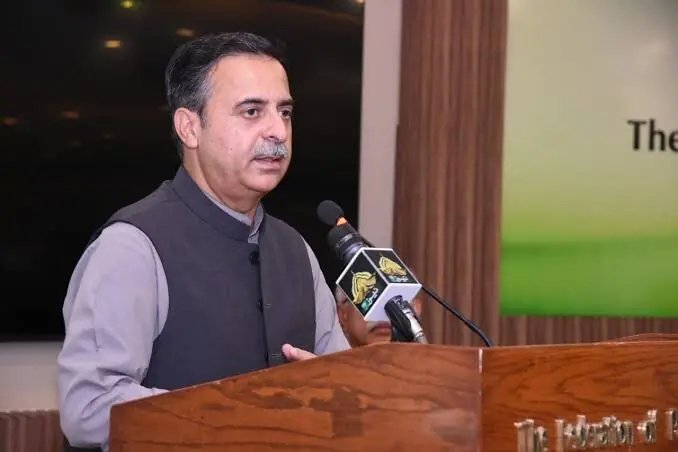
Federal Minister for Maritime Affairs Muhammad Junaid Anwar Chaudhry said on Wednesday that Pakistan can become a rising regional economic power with comprehensive maritime reforms, his ministry said. Speaking at a seminar on the geopolitical impact on maritime trade in the Indian Ocean region, he highlighted the strategic importance of the Indian Ocean as a key link between the Middle East, Asia, Africa, and Europe. Chaudhry stressed that tensions in the Indian Ocean have far-reaching implications, not just for trade, but for global economies and regional stability. He outlined the formation of a high-level committee, following directives from Prime Minister Shehbaz Sharif, to transform Karachi Port, Port Qasim, and Gwadar Port into a trans-shipment hub. Read More: Ministry, KPT chief lauded for safeguarding exporters’ interests Recent reforms with the Federal Board of Revenue have introduced risk management techniques to replace 100% scanning, cutting clearance times and facilitating operations for small traders. Karachi Port set a new monthly record with 111, 300 TEUs of trans-shipment cargo in March. Port Qasim managed 3, 485 TEUs, and Gwadar Port handled its first dedicated trans-shipment shipment, with four such vessels arriving so far. Chaudhry emphasized that these actions, including reducing charges for exporters and eliminating container congestion, have helped Pakistan build shipping resilience. He said the country’s ports are now ready to face future challenges, ensuring continuity in trade and oil supply. Karachi Port Trust Chairman Rear Admiral Shahid Ahmed confirmed that four new trains will operate from Karachi Port to Pipri starting September, alongside operational edible oil terminals and ferry services. He added that Karachi Port is prepared for the next 50 years. The government remains focused on strengthening Pakistan’s position as a key maritime trade hub for regional connectivity.



GrowthPakistan brings you the latest news to keep an eye on Pakistan’s startup ecosystem. Business keeps you growing when you stay aware of your competitors' moves. GrowthPakistan offers Business, Tech, Global Tech, Global, Auto, and Startup News straight from industries all around the globe. This platform will help you identify upcoming opportunities not only in Pakistan but worldwide.
Email : growthpakistan@gmail.com
Whatsapp : +92320-9497079
© growthpakistan