


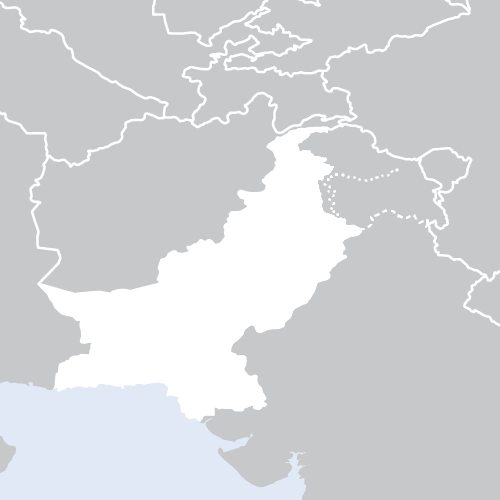
Country: Pakistan Source: World Health Organization Pakistan reduced malaria incidence by 10% in 2025 compared to 2024, but still reported 1. 8 million cases, as the country has not yet recovered from the surge triggered by the 2022 climate-driven floods. 25 April 2026, Islamabad, Pakistan – On World Malaria Day, the World Health Organization (WHO) calls on all partners to intensify the response to prevent a resurgence in Pakistan and stresses that, for the first time, ending malaria in our lifetime is possible. In 2025, Pakistan reduced malaria incidence by 10% compared to 2024, but still reported 1. 8 million cases, as the country has not yet recovered from the surge triggered by the 2022 climate-driven floods – from 399 097 confirmed infections in 2021 to a peak of 2. 7 million in 2023. Progress is at risk due to factors such as climate change, a massive global funding gap of US$ 5. 4 billion and recent cuts in global health aid, which have disrupted health systems, surveillance, and campaigns, demonstrating how quickly hard-fought gains can be reversed. As part of World Malaria Day celebrations, WHO and partners have launched a global campaign under the theme “Driven to End Malaria: Now We Can. Now We Must. ” The objective is to seize the opportunity to protect lives now and fund a malaria-free future. “With the tools and resources available today, together, we have the historic opportunity to offer a malaria-free world to our children and our grandchildren. WHO stands with Pakistan to continue strengthening the response, providing science-based technical support to build together a future where no family should lose a loved one to malaria, ” said WHO Representative Dr Luo Dapeng. In April 2026, WHO supported a country-led malaria programme review that visited health facilities across different provinces. The goal – to collect evidence and lessons learned to continue reinforcing prevention, surveillance, case management, evidence-based vector control, data systems and outbreak preparedness at the federal and the provincial levels. In 2025, Pakistan screened about 16. 9 million suspected cases and provided free treatment to most of the close to 1. 8 million confirmed patients in collaboration with WHO, partners, the private sector and civil society – with funding support from the Global Fund to defeat AIDS, tuberculosis (TB) and malaria. Approximately 12 million nets to prevent mosquito bites were distributed between 2023 and 2025. In addition, community-based case management has been recently adopted and shows strong potential for hard-to-reach communities In Pakistan, malaria transmission persists mainly in Balochistan, rural Sindh, and some districts in Khyber Pakhtunkhwa (KP). 2. 3 billion cases and 14 million deaths averted globally since 2000 Since 2000, thanks to medical science and joint international and country-led efforts, 2. 3 billion cases and 14 million deaths have been averted globally. To date, 47 countries have been certified malaria-free (2 in 2024 and 3 in 2025), while 37 countries reported fewer than 1000 cases in 2024. WHO experts say eradicating malaria is within reach thanks to medical science and the development of new vaccines, treatments, malaria control tools and pioneering technologies – including genetic modification of mosquitoes and long-acting injectables. For additional information, please contact: José Ignacio Martín Galán, Head of Communications, WHO Pakistan: jomartin@who. int Maryam Yunus, National Professional Officer – Communications, WHO Pakistan: yunusm@who. int About WHO Founded in 1948, the World Health Organization (WHO) is the United Nations agency that connects nations, partners and people to promote health, keep the world safe and serve the vulnerable. We work with over 190 Member States across more than 150 locations to ensure everyone, everywhere, can attain the highest level of health. WHO has maintained a permanent presence in Pakistan since its country office was established in 1960. For more information, visit https: //www. emro. who. int/countries/pak/index. html or follow us on our social media:



GrowthPakistan brings you the latest news to keep an eye on Pakistan’s startup ecosystem. Business keeps you growing when you stay aware of your competitors' moves. GrowthPakistan offers Business, Tech, Global Tech, Global, Auto, and Startup News straight from industries all around the globe. This platform will help you identify upcoming opportunities not only in Pakistan but worldwide.
Email : growthpakistan@gmail.com
Whatsapp : +92320-9497079
© growthpakistan