


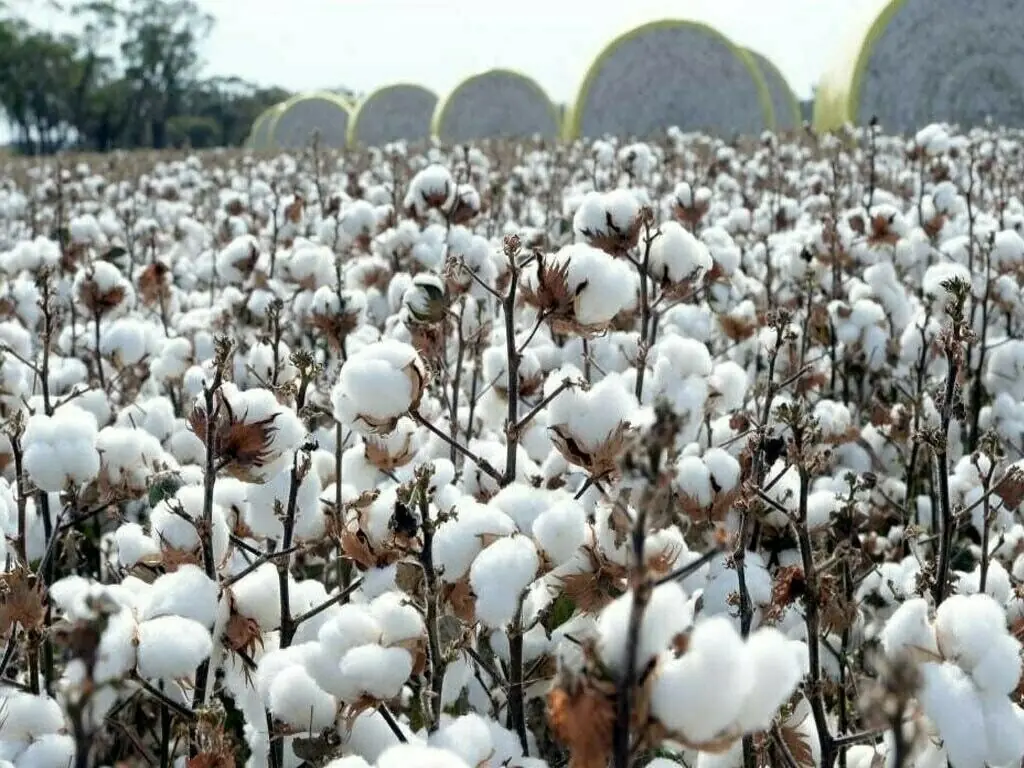
KARACHI: Trading activity in the domestic cotton market remains limited, though prices have been broadly stable, market sources said on Sunday. On the international front, the ongoing Middle East tensions are driving a bullish trend on the New York cotton exchange, with the effects increasingly being felt in local markets. However, business circles have adopted a wait-and-see approach amid the conflict involving Iran, Israel and the United States, further dampening market activity. Domestic cotton stocks are now nearly exhausted, leading to a sustained rise in imports to meet mill demand. Partial advance deals for the upcoming 2026-27 cotton season have already started taking place. The Federal Committee on Agriculture has set the production target for the next season at more than 96 lac bales, significantly lower than the previous year’s target of one crore twenty lac bales. Last season’s actual output was particularly alarming: the country produced only 56 lac bales, the lowest level in 40 years. In an effort to ease the financial strain on the textile sector, the All Pakistan Textile Mills Association is actively working to secure improvements in refinance facilities. Prominent agriculture expert Sajid Mahmood said the challenge of reviving cotton production is fundamentally economic, not technical. “Concrete economic measures are indispensable for any lasting recovery, ” he maintained. The local cotton market remained largely stable but subdued during the past week, as mounting anxiety among businessmen over the ongoing conflict involving the United States, Israel, and Iran in the Middle East continued to weigh heavily on trade activity. With uncertainty dominating market sentiment, transactions have slowed to a near standstill, making it increasingly difficult to determine accurate price levels. No significant deals have been formally recorded in the market, though occasional reports from cotton traders indicate that prices are ranging between Rs. 18, 500 and Rs. 21, 500 per maund, varying according to quality. Ginners are reported to be holding a limited stock of a few thousand bales, but these too have seen little to no trading activity in the open market. In a sign of cautious optimism for the season ahead, some advance deals for the 2026–27 cotton seasons have already been concluded, with transactions settled at Rs. 21, 500 per maund against delivery conditions between May 20 and 30. The price of phutti has been reported at Rs. 10, 000 per 40 kilograms. On the production front, the Federal Committee on Agriculture has set a cotton production target of 96 lac bales for the 2026–27 season. Internationally, cotton prices reflected a mixed trend following an initial surge driven by Middle East tensions. New York cotton futures climbed to between 78 and 82 US cents per pound before retreating to close in the range of 76 to 80 cents. Meanwhile, the Karachi Cotton Exchange building remains sealed since December 12, 2025, following action by the Evacuee Trust Property Board with the assistance of the FIA. As a result, the daily cotton spot rate, a key market benchmark, has not been issued, further adding to the uncertainty in the market. Across Sindh and Punjab, cotton prices held in the range of Rs 18, 500 to Rs 21, 500 per maund, subject to quality and payment conditions, while prices of cottonseed cake and cottonseed oil remained relatively stable. Naseem Usman, Chairman of the Karachi Cotton Brokers Forum, said international cotton prices remained mixed during the week, with New York cotton futures closing at 76 to 80 US cents per pound. According to the USDA weekly export report, a total of 119, 900 bales were sold for the 2025–26 marketing year. Vietnam topped the buyers’ list with 52, 100 bales, followed by Turkey at 22, 400 bales and Pakistan in third place with 15, 900 bales. For the 2026–27 marketing year, sales stood at 57, 100 bales, with Vietnam and Indonesia sharing the lead at 17, 600 bales each and Pakistan again ranking third with 13, 200 bales. Total export shipments for the week reached 296, 400 bales, with Vietnam receiving the largest share at 89, 000 bales, Pakistan second at 46, 600 bales, and India third at 25, 100 bales. On the domestic front, Pakistan’s export-oriented textile industry is facing mounting pressure amid the ongoing conflict in the Middle East. Industry exporters have warned that value-added textile sales could decline significantly during the current fiscal year 2025–26 if regional tensions continue to escalate. Ongoing hostilities involving Iran, Israel, and the United States could result in a 10 to 20 percent drop in Pakistan’s textile exports. Disruptions to shipping routes through the Strait of Hormuz are already pushing up freight and insurance costs, while textile shipments to the European Union and the United States are facing expected delays of 15 to 20 days. Rising import prices of fuel and raw materials are placing additional financial strain on the sector. A decline in textile exports was already recorded in March 2026, and industry officials caution that the figure could reach 20 percent if the situation does not improve. Textile industry leaders have formally requested the government to devise an emergency contingency plan to protect this critical pillar of Pakistan’s national economy. The country’s textile industry has urged the State Bank of Pakistan (SBP) to enhance export refinance facilities to enable exporters to meet their growing working capital requirements. In a letter to the Governor, State Bank of Pakistan, APTMA Chairman Kamran Arshad stated that the textile industry remains the mainstay of Pakistan’s economy, contributing around 60 percent to total exports, 8. 5 percent to GDP, and employing nearly 40 percent of the manufacturing workforce. He noted that the sector, a key driver of foreign exchange earnings, is currently facing mounting working capital constraints due to elevated energy costs, supply chain disruptions, and uncertainties stemming from the evolving geopolitical situation —particularly in the Middle East — alongside domestic economic pressures. These challenges, he added, are adversely affecting the sector’s operations and growth trajectory. Kamran Arshad emphasized that, given these constraints, there is an urgent need to facilitate exporters through adequate and timely access to financing. “We, therefore, request the State Bank of Pakistan to enhance export refinance facilities, enabling exporters to efficiently meet their working capital requirements and fulfill export orders, ” he said. He further stated that an expansion in export refinance facilities would help the textile sector navigate current challenges, strengthen Pakistan’s position in global markets, and contribute to higher exports and improved economic stability. Cotton expert Sajid Mahmood, in a telephonic conversation with renowned cotton market analyst Naseem Usman, held a detailed discussion on the current state of cotton in Pakistan and its future prospects. During the exchange, he emphasized that the challenge of cotton revival is less technical in nature and more closely linked to economic conditions and practical policy measures. Sajid Mahmood pointed out that in recent years, cotton production in the country has declined by approximately 45 percent, reflecting a deeply concerning trend for this vital agricultural sector. According to him, a regional shift has also been observed, with Sindh outperforming Punjab in cotton production. He further noted that the primary factors behind the decline in cotton cultivation include rising production costs, reduced water availability, price instability, and farmers’ increasing inclination toward alternative crops that offer relatively more assured returns. In this context, the establishment of new sugar mills—particularly in South Punjab, especially in Rahim Yar Khan district—has also accelerated the shift toward sugarcane cultivation. Sajid Mahmood stressed that the core challenge lies in the profitability gap and income uncertainty associated with the cotton sector, which is making the crop increasingly unattractive for farmers. He maintained that unless the economic returns from cotton cultivation become more visible and stable, farmers will continue to favor alternative crops. With regard to solutions, he highlighted the need for transparency in subsidy mechanisms, strengthening of direct procurement systems, and enhanced linkages between the textile industry and farmers. Such measures, he noted, are essential for improving the efficiency of the cotton value chain and ensuring more equitable returns for growers. On institutional coordination, Sajid Mahmood described the proposed merger between the Pakistan Central Cotton Committee (PCCC) and the Pakistan Agricultural Research Council (PARC) as an important and positive development. He observed that this integration could help bring research, policy formulation, and practical agricultural operations onto a unified platform, thereby strengthening the prospects for the revival and sustainable development of the cotton sector. Copyright Business Recorder, 2026



GrowthPakistan brings you the latest news to keep an eye on Pakistan’s startup ecosystem. Business keeps you growing when you stay aware of your competitors' moves. GrowthPakistan offers Business, Tech, Global Tech, Global, Auto, and Startup News straight from industries all around the globe. This platform will help you identify upcoming opportunities not only in Pakistan but worldwide.
Email : growthpakistan@gmail.com
Whatsapp : +92320-9497079
© growthpakistan