

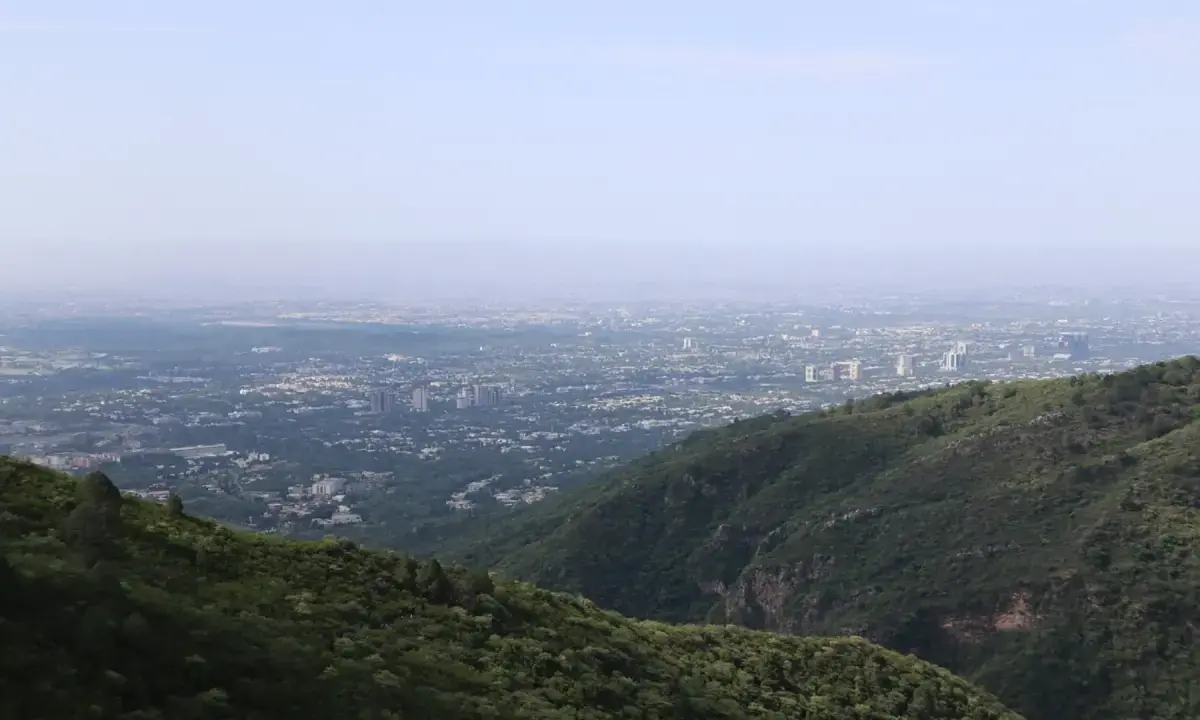
The World Wide Fund for Nature-Pakistan (WWF-P) on Friday highlighted “potentially irreversible risks” and “ecological degradation” from development work at the foothills of Islamabad’s Margalla Hills, calling for the suspension of all such proposed and ongoing activities pending a “transparent environmental review”. The conservation organisation’s call came three days after the Ministry of Interior announced that a new park, spanning 1, 000 kanals, would be developed at the foothills of the Margalla Hills. “WWF-Pakistan expresses its serious and escalating concern regarding ongoing and proposed development activities in areas adjoining the Margalla Hills National Park, particularly within ecologically sensitive foothill zones, ” the organisation said in a statement. It recalled that recent assessments published by WWF-P earlier this year on tree removal in the federal capital “indicate that large-scale vegetation clearance and infrastructure expansion are taking place across multiple locations”. These developments had also been widely reported and had raised serious concerns among environmental experts, civil society organisations and the public at large, the WWF-P statement said. It added that the Margalla Hills National Park and its surrounding habitats represented a “critical ecological landscape”, supporting diverse flora and fauna, including important bird and mammal species, and serving as the lungs and natural water filter to the capital city. “Development activities in close proximity to the park, irrespective of whether they fall within formally designated buffer zones or not, pose serious and potentially irreversible risks, including habitat fragmentation, disruption of wildlife movement corridors, and degradation of essential ecosystem services such as groundwater recharge and micro-climate regulation, ” it warned. It said its field-based evidence suggested that the “cumulative expansion of road networks, land clearing, and associated infrastructure, particularly along key corridors such as the Margalla Enclave Link Road and adjacent foothill areas, has already resulted in measurable ecological degradation”. “While certain activities may be linked to the removal of invasive species, the extent, pattern, and scale of clearing strongly indicate broader development-driven impacts. “Recent official statements regarding proposed development in the Margalla foothills have further intensified concern since it is evident that the proposed intervention is not limited to a park alone, but includes associated large-scale infrastructure such as hotels, sports facilities, and supporting developments, ” the statement read. It said WWF-P, along with other stakeholders, remained concerned regarding the limited availability of publicly disclosed environmental impact assessments, the extent of stakeholder consultation, and the absence of clearly articulated ecological restoration and mitigation plans for several of those projects. Given the ecological sensitivity of the Margalla Hills and surrounding areas, it was essential that all development interventions followed rigorous environmental safeguards and transparent review processes, the organisation stressed. It urged Islamabad’s Capital Development Authority (CDA), with the support of relevant authorities such as the Islamabad Wildlife Management Board, to “formally designate and enforce ‘no-go’ zones within and adjoining Margalla Hills National Park, particularly in critical habitats and wildlife corridors, where all forms of development would be strictly prohibited; ensure that any proposed development outside designated no-go zones is subject to comprehensive, independently reviewed environmental impact assessments, with full public disclosure and stakeholder consultation prior to approval; immediately suspend all ongoing and proposed development activities in sensitive foothill areas pending a transparent environmental review”. The CDA plans to develop the proposed park near the federal capital’s D-12 area on its acquired land, where a cricket stadium has also been proposed. Similarly, the CDA intends to set up hotels and other commercial components as part of the stadium project in the area, as it has already earmarked 175 acres for an Olympic Village. This area falls in Zone III, where, according to sources in the CDA, sports and recreational facilities and parks can be developed, but hotels and commercial projects cannot be launched, as even locals are not allowed to construct houses on their private land. Some months ago, then CDA chairman Muhammad Ali Randhawa had moved a summary to the Ministry of Interior for onward submission to the federal cabinet to seek permission for hotel and other commercial components of the cricket stadium in Zone III. Meanwhile, the PPP, which is an ally of the ruling PML-N in the Centre, has also opposed the planned park project, saying it amounted to “ecological terrorism, an assault on Islamabad’s geography, environment and social fabric with long-term repercussions”. PPP Human Rights Cell General Secretary Malaika Raza noted in a statement that “more than 29, 000 trees have already been destroyed by government actions, and new development plans are being pushed forward without meaningful consent from locals”.
WWF-Pakistan highlights ‘potentially irreversible risks’ of development work at Margalla foothills

RELATED ARTICLES


