


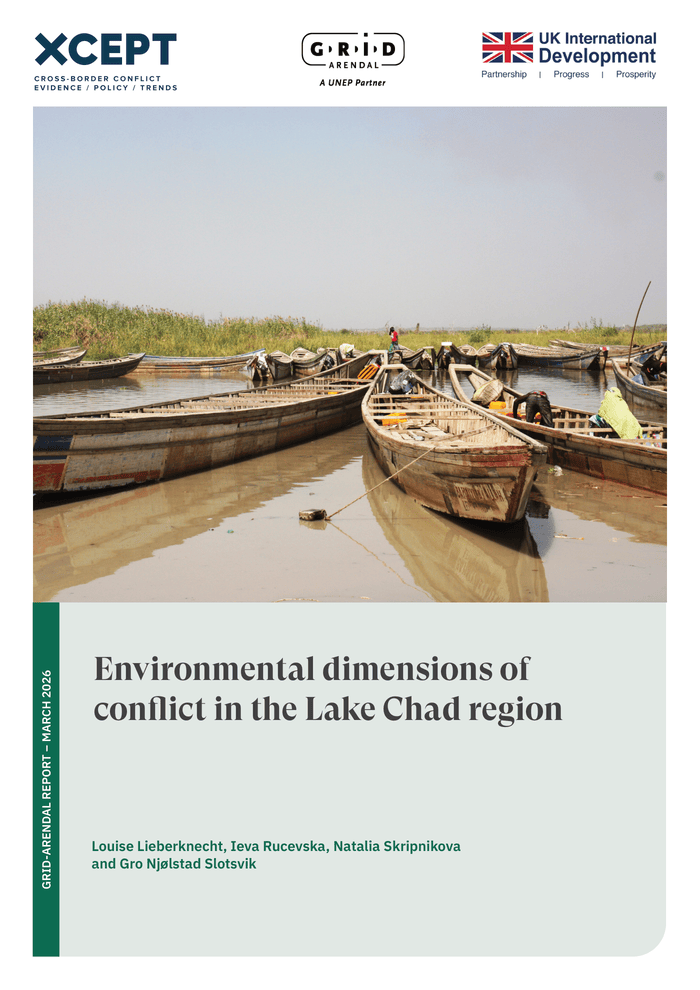
Countries: Chad, Cameroon, Niger, Nigeria Source: Norwegian Institute of International Affairs Please refer to the attached file. A new report illuminates the environmental dimensions of conflict in the Lake Chad region by examining how insecurity impacts the environment and how conflict dynamics are shaped by environmental factors. Drought and floods in the Lake Chad region Lake Chad lies in the central Sahel, intersected by the borders of Chad, Cameroon, Niger, and Nigeria. It is a vital and life-sustaining ecosystem and water reservoir for tens of millions of people in a region characterised by water scarcity. The Sahel is one of the regions on the planet most vulnerable to climate change, facing increased unpredictability and bigger extremes of high and low rainfall. Extended droughts in the late 20th century reduced water flows into Lake Chad so severely that its surface area shrank by more than 90%. This century, the remaining pool of water has stabilised, but the current body of water is still less than a tenth of the size of the lake that existed in 1960. The former lake area is now a rich mosaic of wetlands, islands, vegetated areas, and seasonally flooded pools and oxbow lakes where water levels fluctuate by up to two metres between the wet and dry seasons. The wetland vegetation creates a rich habitat for hundreds of thousands of waterbirds, and the lake supports fisheries as well as flood-recession crop cultivation and cattle grazing. Insurgencies and violence Insurgent-led conflict and insecurity in the region is characterised by a pattern of temporally and geographically scattered localised violence against local populations, between insurgent groups, and between insurgents and counter-terrorism forces. There have been repeated localised bombings, use of landmines, armed attacks, and targeted destruction and burnings of buildings in villages and settlements. Natural areas with dense vegetation cover and difficult-to-access terrain, such as the lake wetlands and woodlands in the region have become operational strongholds for insurgent groups, with the natural vegetation and terrain providing cover from counter-insurgency forces. Within these areas, region violent incidents and combat operations have caused local impacts on the environment, including through use of munitions, setting of fires, and the clearance of vegetation. Furthermore, conflict in the region is interlinked with the natural resource economy. Insurgents are sustained in part by food and shelter derived from natural resources, and by financing extracted through extortion of fishermen, transhumant pastoralists, and crop farmers. Insurgent groups control access to pastures, areas suitable for crop cultivation, and fishing areas, and demand fees in return for access. They control trade networks and apply taxes in return for market access. There has been an ongoing process whereby insurgents have diversified income streams by gaining control of an increasing range of natural resources, infiltrating and extorting legitimate natural resource use, and connecting with transnational organised crime networks involved in criminal wildlife trade and illegal mining. Climate change amplifies conflict Threats of violence associated with extortion of pastoralists, farmers, and fishermen drive displacement, causing pressures on the environment in locations people are displaced to. These threats are also disrupting traditional resource management practices and causing conflicts between farmers and pastoralists seeking to use the same areas for grazing and crop cultivation. Climate change amplifies these conflicts by increasing unpredictability of rainfall patterns and exacerbating temporary water scarcity, with resulting pressures on remaining areas of pasture and crop land. As such, the environmental dimensions of conflict in and around Lake Chad cannot be meaningfully analysed in isolation from social, economic, political, and cultural dimensions. Conflict in this region is playing out within a broader socio-ecological system in which the environment, climate change, natural resource economy and livelihoods, governance structures, demographic pressures, and insecurity interact in complex ways. This report and podcast episode from the CPS-Lake Chad Project is a contribution to an emerging systems level understanding of conflict and insecurity in the Lake Chad region. This understanding can be further consolidated in the future through multidisciplinary and participative approaches that will also be well placed to co-create effective strategies for building sustainable peace and security in the region.



GrowthPakistan brings you the latest news to keep an eye on Pakistan’s startup ecosystem. Business keeps you growing when you stay aware of your competitors' moves. GrowthPakistan offers Business, Tech, Global Tech, Global, Auto, and Startup News straight from industries all around the globe. This platform will help you identify upcoming opportunities not only in Pakistan but worldwide.
Email : growthpakistan@gmail.com
Whatsapp : +92320-9497079
© growthpakistan