


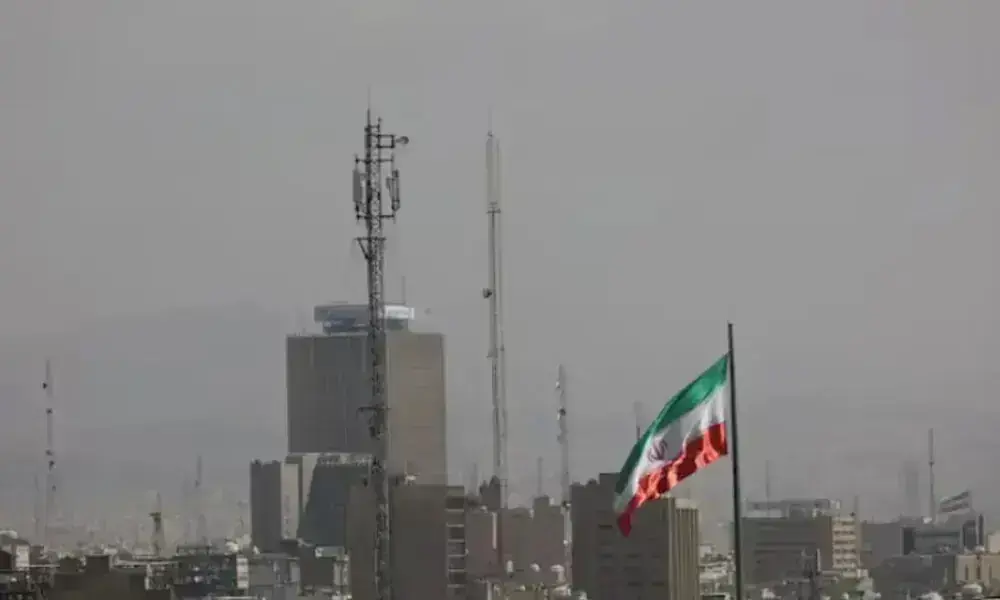
The war in the Middle East between the USA with Israel and Iran has continued for the last seven weeks. Currently, there is a two-week ceasefire after the initiation of talks in Pakistan. There are two types of impacts of the war on the global economy. The first is that the Middle East countries collectively account for 36 percent of global production of crude oil, gas and petroleum products. In addition, in the event of a recession in these countries this could lead to a decline in imports from the rest of the world and lower home remittances. The war has already had diversified effects on fuel output and export from the Middle East because of, first, the damage to infrastructure, refineries, etc. , related to the production. Second, transportation has been limited by the ban imposed on movement of ships in the Strait of Hormuz by Iran and more recently by the USA on ships either leaving or going to Iranian ports. There is the likely impact of fuel supply constraints on production in Pakistan. Other impacts include the reduction of remittances from the various Middle East countries as they go into a recession. Also, Pakistan’s exports to these countries may be affected. The feasibility of assessing the short-run impact of the war on Pakistan has been facilitated by the timely release of the figures for March 2026 on the price indices, production in large-scale manufacturing, imports and exports of goods by the PBS (Pakistan Bureau of Statistics). The SBP (State Bank of Pakistan) has also given the estimates of the balance of payments of Pakistan up to the end of March 2026. Further, other statistics on public finances, FBR revenues, etc. , have also become available for March 2026. The first visible indicator of short-term change is in the Sensitive Price Index (SPI), which is monitored on a weekly basis by the PBS. The rate of inflation according to this index as of the 16th of April on a year-to-year basis rose to a double-digit rate of 12. 2 percent. It has grown sharply during the last six weeks, as shown in Table 1. The acceleration in the rate of inflation over the last seven weeks is exceptional. This corresponds to the period since start of the war. The fundamental question is what explains the jump in the rate of inflation. The rise in the rate of increase in fuel prices is shown in Table 2. The estimate is that 32 percent of the rise in the overall rate of inflation is due to fuel items. Further, the resulting increase in the transport costs and production costs has also contributed to the across-the-board jump in the rate of inflation. The Sensitive Price Index, as highlighted by its name, monitors better the short-term changes in the rate of inflation. The Consumer Price Index has shown a more moderate rate of increase in the rate of inflation from 7 percent in February 2026 to 7. 3 percent in March, due particularly to a very low rate of inflation in food prices. The emergence of a supply constraint on imports of fuel from the Middle East for power generation has led to the emergence of substantial power load-shedding in the country. The share of thermal power in electricity generation is over 61 percent. The first reason for the emergence of power and gas load-shedding is the drastic reduction in the availability of gas for power generation. Apparently, there has also been a decline in hydel generation. The return to load-shedding portends badly for the economy. Almost 35 percent of the power consumption is by industry and commerce. The result will be a negative impact on the quarterly GDP growth rate in the fourth quarter of 2025-26 and possibly thereafter. There is need to also look at the trade and balance of payments figures in the month of March. This leads to the identification of various changes in trends. First, there has been a quantum decline in LNG and LPG imports of 48. 2 percent in March as compared to the level in March 2026. Fertilizer imports have also plummeted by 33 percent. The Quantum Index of Manufacturing estimate for March 2026 has not yet been released by the PBS. There is the likelihood that fertilizer production, in particular, has plummeted in the month due to a reduction in availability of gas. The balance of payments for March 2026 reveals a decline in workers’ remittances in the month. They have fallen by almost 6 percent in relation to the level in March 2025, with a bigger decline of 11 percent from Dubai, one of the emirates of the United Arab Emirates. Earlier, from July 2025 to February 2026 there had been a healthy jump in home remittances of over 10 percent. Clearly, the economic conditions in the Middle East due to the war are beginning to reduce remittances from the region, which are 55 percent of total remittances to Pakistan. Another indicator of the slowdown of the growth process in Pakistan is the significant reduction in the growth rate of FBR revenues in March to only 6 percent. Earlier a double-digit growth rate was being achieved. Therefore, there are indications of a big negative impact of the on-going war in the Middle East on Pakistan’s economy. The rate of inflation has risen significantly, output of some industries is likely to have fallen due particularly to power load-shedding and shortages of inputs. Also, there is evidence that home remittances have started declining. The above findings are in contrast to the recent projection by the IMF of the economy of Pakistan. The short-term impact of war on Pakistan in 2025-26 is likely to be very limited, according to the IMF. The impact in 2026-27 has been identified with three scenarios depending upon the duration of the conflict. We hope and pray that the extraordinary efforts at mediation by Pakistan will result in success soon and that the negative impacts will came to an end sooner than later. Copyright Business Recorder, 2026



GrowthPakistan brings you the latest news to keep an eye on Pakistan’s startup ecosystem. Business keeps you growing when you stay aware of your competitors' moves. GrowthPakistan offers Business, Tech, Global Tech, Global, Auto, and Startup News straight from industries all around the globe. This platform will help you identify upcoming opportunities not only in Pakistan but worldwide.
Email : growthpakistan@gmail.com
Whatsapp : +92320-9497079
© growthpakistan