


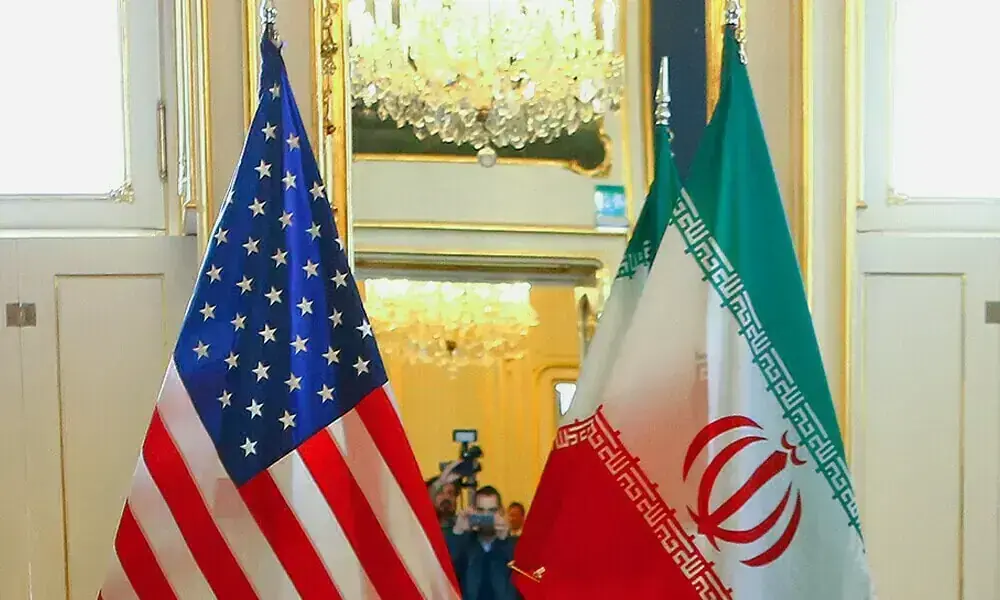
Pakistan did something remarkable. Not once. Several times over. First, it brought Washington and Tehran into the same room in Islamabad. The first direct talk between those two powers since 1979. Twenty-one hours. Face-to-face. On Pakistani soil, with Pakistani mediators. CNN called it “a stunning pivot”. Analysts who track global diplomacy for a living said Pakistan had gone from largely isolated to indispensable in under a year. Pakistan did not stop there. When the talks ended without a signed agreement, Pakistan kept working. Field Marshal Asim Munir flew to Tehran carrying a new message from Washington. Prime Minister Sharif made a tri-nation visit to Saudi Arabia, Qatar and Turkey. The White House confirmed that Pakistan is “the only mediator in this negotiation. ” Trump said that if a deal is signed in Islamabad, he may travel there himself, describing Pakistan’s leadership as “extraordinary, kind and very competent. ” The ceasefire Pakistan brokered on April 7 suspended Iran’s blockade of the Strait of Hormuz, which had choked global energy markets for over five weeks. On April 16, a 10-day ceasefire between Israel and Lebanon came into effect. Iran had set Lebanon as a precondition for resuming nuclear talks. That condition is now met. A second round of negotiations is being arranged before the April 22 deadline. What started as the Islamabad Talks is now being called the Islamabad Process. Third, on April 10, Prime Minister Shehbaz Sharif cut diesel price by Rs 134. 81 per litre and petrol’s by Rs 11. 83 and passed every rupee of savings to the public, rejecting proposals to retain any portion. That kind of decisiveness deserves acknowledgment. I acknowledge it. Both moments matter enormously. We now know they were the beginning of something. Pakistan is still in the room. Businesses cannot plan when they cannot predict fuel prices. The April 11 reduction is real relief. Relief alone is not a mechanism. The deeper problem was never just the price. It was the opacity of how the price gets set, and how relief, when it comes, gets delivered. A single government announcement, however well-intentioned, is not policy. The Platt’s index formula that drove diesel to Rs 520 per litre, pricing 100% of domestic diesel on Singapore import costs even though 70% is locally refined, must be permanently reformed. Not patched. Reformed. This was raised in a PBC webinar last week. That speed and responsiveness should now produce a structural fix. Not just a fortnight’s relief. Diesel is how food moves. The Rs 134 cut is the single most consequential economic decision of this entire crisis period. Diesel is not merely a fuel. It is the circulatory system of Pakistan’s food economy. Every rupee on the diesel price travels directly into freight, wholesale costs, and retail food margins. With inflation projected above eight percent in April and nine percent in May, getting diesel right is inseparable from getting food prices right. We need a weekly diesel-to-food transmission monitor, tracking how pump prices move through freight into retail margins. Early warning before a fuel shock becomes a food security event. The State Bank, the Ministry of Finance, and the Petroleum Division need one coordinated signal. Not three separate press conferences moving at three different speeds. The rupee’s hard-won stability is not guaranteed. The rupee held steady for over 130 consecutive sessions before the war. That discipline must be actively reinforced, not left to assumption. Tabadlab has documented how little room Pakistan’s external debt trajectory leaves for exactly this kind of import-cost shock. This week, the Asian Development Bank projected Pakistan’s economy to grow 3. 5% in FY2026 and 4. 5% in FY2027. It specifically warned that downside risks remain significant and that sustained reform is critical to preserve momentum. That is not a disclaimer. It is a roadmap. Fuel relief eases current account pressure. It does not change the underlying vulnerability. Pakistan is now the only country both Washington and Tehran trust. Use it. Washington confirmed it plainly: Pakistan is the only mediator in this negotiation. That trust is a national asset. It must now be converted into economic outcomes. The opportunity is real and specific. If sanctions on Iran are lifted as part of a comprehensive settlement, the Iran-Pakistan gas pipeline moves from aspiration to project. The old RCD trade corridor, through Iran into Turkey and Europe, or through Afghanistan into Central Asia, opens. Pakistan’s regional trade, currently near zero across all its borders, gets a genuine pathway. Gulf investors, the ADB and even US energy companies would find Pakistan, more compelling. The issues that held Pakistan back before this conflict are the same ones that hold it back now. Diplomatic capital does not automatically convert into economic growth. That conversion requires work. The private sector is not asking to be rescued. It is asking for coordination. PBC member companies account for forty percent of Pakistan’s exports and a third of its tax revenues. They are not waiting. They are reviewing contracts, tightening working capital, building contingency inventory, and monitoring diesel transmission at the firm level, because they cannot afford not to. What they are asking for is not subsidies. It is coordination, a predictable policy signal that aligns fuel, exchange rate, and inflation management. Structural energy reform that stops pricing Pakistani manufacturers out of competition with Vietnam, India, and Bangladesh before a single unit leaves the factory floor. Regulatory reform that removes the friction keeping FDI chronically below potential. A level playing field. A conducive business environment. Let us do what we know best, create jobs, drive exports, run the wheels of this economy through sustainable investments. The ADB says 4. 5% growth is achievable by FY2027. The IMF programme is broadly on track. The foundations are not absent. They are fragile. The question is whether the political will that produced this week’s fuel cut, and the diplomatic will that produced the Islamabad talks, can now turn toward reforms that have been discussed and deferred for years. Pakistan has been here before. Moments of heightened relevance that faded before the opportunity could be institutionalized. This time, the consequences of repetition are steeper. The window is measurably shorter. The signal from this week – diplomatic achievement, decisive fuel relief, international recognition – is the strongest Pakistan has sent the world in a generation. The private sector is ready. The window is open. Let us climb through it together. Copyright Business Recorder, 2026



GrowthPakistan brings you the latest news to keep an eye on Pakistan’s startup ecosystem. Business keeps you growing when you stay aware of your competitors' moves. GrowthPakistan offers Business, Tech, Global Tech, Global, Auto, and Startup News straight from industries all around the globe. This platform will help you identify upcoming opportunities not only in Pakistan but worldwide.
Email : growthpakistan@gmail.com
Whatsapp : +92320-9497079
© growthpakistan