


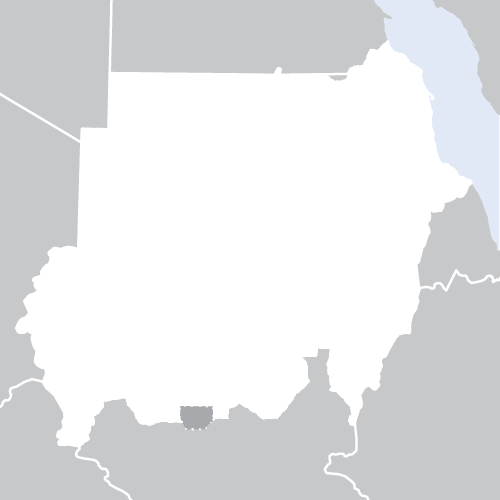
Country: Sudan Source: Plan International Sudan is still facing the world’s worst humanitarian crisis. Girls lives, safety and futures are at risk. Tens of thousands of people – possibly even more – have reportedly been killed. More than 12 million people have been displaced, often multiple times, as front lines continue to shift. Drone attacks on schools and hospitals are becoming increasingly common – particularly in the Kordofan region. As the conflict enters its fourth year, violence is spreading across the country – including most recently into Blue Nile State. The catastrophic scale of displacement, the breakdown of basic services, and the near‐collapse of food systems mean this protracted crisis is deeply entrenched. Girls and women are bearing the heaviest burden. An estimated 12 million people – one quarter of Sudan’s population – are at risk of gender‐based violence, including rape and sexual assault. Attacks on health facilities, increasingly by drone, mean that the capacity of medical staff to treat survivors is diminished at precisely the time when these crimes are being committed on a wide scale. Many survivors are left without access to emergency health care, psychosocial support or legal protection. The conflict is also paralysing Sudan’s education system. More than 14 million children, mostly girls, are unable to go to school. School buildings have been damaged, occupied, or deliberately targeted in violation of international humanitarian law. Research by Plan International shows that among surveyed children out of school, the proportion of girls citing marriage as the primary reason has risen since the conflict began. A generation of girls who could be in school or university is being pulled out of the classroom, increasing their risk of exploitation, early pregnancy and long‐term poverty. “This conflict has devastated Sudan. Young people are missing out on an education, hospitals are in ruins and communities are being torn apart. The long‐term consequences will be felt for generations if we do not act now, ” said Mohamed Kamal, Plan International’s Country Director. Famine-like conditions Famine-like conditions have spread to new parts of the country, with more than 21 million people in Sudan facing acute food insecurity. Children, whose immune systems are not fully developed, and women, who are often the last to receive food in conditions of scarcity, face heightened health risks amid the ongoing hunger crisis. Escalating conflict in the Middle East, disruption of maritime traffic in the Red Sea and the closure of the border with Chad are contributing to rising food costs at a time when many are already on the brink. When fighting came to her village, 15-year-old Rania fled to Chad with her family. They now live in Aboutengue camp, alongside 46, 000 other Sudanese refugees. “At night there is no light or any electricity. I don’t like to be out at night. I don’t feel safe here, it is bad for girls here at night. We can hear guns, ” she said. Plan International and its partners in eastern Chad have constructed two temporary learning spaces and two child-friendly spaces in Aboutengue. These sites aim at promoting mental health, psychosocial wellbeing, play and social interaction. “Going to school and using the centre is helping me to live a more normal life, ” said Rania. We must not forget Sudan With global leaders and donors increasingly focused on the Middle East, it is vital that Sudan is not forgotten. Our staff continue to work across the country despite great personal risk – more than 120 humanitarian workers have been killed since the conflict began. At the same time, aid convoys face a maze of checkpoints, drone threats and border closures, leaving food and supplies stranded while needs soar. More than 30 million people are estimated to need urgent humanitarian assistance, and the response plan remains significantly underfunded. Plan International is responding in Eastern Sudan, White Nile State, North Kordofan, South Kordofan and North Darfur – all areas that have seen heavy fighting. Our work focuses on child protection, education, supporting survivors of sexual and gender‐based violence and providing food assistance. The conflict has shattered the country’s key infrastructure: schools, hospitals, water systems and markets are damaged or destroyed, setting development back by decades and eroding opportunities for the next generation. More than 4 million Sudanese have fled to neighbouring countries, including Ethiopia, South Sudan and Chad, where Plan International also works. In these contexts, girls and women face similar risks of violence, exploitation and forced marriage, often in overcrowded camps and informal settlements with limited services. “We need a drastically scaled‐up humanitarian response. This can only be achieved through greater funding at a time when aid budgets are shrinking. Without financial backing, lives – and the futures of girls and young women across Sudan – will be lost, ” said Kamal.



GrowthPakistan brings you the latest news to keep an eye on Pakistan’s startup ecosystem. Business keeps you growing when you stay aware of your competitors' moves. GrowthPakistan offers Business, Tech, Global Tech, Global, Auto, and Startup News straight from industries all around the globe. This platform will help you identify upcoming opportunities not only in Pakistan but worldwide.
Email : growthpakistan@gmail.com
Whatsapp : +92320-9497079
© growthpakistan