


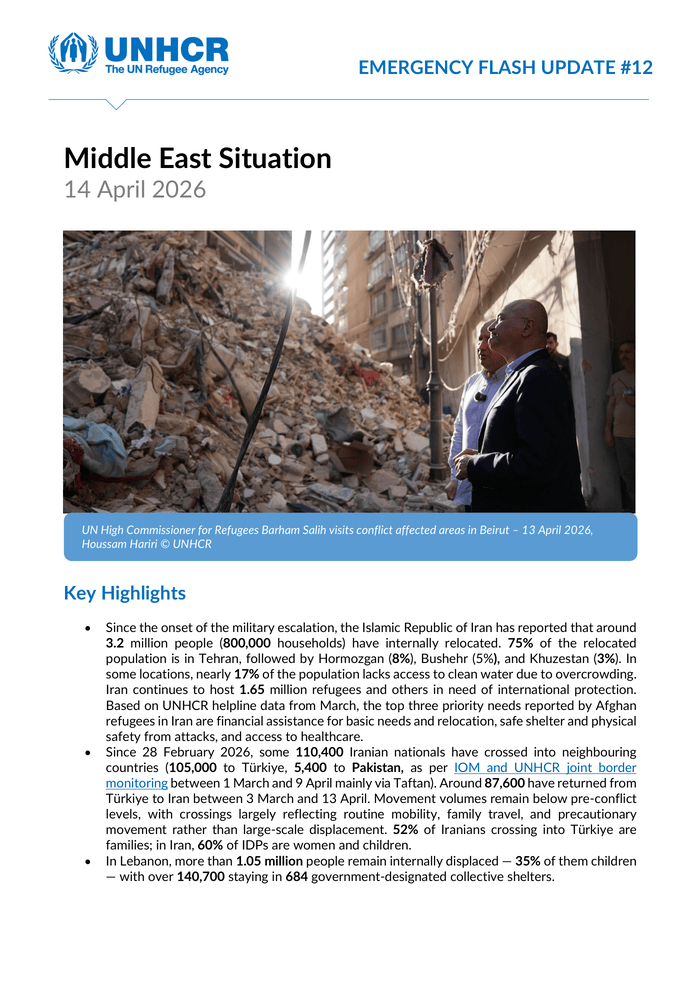
Countries: Iran (Islamic Republic of), Afghanistan, Armenia, Iraq, Lebanon, Pakistan, Syrian Arab Republic, Türkiye, Turkmenistan Source: UN High Commissioner for Refugees Please refer to the attached file. Key Highlights • Since the onset of the military escalation, the Islamic Republic of Iran has reported that around 3. 2 million people (800, 000 households) have internally relocated. 75% of the relocated population is in Tehran, followed by Hormozgan (8%), Bushehr (5%), and Khuzestan (3%). In some locations, nearly 17% of the population lacks access to clean water due to overcrowding. Iran continues to host 1. 65 million refugees and others in need of international protection. Based on UNHCR helpline data from March, the top three priority needs reported by Afghan refugees in Iran are financial assistance for basic needs and relocation, safe shelter and physical safety from attacks, and access to healthcare. • Since 28 February 2026, some 110, 400 Iranian nationals have crossed into neighbouring countries (105, 000 to Türkiye, 5, 400 to Pakistan, as per IOM and UNHCR joint border monitoring between 1 March and 9 April mainly via Taftan). Around 87, 600 have returned from Türkiye to Iran between 3 March and 13 April. Movement volumes remain below pre-conflict levels, with crossings largely reflecting routine mobility, family travel, and precautionary movement rather than large-scale displacement. 52% of Iranians crossing into Türkiye are families; in Iran, 60% of IDPs are women and children. • In Lebanon, more than 1. 05 million people remain internally displaced — 35% of them children — with over 140, 700 staying in 684 government-designated collective shelters. • ~236, 800 Syrians and 43, 900 Lebanese have crossed from Lebanon into Syria since the start of the crisis; 68, 084 Syrians reported an intention to return permanently. • Over 134, 100 Afghans have returned from Iran and Pakistan since the start of the crisis (65, 800 from Iran, 68, 300 from Pakistan). 76% of UNHCR-assisted returnees were women and children. Top provinces of intended return are Kabul (11%) and Nangarhar (10%). In Afghanistan, 115, 000 people are internally displaced, 73% of whom are women and children. Protection concerns have arisen in displacement sites, with authorities ordering IDPs in seven sites to return to their areas of origin; two sites have already been fully vacated. For the latest information on population movements, see the latest UNHCR CORE Update and newly launched Operational Data Portal page on the Middle East situation.



GrowthPakistan brings you the latest news to keep an eye on Pakistan’s startup ecosystem. Business keeps you growing when you stay aware of your competitors' moves. GrowthPakistan offers Business, Tech, Global Tech, Global, Auto, and Startup News straight from industries all around the globe. This platform will help you identify upcoming opportunities not only in Pakistan but worldwide.
Email : growthpakistan@gmail.com
Whatsapp : +92320-9497079
© growthpakistan