


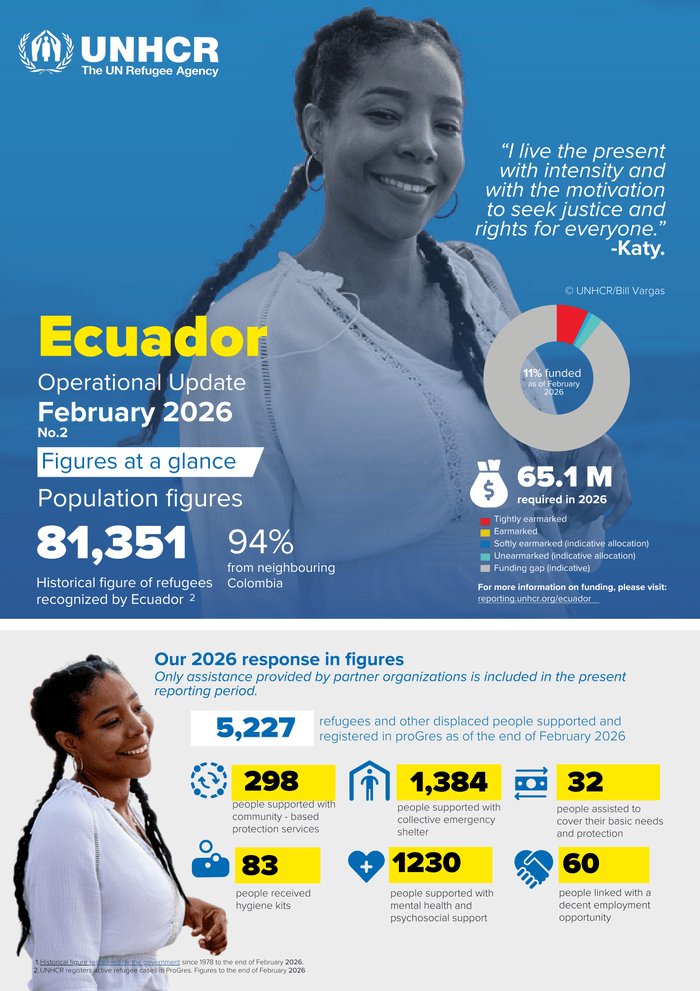
Countries: Ecuador, Colombia, Venezuela (Bolivarian Republic of) Source: UN High Commissioner for Refugees Please refer to the attached file. Operational context The operational context in February has been marked by weather-related events and ongoing security concerns, which have affected forcibly displaced people and the communities hosting them. Severe rains have triggered a nationwide emergency in Ecuador, significantly affecting several provinces across the Coast and Highlands. The National Risk Management Secretariat (SNGR) declared a 90-day regional emergency covering provinces including Guayas, Esmeraldas, El Oro, Los Ríos, Manabí, Santa Elena, Loja, and Chimborazo due to floods, landslides, and damage to public and private infrastructure. According to SNGR reports, in February more than 28. 853 were affected nationwide, with eight fatalities and over 1, 200 impacts on roads, schools, and health facilities. Rising river levels and flooding have been reported across coastal provinces, with 17 rivers currently at risk of overflowing, further straining local response capacities and increasing the risk of displacement, service disruptions, and growing humanitarian needs in vulnerable communities. So far, there have been over 47, 000 people affected nationwide, especially in provinces hosting large number of forcibly displaced people and where UNHCR has offices. At the same time, Ecuador continues to face a deteriorating security situation. The state of emergency has been renewed in nine provinces, reflecting persistent levels of violence and concerns related to organized crime across the country. In the northern border province of Sucumbíos, sustained military operations against criminal groups are restricting mobility and affecting access to services in border communities. The closure of official border crossings has pushed many people to use informal routes, increasing exposure to smuggling networks and risks of exploitation, abuse, and family separation. Communities also report rising incidents of extortion, micro-trafficking, harassment, recruitment attempts, and mobility constraints, which have reduced participation in community activities and weakened local protection mechanisms. In parallel, bilateral tensions between Ecuador and Colombia continue following the imposition of mutual tariffs, disrupting trade flows and affecting border economies. Transport unions and productive sector organizations from both countries have protested at the border. These dynamics are raising concerns about the livelihoods of border communities and the potential increase of smuggling and related crimes. In this evolving context, UNHCR continues to work alongside the Government of Ecuador, local authorities, civil society, and community-based organizations to deliver a comprehensive response addressing both protection needs and solutions for affected populations. By strengthening local services and systems, UNHCR seeks to expand access to international protection, essential services, and socioeconomic inclusion opportunities for forcibly displaced people and host communities across the country, helping those forced to flee rebuild their lives with dignity, stability, and renewed hope for the future.



GrowthPakistan brings you the latest news to keep an eye on Pakistan’s startup ecosystem. Business keeps you growing when you stay aware of your competitors' moves. GrowthPakistan offers Business, Tech, Global Tech, Global, Auto, and Startup News straight from industries all around the globe. This platform will help you identify upcoming opportunities not only in Pakistan but worldwide.
Email : growthpakistan@gmail.com
Whatsapp : +92320-9497079
© growthpakistan