


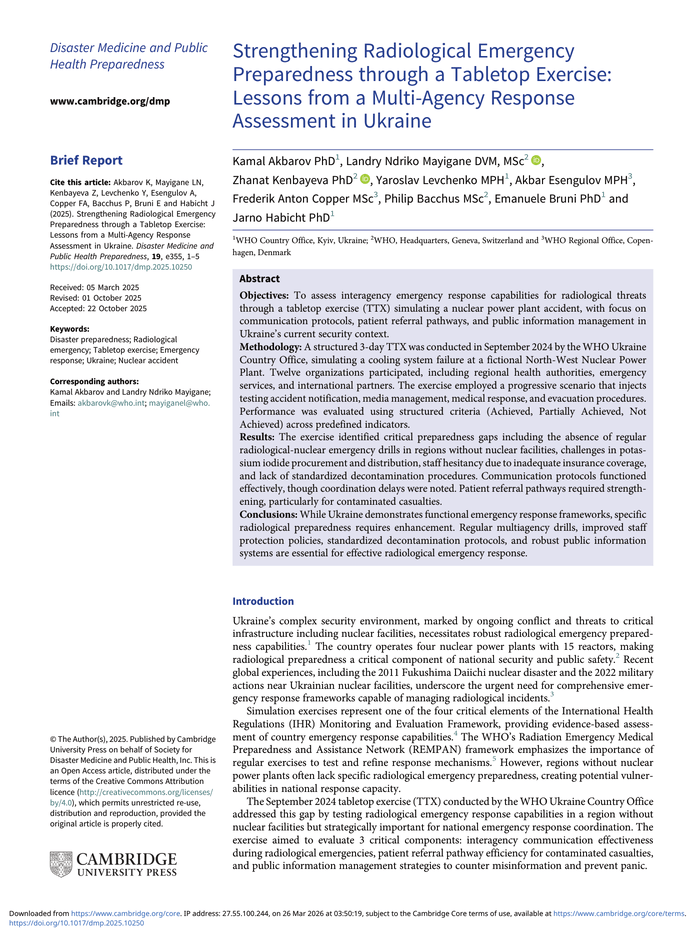
Country: Ukraine Source: University of Cambridge Please refer to the attached file. Abstract Objectives To assess interagency emergency response capabilities for radiological threats through a tabletop exercise (TTX) simulating a nuclear power plant accident, with focus on communication protocols, patient referral pathways, and public information management in Ukraine’s current security context. Methodology A structured 3-day TTX was conducted in September 2024 by the WHO Ukraine Country Office, simulating a cooling system failure at a fictional North-West Nuclear Power Plant. Twelve organizations participated, including regional health authorities, emergency services, and international partners. The exercise employed a progressive scenario that injects testing accident notification, media management, medical response, and evacuation procedures. Performance was evaluated using structured criteria (Achieved, Partially Achieved, Not Achieved) across predefined indicators. Results The exercise identified critical preparedness gaps including the absence of regular radiological-nuclear emergency drills in regions without nuclear facilities, challenges in potassium iodide procurement and distribution, staff hesitancy due to inadequate insurance coverage, and lack of standardized decontamination procedures. Communication protocols functioned effectively, though coordination delays were noted. Patient referral pathways required strengthening, particularly for contaminated casualties. Conclusions While Ukraine demonstrates functional emergency response frameworks, specific radiological preparedness requires enhancement. Regular multiagency drills, improved staff protection policies, standardized decontamination protocols, and robust public information systems are essential for effective radiological emergency response.



GrowthPakistan brings you the latest news to keep an eye on Pakistan’s startup ecosystem. Business keeps you growing when you stay aware of your competitors' moves. GrowthPakistan offers Business, Tech, Global Tech, Global, Auto, and Startup News straight from industries all around the globe. This platform will help you identify upcoming opportunities not only in Pakistan but worldwide.
Email : growthpakistan@gmail.com
Whatsapp : +92320-9497079
© growthpakistan