


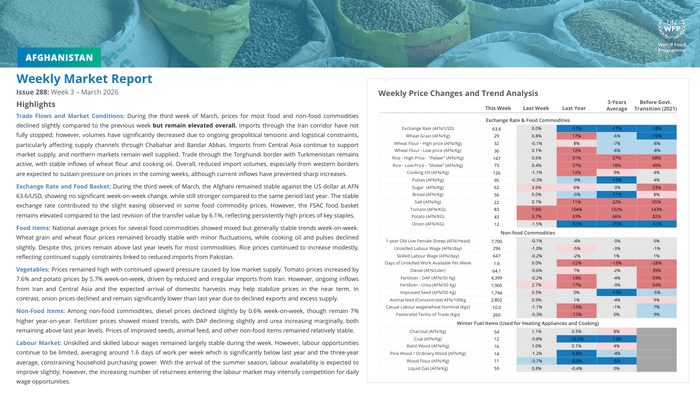
Country: Afghanistan Source: World Food Programme Please refer to the attached file. Highlights Trade Flows and Market Conditions: During the third week of March, prices for most food and non-food commodities declined slightly compared to the previous week but remain elevated overall. Imports through the Iran corridor have not fully stopped; however, volumes have significantly decreased due to ongoing geopolitical tensions and logistical constraints, particularly affecting supply channels through Chabahar and Bandar Abbas. Imports from Central Asia continue to support market supply, and northern markets remain well supplied. Trade through the Torghundi border with Turkmenistan remains active, with stable inflows of wheat flour and cooking oil. Overall, reduced import volumes, especially from western borders are expected to sustain pressure on prices in the coming weeks, although current inflows have prevented sharp increases. Exchange Rate and Food Basket: During the third week of March, the Afghani remained stable against the US dollar at AFN 63. 6/USD, showing no significant week-on-week change, while still stronger compared to the same period last year. The stable exchange rate contributed to the slight easing observed in some food commodity prices. However, the FSAC food basket remains elevated compared to the last revision of the transfer value by 6. 1%, reflecting persistently high prices of key staples. Food Items: National average prices for several food commodities showed mixed but generally stable trends week-on-week. Wheat grain and wheat flour prices remained broadly stable with minor fluctuations, while cooking oil and pulses declined slightly. Despite this, prices remain above last year levels for most commodities. Rice prices continued to increase modestly, reflecting continued supply constraints linked to reduced imports from Pakistan. Vegetables: Prices remained high with continued upward pressure caused by low market supply. Tomato prices increased by 7. 6% and potato prices by 5. 7% week-on-week, driven by reduced and irregular imports from Iran. However, ongoing inflows from Iran and Central Asia and the expected arrival of domestic harvests may help stabilize prices in the near term. In contrast, onion prices declined and remain significantly lower than last year due to declined exports and excess supply. Non-Food Items: Among non-food commodities, diesel prices declined slightly by 0. 6% week-on-week, though remain 7% higher year-on-year. Fertilizer prices showed mixed trends, with DAP declining slightly and urea increasing marginally, both remaining above last year levels. Prices of improved seeds, animal feed, and other non-food items remained relatively stable. Labour Market: Unskilled and skilled labour wages remained largely stable during the week. However, labour opportunities continue to be limited, averaging around 1. 6 days of work per week which is significantly below last year and the three-year average, constraining household purchasing power. With the arrival of the summer season, labour availability is expected to improve slightly; however, the increasing number of returnees entering the labour market may intensify competition for daily wage opportunities.



GrowthPakistan brings you the latest news to keep an eye on Pakistan’s startup ecosystem. Business keeps you growing when you stay aware of your competitors' moves. GrowthPakistan offers Business, Tech, Global Tech, Global, Auto, and Startup News straight from industries all around the globe. This platform will help you identify upcoming opportunities not only in Pakistan but worldwide.
Email : growthpakistan@gmail.com
Whatsapp : +92320-9497079
© growthpakistan