

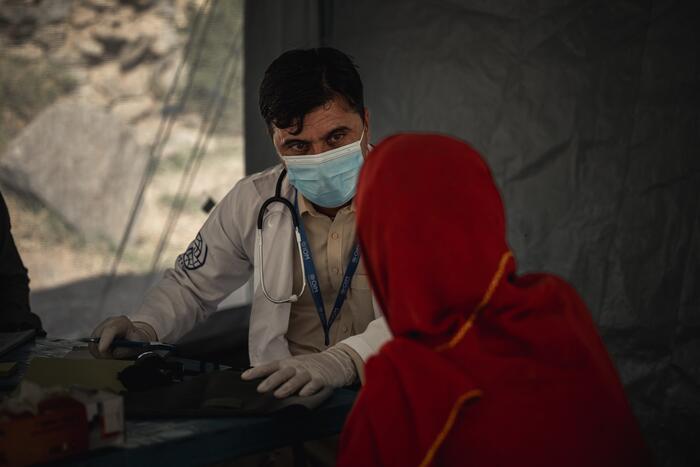
Country: Afghanistan Sources: International Organization for Migration, UN Office for the Coordination of Humanitarian Affairs Months after devastating earthquakes struck eastern Afghanistan, many families in remote mountain communities were still living in fragile tents. As winter took hold, freezing temperatures, strong winds and scarce firewood made already difficult conditions even harder. “We are still living in tents, ” said Dalil, 27, who lost 10 family members in the earthquake. “Adults can endure somehow, but children can’t survive in this cold. ” With support from CERF, the UN’s Global Emergency Fund, teams from the International Organization for Migration (IOM) reached affected communities within a day of the disaster, providing emergency shelter materials and other essential items, including blankets, solar lamps, kitchen sets and emergency tents, to more than 7, 000 families. As immediate needs began to ease, efforts shifted to helping families get through the winter months. “They came quickly after the earthquake with tents, water, blankets and household items, ” said Jamila, a survivor. “Without that support, we wouldn’t have made it through those first weeks. ” But needs remained severe. In hard-to-reach districts such as Nurgal and Dara-e-Noor, families continued to face isolation, limited access to health care and inadequate shelter. Humanitarian teams kept delivering winterization support and basic services, often travelling long distances across difficult terrain to reach remote villages. Funding shortfalls, however, meant help reached only a fraction of those who needed it. As temperatures fell below freezing, many families remained without the support they needed to get through the winter. Read more about how CERF and IOM support communities affected by disasters in Afghanistan here. Pooled Fund impact stories
Afghanistan: CERF support helps earthquake survivors get through winter

RELATED ARTICLES


