


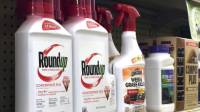
A US judge on Friday approved Bayer’s $7. 25 billion settlement of lawsuits over claims its Roundup weedkiller caused blood cancer, in one of the largest class-action payouts in US history. The decision paves the way for compensation to tens of thousands of people who were exposed to the glyphosate-based herbicide and have been diagnosed with Non-Hodgkin lymphoma (NHL). It also covers people who were exposed to Roundup and go on to develop the illness in the future. The Missouri state court “fully and finally approves the Settlement Agreement in its entirety,” Judge Timothy Boyer said in his ruling. “Today is a real good day,” Christopher Seeger, a court-appointed lead attorney for plaintiffs already diagnosed with NHL, told AFP by phone. People with diagnosed NHL will receive payments of between $10, 000 to $165, 000, depending on a range of factors including whether they were residential or occupational users of Roundup, such as landscapers. Approval of the settlement was “really the only path that most victims of Roundup will have to compensation,” Seeger said, because in June, the US Supreme Court sided with Bayer in a case and ruled it would no longer allow “failure-to-warn” claims in US states. The Supreme Court concluded that the US Environmental Protection Agency’s determination that Roundup is not a carcinogen pre-empts claims in state courts tying the product to a cancer diagnosis. Seeger explained that those claims had been the most viable path for most plaintiffs. This settlement was reached before the Supreme Court ruling, but both sides had agreed to honor it whatever the outcome. People who never filed a case but were exposed to Roundup can still apply for compensation if they develop NHL in the coming years and if they meet certain conditions. Bayer has spent billions of dollars settling thousands of cases linked to Roundup since it acquired the weedkiller’s producer, the US agrichemical group Monsanto, in 2018. In a statement to AFP, it said it hoped the settlement, together with the Supreme Court decision, would help draw a line under litigation. “The Court’s final approval is a decisive milestone in the company’s strategy to mitigate the risks of both pending and future Roundup litigation,” said CEO Bill Anderson. – ‘Probable carcinogen’ – The World Health Organization’s International Agency for Research on Cancer in 2015 designated glyphosate, Roundup’s main active ingredient, a probable human carcinogen, but Bayer says scientific studies and regulatory approvals show the weedkiller is safe. Last year, a highly influential decades-old study that declared Roundup posed no serious health risks was retracted, ending a decades-long saga that exposed how corporate interests can distort scientific research and influence government decision-making. In its retraction note, the Regulatory Toxicology and Pharmacology journal cited a litany of serious flaws, ranging from the omission of carcinogenicity studies available at the time to undisclosed contributions by Monsanto employees. Glyphosate was brought to market as a herbicide in the 1970s and initially welcomed as less toxic than DDT. But its soaring use — especially after Monsanto introduced glyphosate-tolerant seeds that allowed it to be sprayed widely over crops — drew increasing scrutiny in the 1990s. Several countries have since moved to restrict or ban its use, including France, which has prohibited household applications. Bayer said it was phasing out Roundup for US residential use in 2023 in response to growing lawsuits.



GrowthPakistan brings you the latest news to keep an eye on Pakistan’s startup ecosystem. Business keeps you growing when you stay aware of your competitors' moves. GrowthPakistan offers Business, Tech, Global Tech, Global, Auto, and Startup News straight from industries all around the globe. This platform will help you identify upcoming opportunities not only in Pakistan but worldwide.
Email : growthpakistan@gmail.com
Whatsapp : +92320-9497079
© growthpakistan