


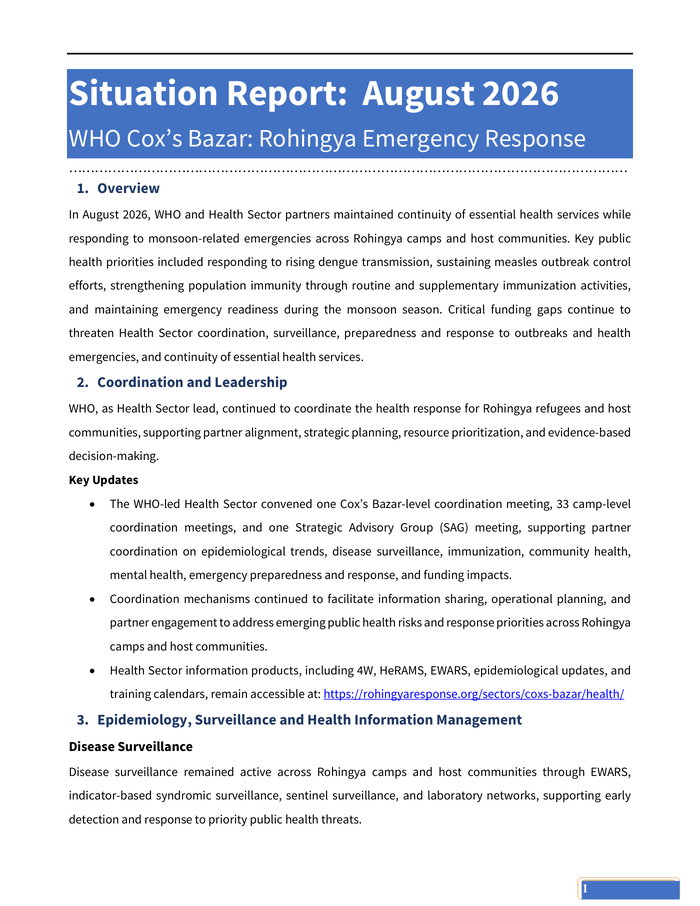
Country: Bangladesh Source: World Health Organization Please refer to the attached file. Overview In August 2026, WHO and Health Sector partners maintained continuity of essential health services while responding to monsoon-related emergencies across Rohingya camps and host communities. Key public health priorities included responding to rising dengue transmission, sustaining measles outbreak control efforts, strengthening population immunity through routine and supplementary immunization activities, and maintaining emergency readiness during the monsoon season. Critical funding gaps continue to threaten Health Sector coordination, surveillance, preparedness and response to outbreaks and health emergencies, and continuity of essential health services. Coordination and Leadership WHO, as Health Sector lead, continued to coordinate the health response for Rohingya refugees and host communities, supporting partner alignment, strategic planning, resource prioritization, and evidence-based decision-making. Key Updates The WHO-led Health Sector convened one Cox’s Bazar-level coordination meeting, 33 camp-level coordination meetings, and one Strategic Advisory Group (SAG) meeting, supporting partner coordination on epidemiological trends, disease surveillance, immunization, community health, mental health, emergency preparedness and response, and funding impacts. Coordination mechanisms continued to facilitate information sharing, operational planning, and partner engagement to address emerging public health risks and response priorities across Rohingya camps and host communities. Health Sector information products, including 4W, HeRAMS, EWARS, epidemiological updates, and training calendars, remain accessible at: https: //rohingyaresponse. org/sectors/coxs-bazar/health/



GrowthPakistan brings you the latest news to keep an eye on Pakistan’s startup ecosystem. Business keeps you growing when you stay aware of your competitors' moves. GrowthPakistan offers Business, Tech, Global Tech, Global, Auto, and Startup News straight from industries all around the globe. This platform will help you identify upcoming opportunities not only in Pakistan but worldwide.
Email : growthpakistan@gmail.com
Whatsapp : +92320-9497079
© growthpakistan