

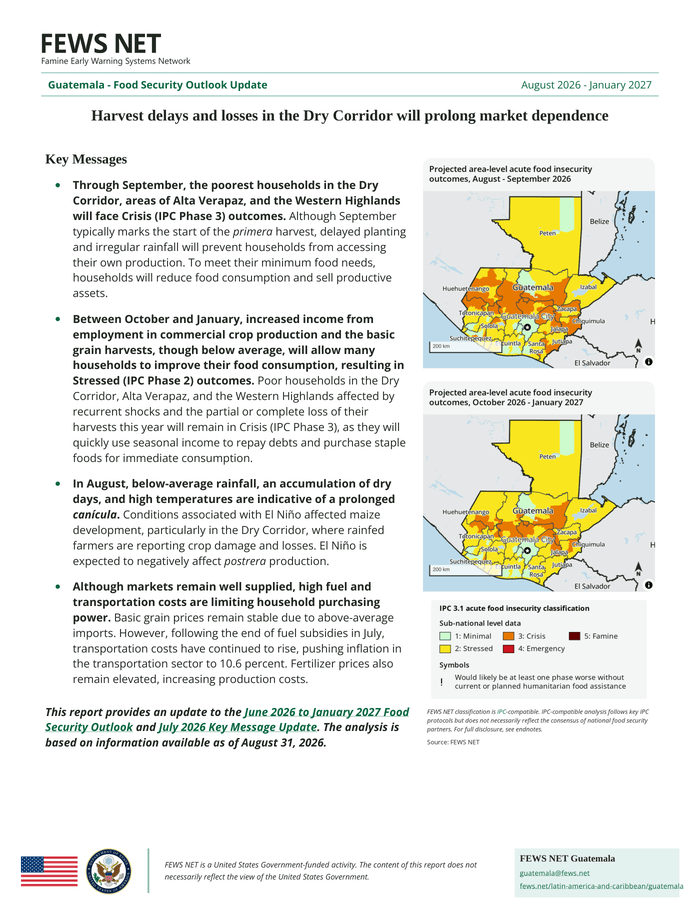
Country: Guatemala Source: Famine Early Warning System Network Please refer to the attached file. Key Messages Through September, the poorest households in the Dry Corridor, areas of Alta Verapaz, and the Western Highlands will face Crisis (IPC Phase 3) outcomes. Although September typically marks the start of the primera harvest, delayed planting and irregular rainfall will prevent households from accessing their own production. To meet their minimum food needs, households will reduce food consumption and sell productive assets. Between October and January, increased income from employment in commercial crop production and the basic grain harvests, though below average, will allow many households to improve their food consumption, resulting in Stressed (IPC Phase 2) outcomes. Poor households in the Dry Corridor, Alta Verapaz, and the Western Highlands affected by recurrent shocks and the partial or complete loss of their harvests this year will remain in Crisis (IPC Phase 3), as they will quickly use seasonal income to repay debts and purchase staple foods for immediate consumption. In August, below-average rainfall, an accumulation of dry days, and high temperatures are indicative of a prolonged canícula **. ** Conditions associated with El Niño affected maize development, particularly in the Dry Corridor, where rainfed farmers are reporting crop damage and losses. El Niño is expected to negatively affect postrera production. Although markets remain well supplied, high fuel and transportation costs are limiting household purchasing power. Basic grain prices remain stable due to above-average imports. However, following the end of fuel subsidies in July, transportation costs have continued to rise, pushing inflation in the transportation sector to 10. 6 percent. Fertilizer prices also remain elevated, increasing production costs.
Guatemala – Food Security Outlook Update : Harvest delays and losses in the Dry Corridor will prolong market dependence, August 2026 – January 2027

RELATED ARTICLES


